Morocco has many deserts, and they are varied. Paradoxically, however, most are far from being the vast, undulating expanses of sand stretching as far as the eye can see that people eager to experience ‘the desert’ are looking for. The great ergs are found more in Algeria and Mauritania than in Morocco, but Morocco’s deserts have a different kind of beauty.
When we think of the desert, images spring to mind of vast sand dunes stretching as far as the eye can see, perhaps mirages, and a sense of “nothingness”. These large, colourful dunes are few and far between in Morocco. There are only two ergs: the famous Erg Chebbi, near Merzouga and Erg Chigaga, further south, near M’hamid. Whilst Chebbi is the highest and most extensive, Chigaga is more isolated, as it takes around 45 minutes by 4×4 to reach it, whereas Merzouga is literally “right by the roadside”.
Heading out into the dunes is a dream come true. Whether you’re a keen hiker and sports enthusiast, or a bit less so (but still keen enough) and simply let yourself be carried along by your camel’s gentle trot, you feel as though you’re “in a picture”. As you roll down the dunes in the sand, you re-enact scenes from films and comic books, giving in to the pleasure of a fast, safe descent.
But there are many more deserts in Morocco, whether they be the rocky deserts that surround—without engulfing—the oases of the Drâa Valley, the high plateaus of the Atlas Mountains, virtually devoid of any vegetation taller than twenty centimetres, or, further south, the vast expanses of the Western Sahara, which stretch right down to the Atlantic coast.
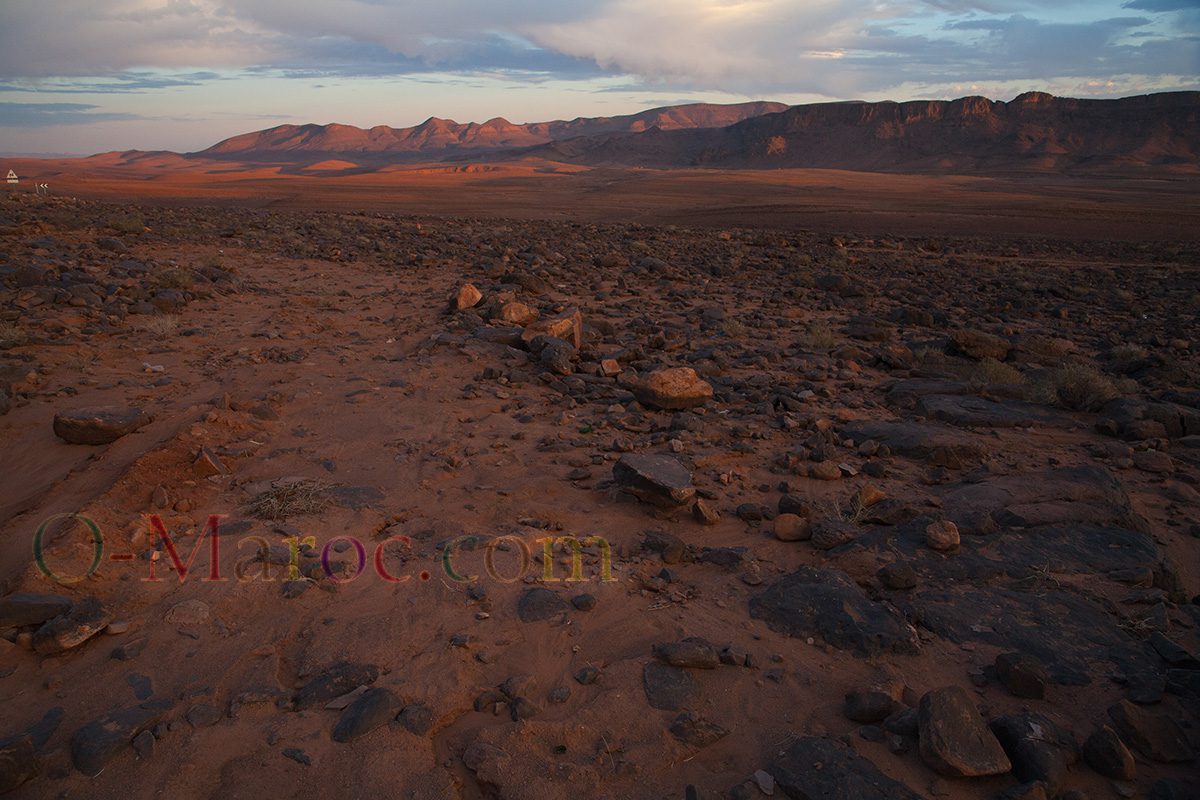
I prefer these deserts to sand dunes; their landscapes are more varied, always rugged, arid and often sombre, like the almost black peaks of Jbel Saghro, or our oasis, just next to Serdrar, where fossils embedded in black shale and marble outcrop, so numerous that one feels as though one is walking through an exhibition in a natural history museum.
To wander under the scorching sun, that oppressive late-spring heat, across these plains where, a few hundred thousand years ago, bonito and other small fish wriggled in a sea that has now vanished, is a truly unique experience, one that brings home just how much this ‘nothingness’ that is the desert signifies a disappearance.
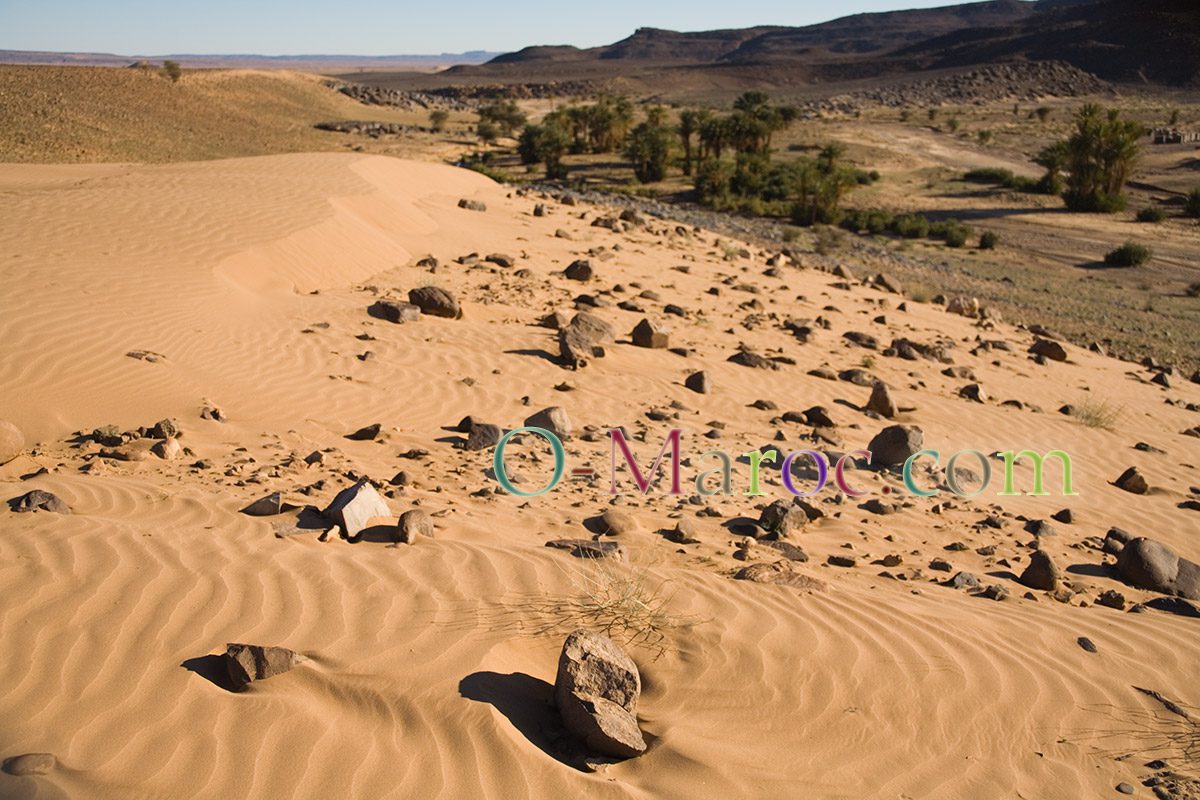
There, in this Drâa Hamada, in prehistoric times, gazelles and elephants roamed. It may not have been a lush jungle, but it was a green, fertile region, whose inhabitants left evidence of their existence in their rock carvings.
Today, the Drâa River is disappearing beneath the sand, unable to flow freely to the Atlantic, absorbed by parched earth. The oases of the Drâa are a treasure. They dot the world’s largest palm grove, islands of lush, almost overwhelming green, planted along the river’s course, amidst a landscape of yellow and red stretching all the way to the Atlas Mountains.
And there, the mountains take over, themselves becoming increasingly dry and arid due to human activity. The villagers have gradually depleted Morocco’s forests to meet their daily needs for firewood and to build enclosures. The nomadic trails are arduous. But landscapes such as the Jaffar Circus are extraordinary…
Head out into the desert
To truly discover the desert, you need to take your time. It takes more than a few hours’ excursion for your body to start drying out, to feel the effects of the aridity and the dust, and for your eyes to adjust to the dazzling light. You need to spend a few nights there to fully appreciate a sky filled with stars like you won’t see anywhere else.
And above all, it takes a few days for the desert’s ‘nothingness’ to take hold. Little by little, the small details around you – a simple, humble blade of grass, a tiny insect buzzing for a few minutes, which you would never have noticed – take on an unexpected significance. That is the magic of the desert: opening you up to the world.
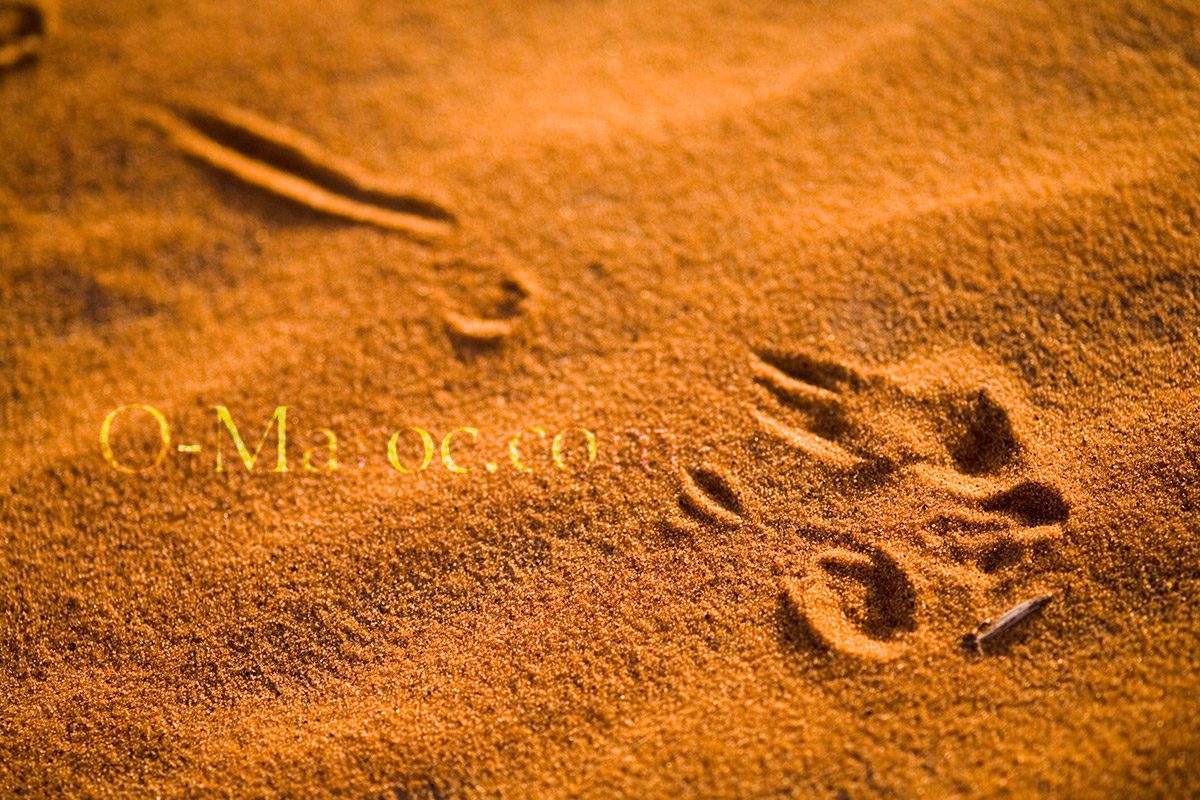
After a few days in the desert, when you return to the oasis, what might appear to a tourist as a few dusty blades of grass and a muddy stream becomes a spring meadow and a river.
My favourite deserts in Morocco
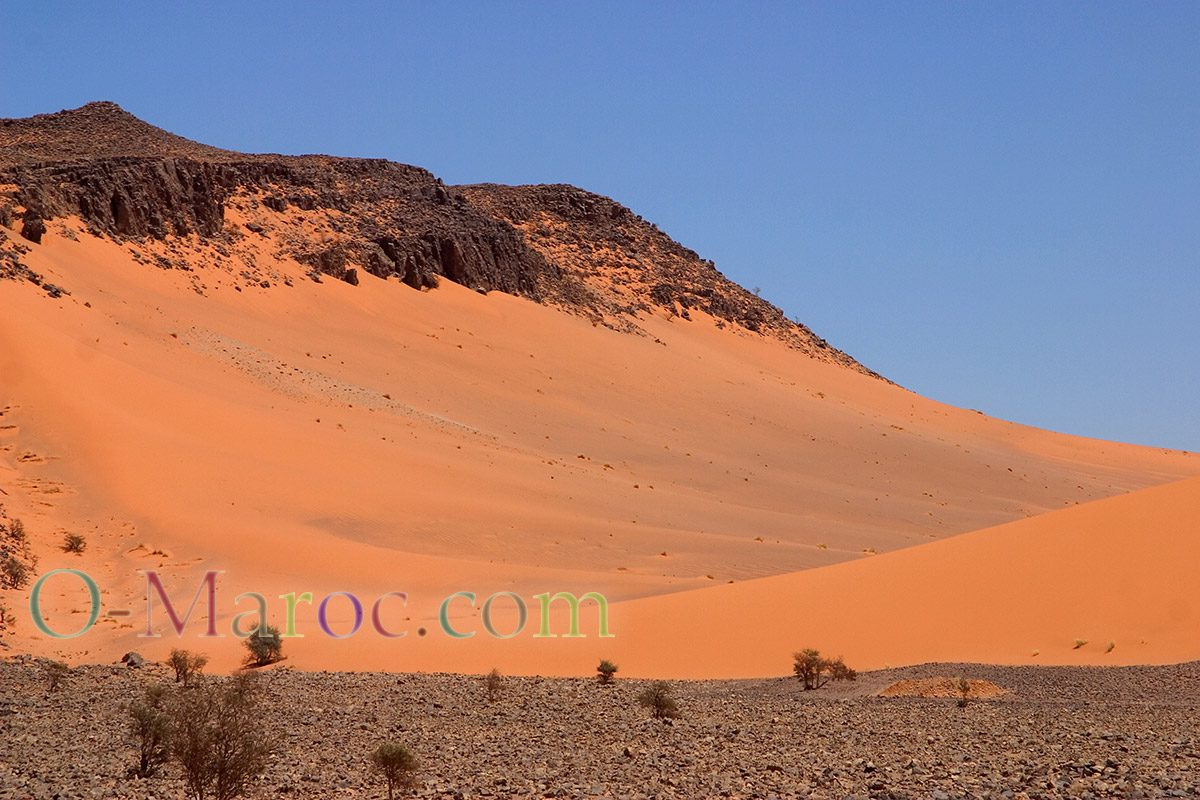
First and foremost, there is “my own” Hamada of the Drâa that surrounds us, and in particular the natural oasis of Serdrar and the dunes of Foum Tizza. Then, between Tazzarine and Merzouga, there is the dry riverbed of the Gheris, a sandy track that winds its way through thick acacia bushes, like a labyrinth. And finally, there is the majestic Djebel Zireg, an enormous, elongated mass of black schist, three-quarters of which is covered in deep orange sand. The contrast in colours is striking; one feels very small in the face of this mass, filled with awe…
Every year, I am lucky enough to discover new places and to share them with those who can devote time to the desert.
Practical tips for travelling in the desert
The departure of the excursions
From Marrakech, you need to allow four days to really get out into the desert, and that’s the bare minimum. Any less than that, and you’ll be spending most of the time on the road just to spend two or three hours in the dunes.It’s best to avoid the summer months, unless you particularly enjoy the heat. It may seem obvious, but it gets very hot in the desert during the summer. So – especially if you’re travelling with children – make sure you take plenty of water with you, and plan short trips.
The toiletries bag
It should include high-factor sun cream – which isn’t easy to find in Morocco – as well as moisturiser for the lips, hands and feet, and possibly for the hair too.
As for clothing, bring light, covering items (you don’t get a tan in the desert… you protect yourself), and for the evening, a warm jumper and a pair of socks, as it gets cold after sunset, especially compared to the heat of the day.
When it comes to footwear, I prefer to avoid flip-flops and other very open sandals, except when I’m in the dunes, of course. But elsewhere, the ground is full of small stones and thorns – it’s prickly – so you need to protect your feet. In the evening, however, it’s a real treat to slip into a pair of comfortable slippers!
Sunglasses and a cheche
As I have very sensitive eyes, I always take two pairs of sunglasses with me, just in case.
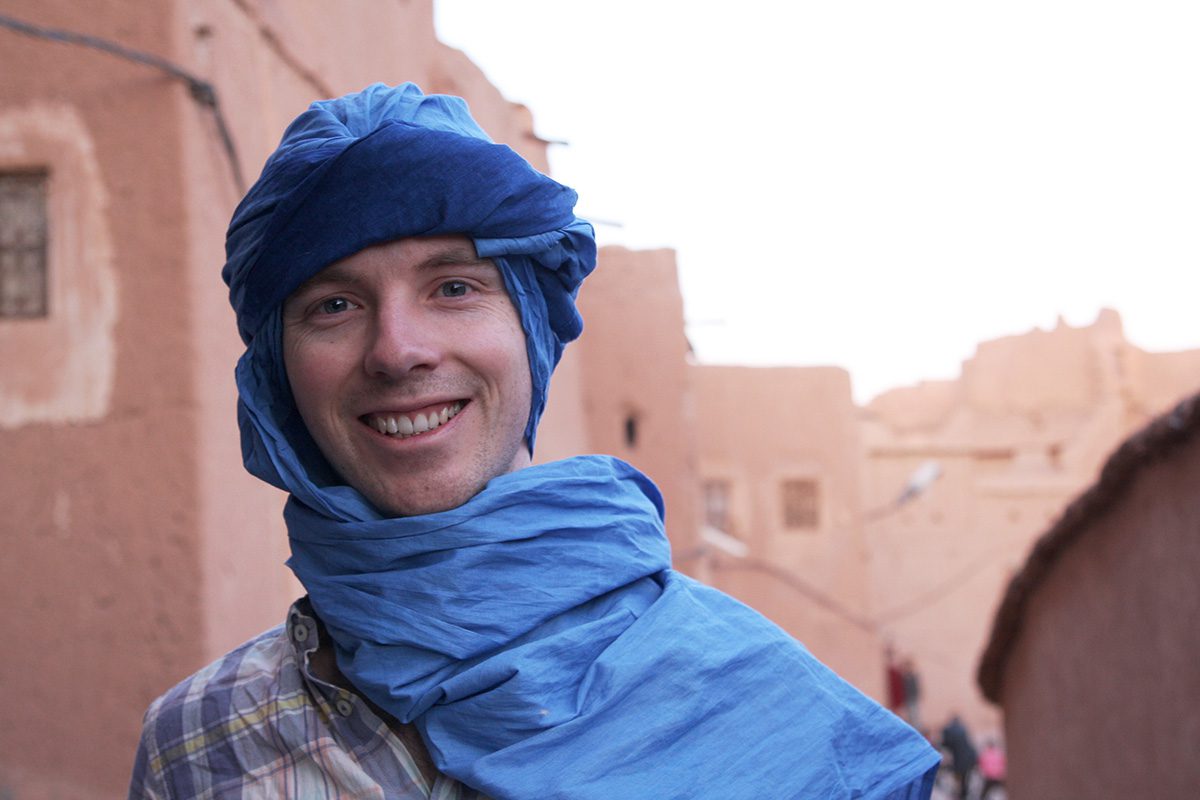
Finally, the essential accessory is the cheche. This long, lightweight cotton scarf will protect you from everything, starting with dust. Moistened with water, it pleasantly cools your head and neck. Worn Tuareg-style, it provides effective protection against sandstorms. Draped over your face, it keeps the flies away during a nap (there’s ‘nothing’ in the desert, but there are always flies). And in the evening, it makes a cushion or a headrest.
This text is a reprint of a column published on L’Internaute in April 2012, which was removed by the website a year later.
 A typo or syntax error? You can select the text and hit Ctrl+Enter to send us a message. Thank you! If this post interested you, maybe you can also leave a comment. We'd love to exchange with you !