Winter began today. In recent years, the cold weather has been arriving later and later, and winter has been getting less and less cold, but nevertheless, in the mountainous country of Morocco, some regions will still experience heavy snowfall. And the ‘Extreme Weather’ page on Facebook reports these snowy events regularly.
The Forty Lyali
The ‘Lyali’ is one of the coldest periods of the year in Morocco, beginning on 22 December each year and ending on 31 January. Some even call it the ‘winter quarantine’ because these forty days are characterised by freezing cold weather coinciding with snowfall.
Moroccans divide cold nights into two periods: the first lasts 20 days and is called the ‘white cold nights’ (الليالي البيض ), when the cold is intense and storms are frequent. The second period is called the ‘black cold nights’ ( الليالي السود ), which are even colder and wetter than the first.

White nights are so called because the moonlight and its intense light when it is full give them great brightness, as well as the lack of clouds. The cold is severe at night, but it is still relatively warm during the day.
On the contrary, dark nights have many more clouds, and night-time temperatures are milder.
Finally, a period from 14 to 19 February, the ‘war of the goat’ (Guerret al Anz: ڤرّة العنز ): because goats are slender animals and are greatly affected by the cold, farmers and breeders lose many goats during this particular period and prefer not to let them out. But not all of them…

Winter in the mountains, winter in the desert or on the coast
It is well known that ‘Morocco is a cold country where the sun is hot,’ said Lyautey.
Winter in the mountains
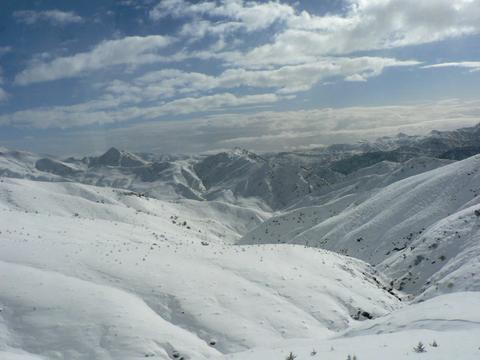
This is, of course, where it is most severe. The absolute record low temperature was recorded in the Ifrane region on 17 January 1981, with a temperature of -14.5°C.

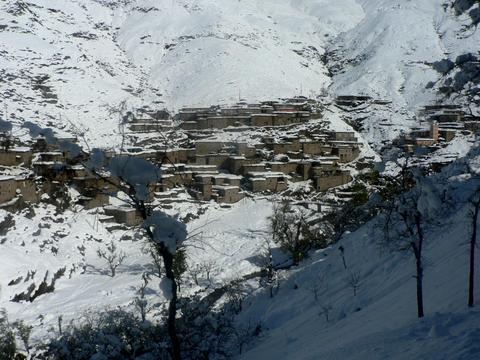


I remember the winter of my wedding in Ouarzazate where it froze at night, but where we had breakfast coffee on the terrace, wearing light jumpers (putting our warm clothes, puffer jackets and coats back on at the end of the afternoon).
Despite global warming, every year sees heavy snowfall in the Moroccan mountains, which is nevertheless welcome because, despite the harsh cold, the melting snow will help to replenish groundwater reserves and dams. This year, in some places, more than a metre of snow fell in a single day!
Winter in the desert
The nights are cold, very cold, and sometimes the days are too. I remember seeing snowflakes falling in M’hamid one year. And two years ago, beautiful layers of snow covered the dunes at Aïn Sefra, about a hundred kilometres from Figuig, in Algeria.

The dry air makes the desert cold quite bearable. It’s a lovely destination for a New Year's Eve in the dunes … as long as you have enough to cover up with!
The big advantage of winter is the absence of biting and stinging creatures. There is no longer any need to fear scorpion or snake bites, as these reptiles are all hibernating.
Winter on the Moroccan coast
In the north, winter will be cold and wet. Rainfall has been much less abundant in recent years due to global warming. Despite this, houses in Tangier, Essaouira and Azemmour are very damp.

In Casablanca or Rabat, it depends on the neighbourhood. And although heating is no longer really necessary, for just a week or two, the large tiled floors give off a distinct ‘coolness’.
The beaches are deserted. A great time to enjoy them, far from the summer crowds.

As soon as you head further south, to Agadir, Dakhla, or even Laayoune, winter disappears. It’s a great time to visit Agadir, without the fog or the summer heat, and just a few kilometres away, Taghazout is a popular destination for motorhome owners who want to warm their bones in the sun for the winter.
Keeping warm in winter
Moroccan homes (and shops and restaurants) do not have central heating. So it is customary to enter fully clothed and not take off your coat… except when it is mandatory, for example for a treatment at a beauty salon or doctor’s office. How do people keep warm in winter in Morocco?
Traditional houses: a form of natural air conditioning
Earth houses benefit from the thermal inertia of this material. Built with thick walls and few or no openings to the outside, they mitigate both cold and heat. However, in the depths of winter, this is not enough, and other solutions are needed, when they can be afforded.
As for stone buildings, while they are perfect for summer, in winter they accumulate cold. (This is what the first settlers in Canada discovered, whose stone houses cracked under the effect of the cold).
Heating with wood
A roaring fire in the fireplace is possible in riads or guest houses. And in houses in the mountains. But wood remains a rare and precious resource. There are also charcoal-fuelled braziers, which spread their heat in a confined space.
Heating with electricity
Electric space heaters and oil-filled radiators are the stars of winter promotions. While they have the advantage of heating quickly and efficiently, they have the disadvantage of skyrocketing your electricity bill if you use them without restraint. You will quickly move up to band 5 – comfort comes at a price!
Heating with a reversible air conditioner
Less expensive than auxiliary heaters – though far from free – reversible air conditioning allows you to heat a room with gentle warmth. It has become popular in Morocco, with prices ranging from 5,000 to 14,000 dirhams for a unit, including installation.
Heating with gas

Gas heating remains the most economical solution. It is portable and can be moved from room to room. One gas cylinder will last one to two weeks. The appliance itself costs between 1,000 and 2,000 dirhams.
It has three disadvantages:
- It releases moisture;
- it releases carbon monoxide and carbon dioxide, which can cause problems for people with asthma and, in general, for people with lung irritation or coughs;
- and therefore, for safety reasons, it is mandatory to turn it off when you are not in the room or when you are asleep… which promises a ‘refreshing’ wake-up call .
This is also the solution used by restaurants to heat their terraces and dining rooms.
Not getting heated up at all
This is the solution adopted by many Moroccans. Woolen djellabas, multiple layers of clothing, glasses of hot tea and piles of blankets to snuggle under in the living room and bedroom help people survive the cold. In living rooms, you often see stacks of these blankets, ready to be rolled out to cover guests!

A short winter
Winter does not last very long in Morocco. By the end of January, the almond trees are already blossoming in the Atlas Mountains. And by the end of March, it is already warm!

Winter celebrations
Some traditional festivals
Most traditional Moroccan festivals do not have a fixed date, as they follow the Islamic calendar.
This is not the case with Yennayer, the Amazigh New Year, which is celebrated on 14 January, a few days after the ‘Western’ New Year. In large cities and tourist centres, there are also celebrations for Christmas.
Festivals
The winter season is also lacking in festivals. The latest ones, such as the Marrakech Film Festival, take place in late autumn.
The Tafraout Almond Festival takes place in early March.
And that’s it!
Winter sporting events
Every year, the Marrakech International Marathon brings runners together in January.
And this year, the African Cup of Nations kicks off on the first day of winter. It will be a great celebration, especially if Morocco wins!
 A typo or syntax error? You can select the text and hit Ctrl+Enter to send us a message. Thank you! If this post interested you, maybe you can also leave a comment. We'd love to exchange with you !