
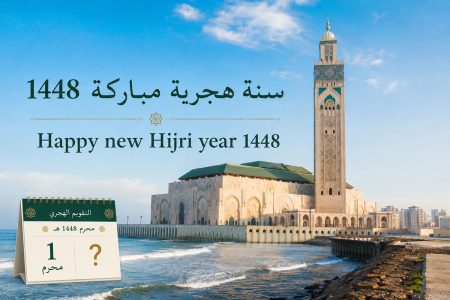
The start of the Islamic year depends on the sighting of the crescent moon rather than on astronomical calculations. This explains the 24-hour delay.
How can you live in Morocco without trying to understand one of the essential aspects of Moroccan culture and daily life: religion and the relationship with religion?
It’s extremely difficult to talk about these subjects, because even the word “Islam” doesn’t mean the same thing to a Muslim as it does to a “secular Westerner” (the number of inverted commas in this text shows how hard I’m trying to be clear).
There is a difference between Islam, as a religion, or Muslim (a follower of this religion) and Islamic, which means “connected with the Muslim religion, or with people or countries who follow it”.
For a Gaouri (foreigner), the adjective ‘Muslim‘ qualifies what relates to religion, Islam, the adjective ‘Islamic‘ what relates to civilisation and culture. Of course, the two are
The start of the Islamic year depends on the sighting of the crescent moon rather than on astronomical calculations. This explains the 24-hour delay.
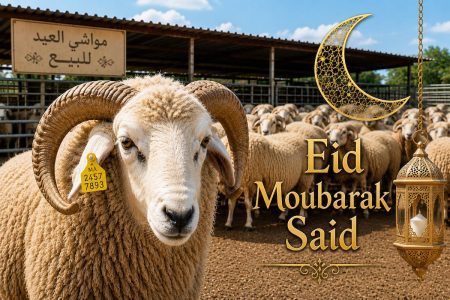
This year, Moroccans are once again carrying out the ritual slaughter of sheep for Eid. But at what cost? Middlemen are making a killing at the expense of consumers and pocketing billions in government subsidies.

The advent of modernity does not call into question the primacy of observation in determining feast days and prayer times.

Zakat, or obligatory almsgiving, is the third pillar of Islam. We'll explain (almost) everything you need to know about this charity obligation, which all Muslims are obliged to give once a year.

In Islam, Bayt and Dar refer to important concepts: Ahl al Bayt, the house of the Prophet, and Dar Al Islam as opposed to Dar Al Harb.
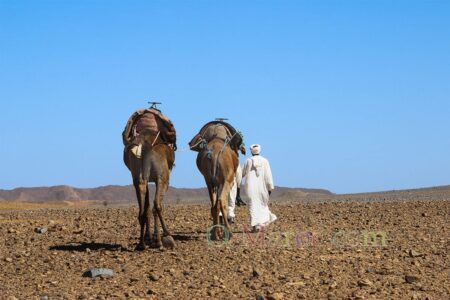
It's almost the end of Ramadan, and I remember my very first Ramadan, in 2004, full of discoveries.
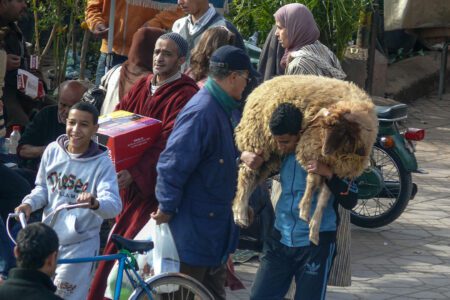
All the answers about Eid el Kebir, why it's celebrated, how it's done, what the food is like, who has to make the sacrifice...
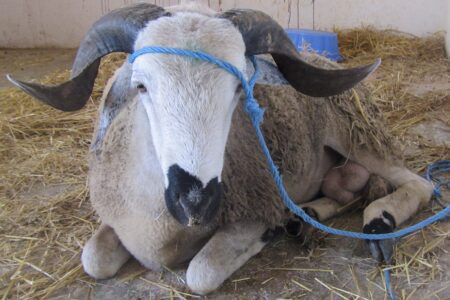
Far fewer sheep are being sold for Eid al-Adha 2022, reflecting the crisis and the difficulties that have led to a doubling of sheep prices.
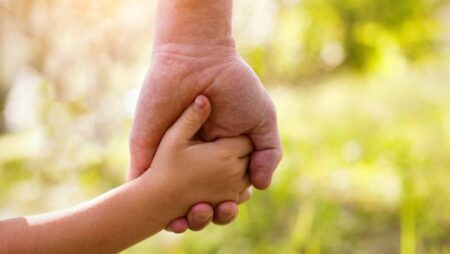
Islam has abrogated adoption as it was practised "before", replacing it with another legal regime. The implications, the importance of filiation are part of the DNA of Moroccans, a concept to be understood to avoid misunderstandings.

There is no racism in Islam, and proof is given of Bilal, the first muezzin, a former black slave. The reality is far less glorious, even in the heart of a melting pot country like Morocco
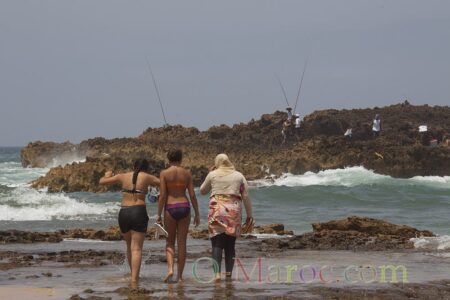
Every time we talk to expats about Ramadan, the accusation of hypocrisy comes up. It pisses me off, because it shows how little we understand in Morocco
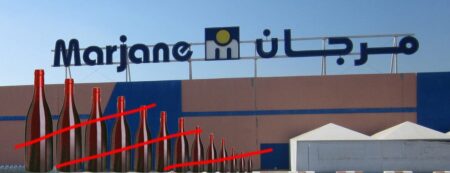
Stop, or not? Marjane’s back-and-forth on the sale of alcohol. In the end… she stopped
Marjane has not stopped selling alcohol; it has only done so in 16 out of 32 hypermarkets.

Ramadan is the most important event of the year. For one month, the way the country operates changes completely. Timetable changes, F'tour, stress, here are just a few elements
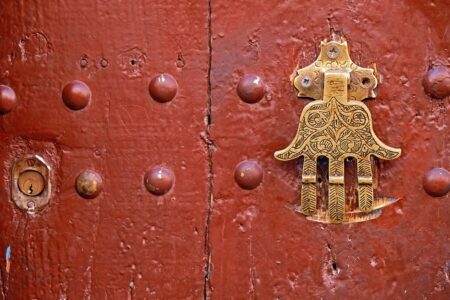
The Hamsa is a universal lucky charm around the Mediterranean. Muslims call it "Fatima's Hand", after the Prophet's daughter. It is everywhere in Morocco.
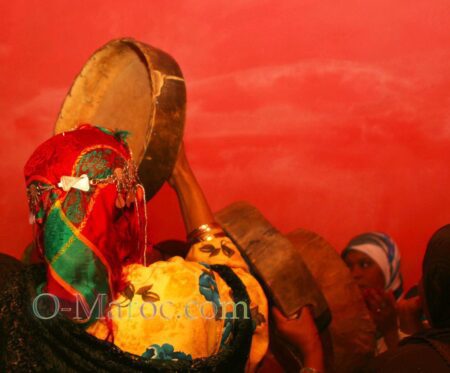
Islam separates men and women, but does not demand that women be treated any less well. Yet women's celebrations are not as rich as men's.

