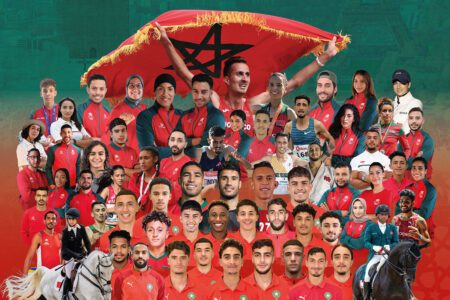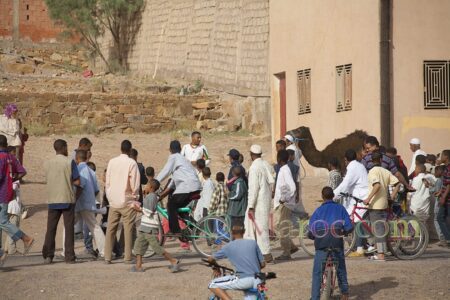
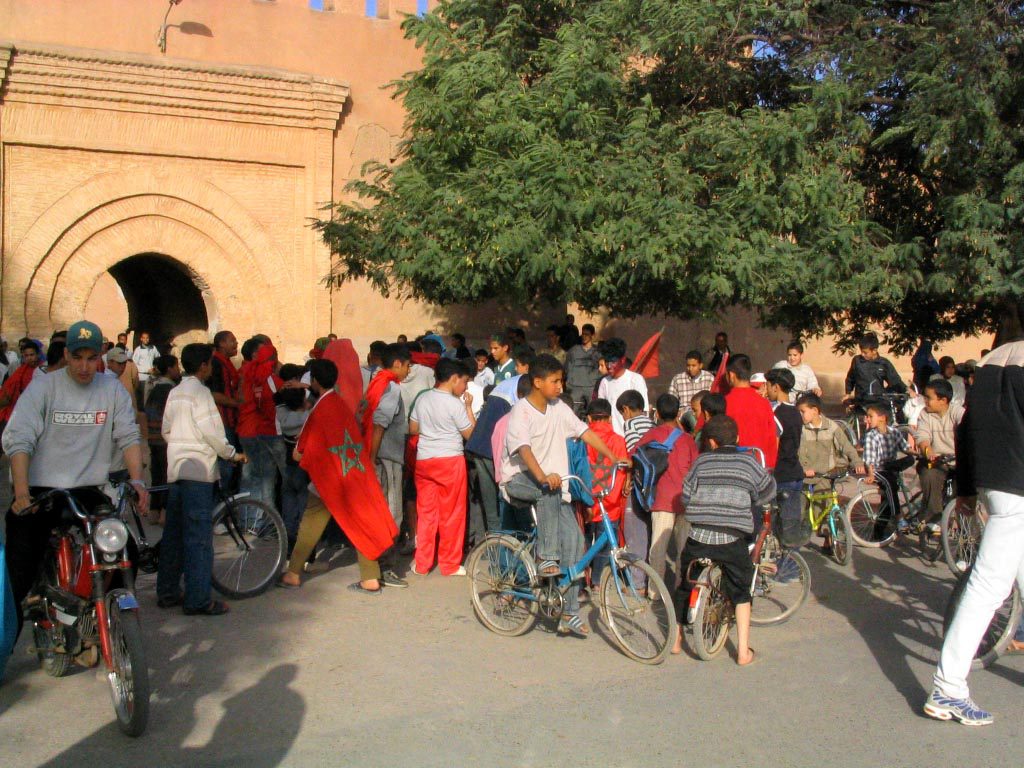
The first time I came to Morocco was in February 2004. That was the year when, after a 16-year wait, Morocco reached the semi-finals of the Africa Cup of Nations, and then the final. Although I’m not really a football fan, I discovered the enthusiasm of an entire country rallying behind its team.
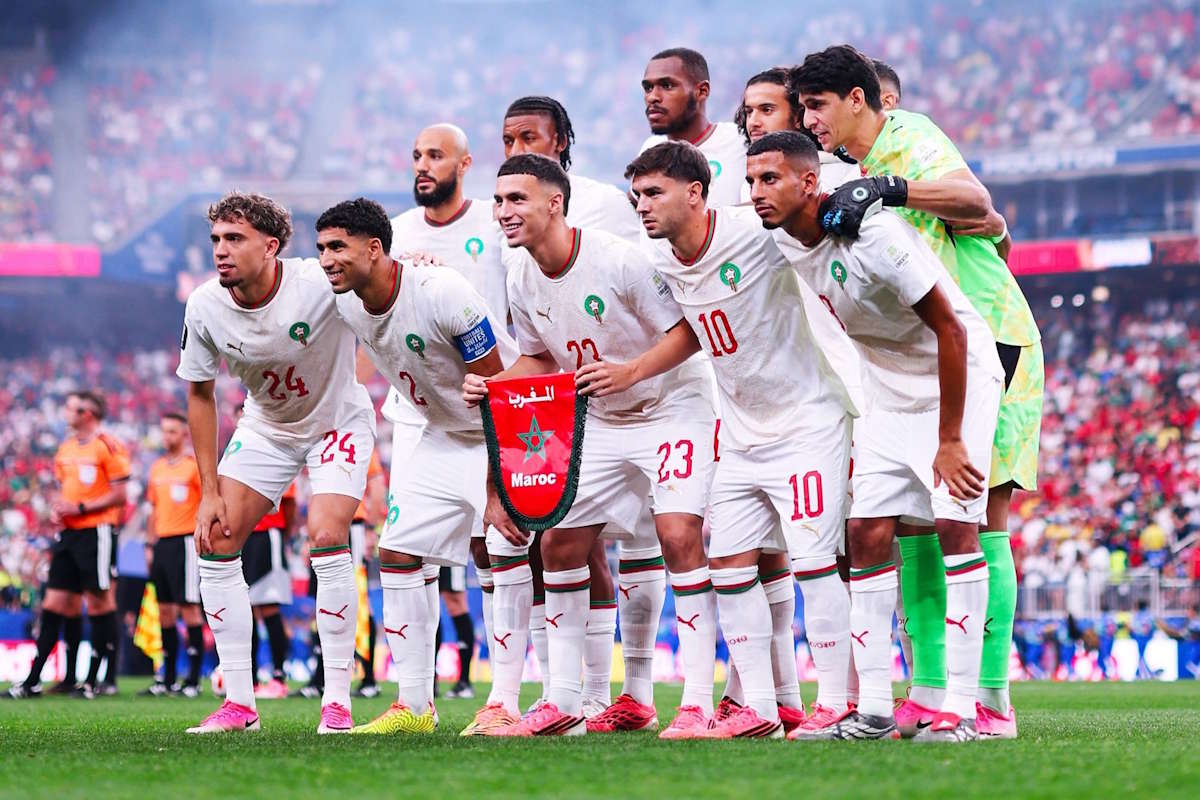
And this year, the 2022 semi-final is set to be replayed between France and Morocco, but this time in the quarter-finals. Tomorrow, 9 July, two excellent teams will face off at Gillette Stadium at 10.00 pm Moroccan time.
As with previous matches, I’ll be keeping track of the score by the noise on the streets. As with previous matches, if Morocco wins, the streets will be a bit quiet the next morning, and those who didn’t watch the match live will be glued to their phones to rewatch the highlights.
The Moroccan team’s remarkable progress
No one would have predicted this ten years ago. Morocco’s run to the semi-finals in 2022 took everyone by surprise. And today, this ranking seems quite normal. But we must still remember that, throughout its history, Morocco has often been the ‘first African nation’ to score.
From humble beginnings to early successes (1922–1986)
The Moroccan national team, nicknamed the Atlas Lions, was founded as early as 1922 during the colonial era under the Moroccan Football League (LMFA), before playing its first official match as an independent nation on 19 October 1957 against Iraq.
Following its affiliation with FIFA in 1959 and CAF in 1966, Morocco went on to achieve a series of historic qualification successes: its first World Cup appearance in 1970 (where it secured the first African point in the competition’s history), followed by continental glory in 1976 when it won the Africa Cup of Nations in Ethiopia. The high point of this first golden era came in 1986 in Mexico, where Morocco became the first African nation to progress beyond the group stage of a World Cup, notably knocking out Portugal before narrowly losing 0–1 to Germany in the round of 16.
Renaissance and global heyday (2004–2025)
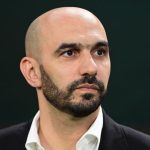
After a long dry spell marked by failures in qualifying campaigns and early exits, the national team reached a decisive turning point with the arrival of Hervé Renard in 2016, who led Morocco to qualify for the 2018 World Cup after a twenty-year absence. But it was under the management of Walid Regragui, from 2022 onwards, that the Atlas Lions made history: at the 2022 World Cup in Qatar, Morocco achieved a historic run by becoming the first African and Arab team to reach the semi-finals, eventually finishing in fourth place. Today, Mohamed Ouahbi has taken the reins of the national team.


This performance is part of a long-term trend driven by a golden generation (Hakimi, Ziyech, Amrabat, Bounou) and an increasingly influential Moroccan diaspora in Europe. In 2025, Morocco even set a world record with 19 consecutive wins in international matches and won the Africa Cup of Nations on home soil, cementing its status as a major force in African and world football.




In 2025, Morocco racked up a string of titles:
- Winners of the Africa Cup of Nations
- Winners of the CHAN
- Winners of the Arab Cup
- U20 World Champions
It just goes to show that where there’s a will… there’s a way!
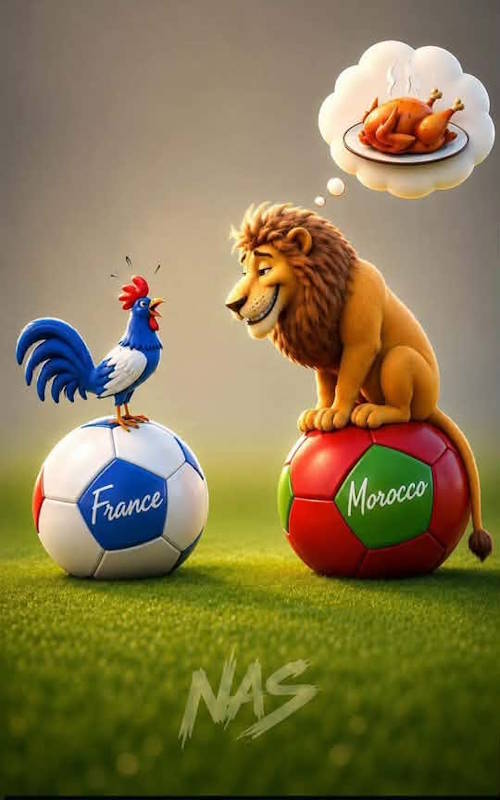
So it will be France v Morocco in the quarter-finals – a fixture that naturally brings to mind the 2022 World Cup semi-final. The Moroccans are seriously hoping to beat France, and comments highlighting the importance of chicken in Moroccan cuisine are popping up everywhere.
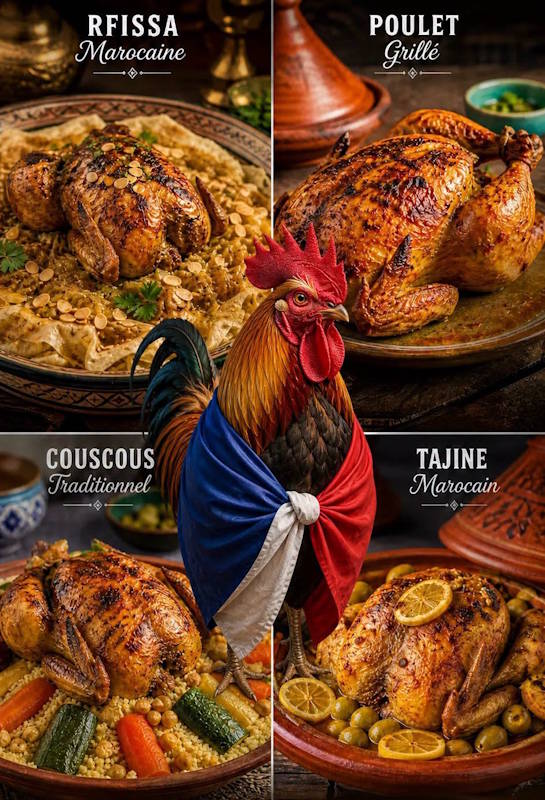
In any case, the French do not underestimate Morocco.
A highly politicised World Cup
Many people feel that this 2022 World Cup has become politicised, and I’ve seen some rather unpleasant hostility towards Morocco on social media. Not all of Africa was behind Morocco – far from it. Which is hardly surprising: at the start of the tournament there were 10 African nations, 8 in the round of 32, but only 2 in the quarter-finals.
The injury of the Africa Cup of Nations
The Africa Cup of Nations final did not go very well, to say the least. The Senegalese team walked off the pitch for 15 minutes, then returned without the referee having penalised them for their departure by declaring – as he should have done – a forfeit. This was followed by a completely botched penalty shoot-out that handed victory to Senegal. There were accusations that Moroccan players had stolen towels from behind the Senegalese goal. And there were serious disturbances caused by Senegalese supporters in the stands. Fifteen stewards ended up in hospital following the disturbances, one of whom was in a serious condition.
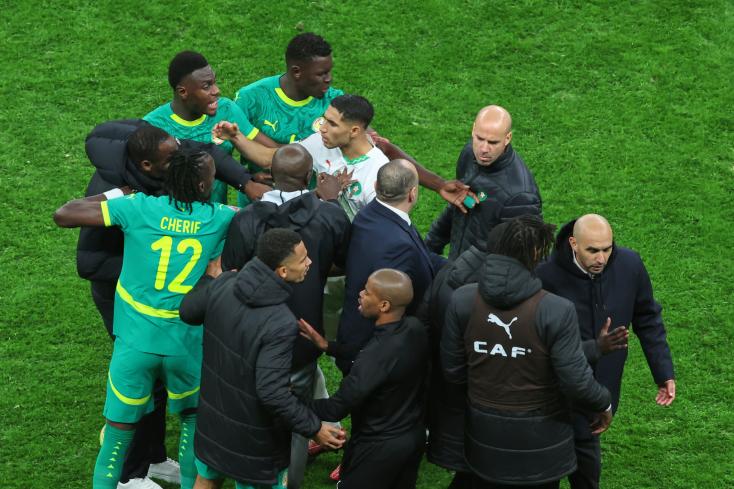
The Moroccan Football Federation then lodged a complaint with CAF and FIFA. And more than a hundred Senegalese supporters were imprisoned. On 17 March 2026, CAF overturned Senegal’s victory in favour of Morocco. Morocco immediately lodged an appeal with the Court of Arbitration for Sport. This appeal did not have suspensive effect, and its outcome would not be known until after the World Cup.
Both countries therefore each claim to have won the Africa Cup of Nations. And they have been trading insults on social media. The Moroccans really haven’t taken it well. One woman explained that she had sacked her Senegalese cleaner “in retaliation”, whilst Senegalese people on Facebook have reported incidents of assault.
Although the atmosphere has gradually eased following the royal pardon granted to the Senegalese and even some laudatory articles in the Senegalese press, something seems to have been permanently damaged.
Algerian provocations
 For the past few years, relations between Morocco and Algeria have been at a “deadlock”. What were once political stances that had no impact on relations between individuals have gradually changed. On social media, Algerian accounts are spreading fake news, all of which is, of course, highly critical of Morocco. And the Moroccans are getting worked up and hurling insults back at them.
This escalated during the World Cup, with these posts highlighting the issue surrounding the Africa Cup of Nations and accusing the Moroccans of being poor footballers incapable of winning a cup ‘fairly’.
The American organisation and the peace prize awarded to Trump
Far from these issues, which are ultimately very much a Moroccan affair, the organisation of the World Cup itself has attracted a great deal of criticism: a visa refusal for a referee, visa problems for many supporters, and conflicts from the Middle East spilling over into the stadium. And whilst Trump did not ban Iranians from taking part, he only allowed them to enter the US on the day of the match.
Finally, the highly bizarre “Peace Prize” awarded to Trump by Gianni Infantino (does he think he’s the Nobel Committee?) raised plenty of eyebrows and sparked suspicions of corruption.
The overturning of the red card
These suspicions were fuelled by the decision to overturn the red card shown to Folarin Balogun ahead of the USA v Belgium match.
And this comment
Despite the cancellation, the United States still suffered a heavy defeat against Belgium, losing 4–1! This led Trump to claim that the match had been fixed!
So, on Thursday, Dima Maghrib
Anyway… Thursday’s match is a big one, between two great teams. But between my country of origin and my adopted country, I’ve chosen… Dima Maghrib once again!
 A typo or syntax error? You can select the text and hit Ctrl+Enter to send us a message. Thank you! If this post interested you, maybe you can also leave a comment. We'd love to exchange with you !