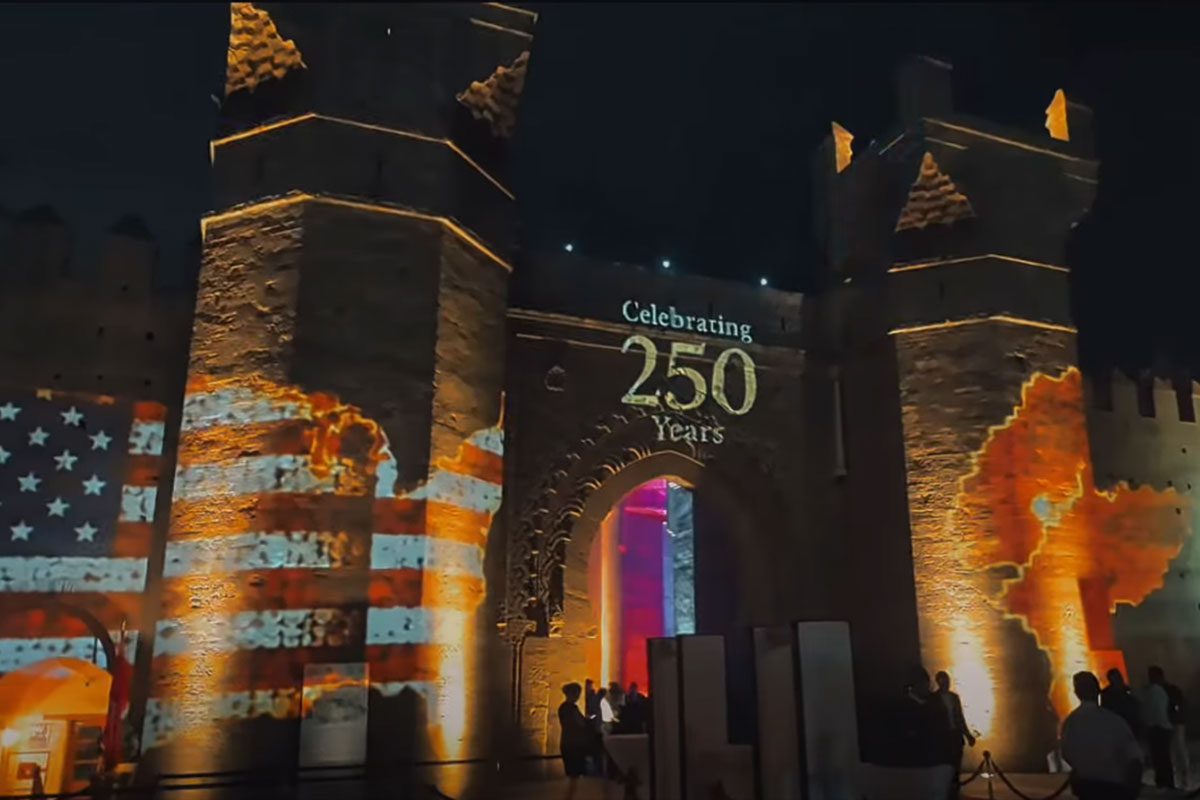
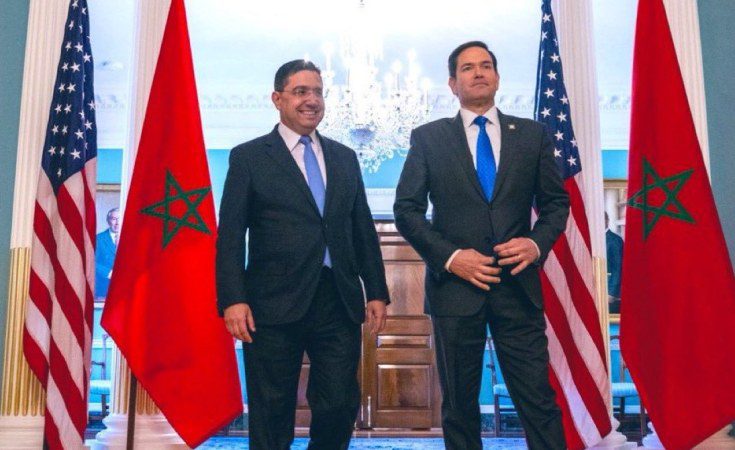
The photograph accompanying this article was taken on 9 June 2026 at Chellah, marking, slightly ahead of schedule, the 250th anniversary of the United States and the friendship with Morocco, the first country in the world to recognise the young republic.
Here is a review of this friendship, highlighted by a few key dates.
1777: Recognition of the newly independent United States
When, on 20 December 1777, Sultan Mohammed Ben Abdallah opened his ports to American ships, guaranteeing their safety from privateers, he effectively recognised the new nation. It was the first country in the world to do so.
1786, the Treaty of Marrakesh
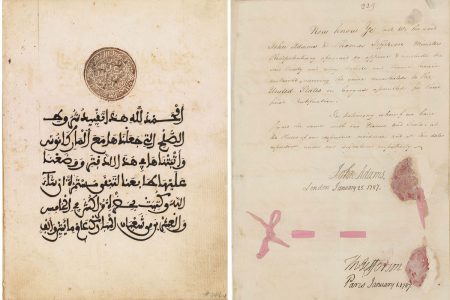
Signed in 1786, the Treaty of Marrakesh formally and diplomatically established friendly relations between the two countries. I have already discussed its contents in detail, and in particular how the Sultan had forced the hand of the United States – which, in his view, was taking too long to act – by seizing one of their ships, only to return it once the treaty had been signed. (I love that!). Here, I’d rather go into more detail about ‘what happened next’
1803: the Barbary Coast War, but a treaty was still signed
In 1801, the United States’ diplomatic efforts with the other Barbary States (Algeria, Tunisia, Libya) failed. Above all, the country used these sixteen years of respite, secured through the Treaty of Marrakesh, to build up a naval force. They refused to pay tribute to the Regency of Tripoli, an Ottoman province in the north-east of present-day Libya. In response, the Regency declared war on them.
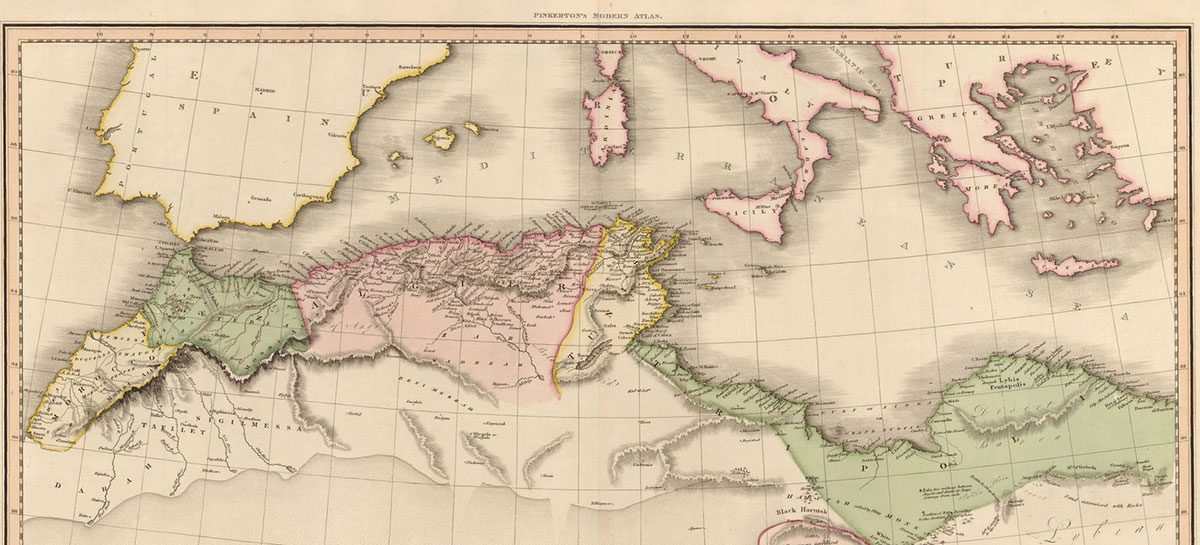
Morocco found itself torn between its treaty of friendship with the United States and its ties with the Regency. Moulay Slimane, the successor to Mohammed III, had special ties with Tripolitania; one of his wives belonged to one of the leading local families (as did his brother, Moulay Aziz). Furthermore, the drought had led to near-famine in the Tripoli region.
After overcoming numerous difficulties, Moulay Slimane managed to arrange for a Tripolitan ship flying the Moroccan flag to deliver a cargo of wheat to the city.
But then, on the pretext that the ship had called at Tunis, the Americans seized it.
To say that the Sultan is angry is an understatement. As far as he is concerned, the Treaty of Marrakesh has been breached: the ship had an American laissez-passer and was flying the Moroccan flag, so under no circumstances should it have been boarded.
He therefore denounced the treaty, expelled the American consul, and declared that the Moroccans were free to seize American ships. In 1803, the Raïs (captain) Brahim Loubaris seized the Celia, which was immediately recaptured by an American frigate, which imprisoned the Rbatis sailors.
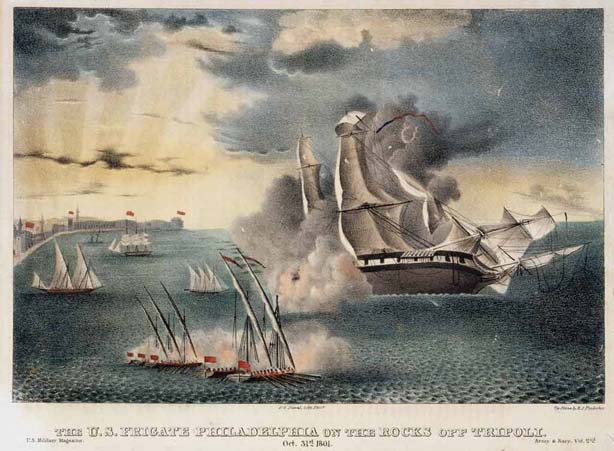
It was to require the intervention of British diplomats, who would step in to secure the release of Loubaris and his crew in exchange for the return of the American consul and the reinstatement of the Treaty of Friendship. This was carried out immediately, by means of a dahir issued that same year. In a sense, this was the reverse of the blackmail employed by Moulay Slimane when he seized the brig ‘Betsey’ to force the United States to sign the Treaty of Marrakesh!
Aware of the weakness of its navy, which consisted of old vessels in poor condition, Morocco disposed of it once and for all in 1817 by handing over its last ships to Algeria. It was not until 1960 that Morocco re-established its Royal Navy.
1821, the Legation in Tangier
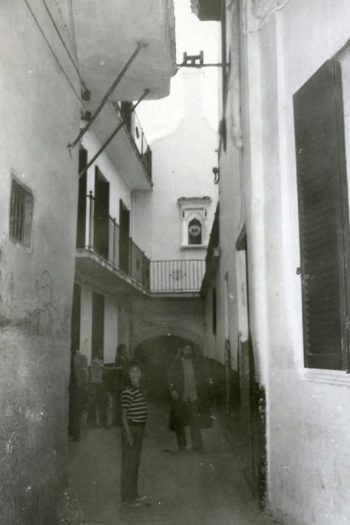
It is a three-storey riad in the old medina of Tangier, donated to the United States by Moulay Slimane in 1821. It was used as a diplomatic mission for 140 years, until a new consulate was built outside the medina in 1961. It is the building that served the longest as a US diplomatic mission. It is also the only National Historic Landmark located abroad, but it very nearly disappeared.
Partially destroyed during the 1844 bombardment of Tangier by France, its reconstruction in 1848 left little of the original building intact. The building was subsequently renovated and extended in the 19th century, notably with the construction of the Arab pavilion under the supervision of Mâalem Ahmed El Bokori, followed by the purchase of the adjacent house in 1941, which housed intelligence services.
From 1961 to 1975, it housed language classes and a Peace Corps training centre, but its condition deteriorated significantly, and the United States was considering selling the building.
In order to be able to host the celebrations for the bicentenary of the United States, the consul is appealing for volunteers and private donations.
The Tangier American Legation Museum Society (TALMS) was established to set up a museum in the building and to organise cultural, educational and research activities.
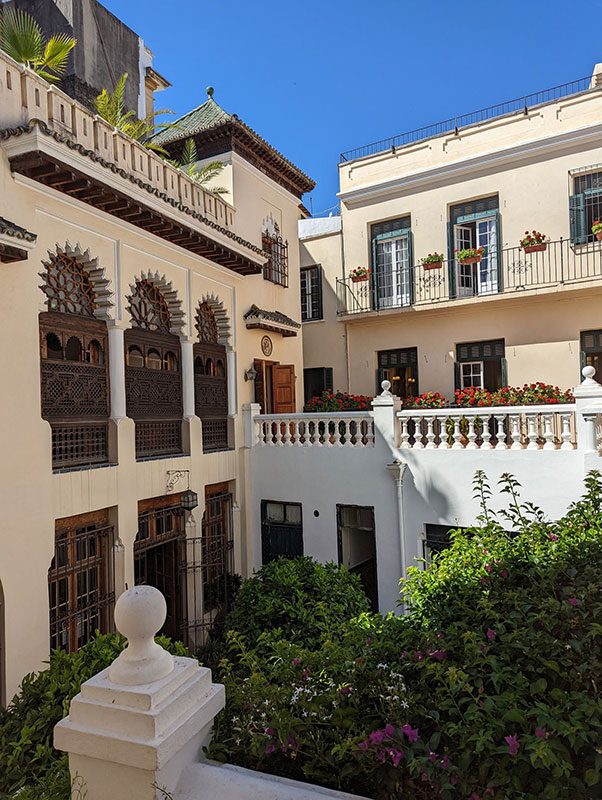
In 1981, the building was listed on the National Register of Historic Places, and in 1982 it was designated a National Historic Landmark.
Renovation and restoration work continued throughout the 1990s, during which a fifth floor was added. TALMS became TAMIL (Tangier American Legation Institute for Moroccan Studies).
1836, renewal of the treaty
In 1836, fifty years after the first Treaty of Marrakesh, a Treaty of Peace and Friendship was concluded in Meknes between the United States and Morocco, during the reign of Sultan Moulay Abderrahmane. It reproduced, word for word, the provisions of the original treaty of 1786.
In 1886, a new treaty was not signed; the situation had changed due to colonial ambitions regarding Morocco, and such a treaty might have been misinterpreted. Above all, there was no need for one, as the treaty was renewable by tacit agreement.
1862: the expulsion of the Confederates
The American Civil War has now been raging for nine months. Confederate ships are launching fierce attacks on Union merchant vessels in an attempt to cripple the Union’s trade. The Sumter is one such vessel. In February 1862, the ship was docked in Gibraltar for repairs, and two of its officers, Henry Myers and Thomas T. Tunstall, went ashore in Tangier to buy coal.
James DeLong, the US consul in Tangier, immediately had them arrested by Moroccan police and imprisoned them at the consulate.
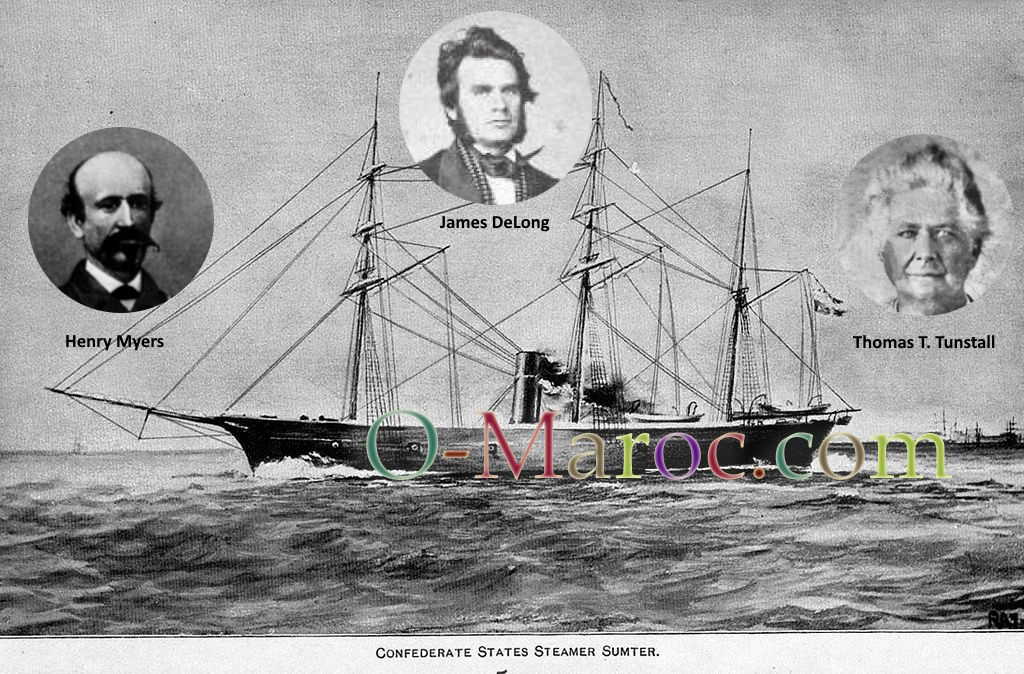
European residents in Morocco are outraged and are calling on the Sultan to maintain strict neutrality and not to take sides in a civil war. The consul, for his part, is convinced he is in the right and expresses his indignation to Mohammed Bargach, the Moroccan niyab (Minister for Foreign Affairs):
In April 1862, the two Confederate prisoners were sent to a prison in Boston. DeLong was replaced by a more diplomatic consul, who managed to secure the support of Sultan Mohammed ben Abderrahmane (Mohammed IV). On 23 September 1863, the Sultan signed a dahir prohibiting Confederate ships from entering Moroccan ports.
1865, the Treaty of Cape Spartel
Although the United States is just one of the parties to [myurl slug=”llnfl_histoire_traite_du_cap_spartel” anchort=”this multinational treaty”]—which brings together 11 countries to manage the Cape Spartel lighthouse—this is a key date for the country, as it marks the signing of its first multinational treaty. The treaty remained in force until Morocco gained independence.

1880–1912: Support for Morocco against the colonial powers
At the Madrid Conference in 1880, during the Tangier Crisis and at the Algeciras Conference in 1906, the United States firmly defended the Kingdom’s right to retain its sovereignty.
The United States was slow to recognise the Protectorate, partly out of friendship towards Morocco and partly to prevent the repeal of the privileges granted under the capitulations to its nationals and some of their Moroccan partners. President Roosevelt eventually secured the retention of these special rights.
1943: the Anfa Conference and support for independence
On the sidelines of the Anfa Conference, which brought together Franklin Roosevelt, Winston Churchill, Giraud and de Gaulle, President Roosevelt held a private meeting with Mohammed V, during which he assured him that the United States would support his quest for independence.
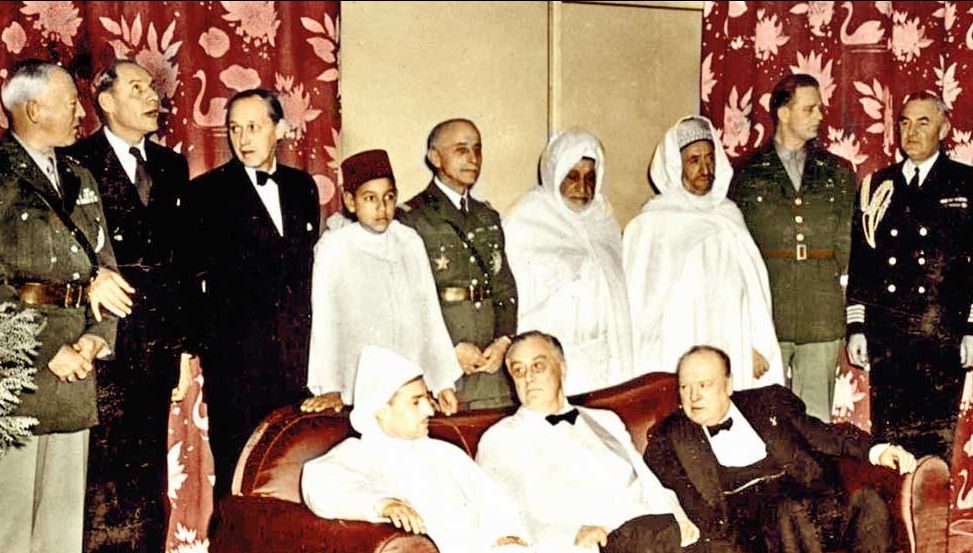
There were many American soldiers stationed in Morocco. A number of them were approached by nationalists seeking international support.
In February 1946, the nationalist Abdellatif Sbihi founded the ‘Roosevelt Club’, which brought together Moroccans, American diplomats and military officers who supported Moroccan self-determination.
1952: the International Court of Justice’s ruling on the rights of Americans in Morocco
In 1948, France imposed customs restrictions on imports, including those from the United States. The United States protested, arguing that these measures infringed upon the rights it believed it held under the treaties binding it to Morocco and that, pursuant to those treaties and the General Act of Algeciras of 1906, no Moroccan legislation or regulation could be applied to its nationals in Morocco without its prior consent.
In a ruling dated 27 August 1952, the International Court of Justice ruled in their favour.
1953: US support for Moroccan independence
The US government remained officially neutral for a time, so as not to antagonise France, its NATO ally.
But in 1953, the United States’ support was proclaimed from the floor of the UN. The US Ambassador, Henry Cadot Lodge, then stated:
The development of military and security cooperation
Subsequently, ties between the two countries were to grow stronger against the backdrop of the Cold War. The United States valued Morocco’s prime strategic location at the entrance to the Mediterranean and on the southern flank of Western Europe and NATO.
Morocco has signed agreements with the US government granting US forces rights of access and transit at Moroccan air force bases.
What is more, he signed a secret agreement authorising the United States to install powerful radio transmitters near Tangier, which were used for communication and espionage in the western Mediterranean. The CIA and the NSA were able to operate with complete freedom in Morocco in exchange for their assistance.
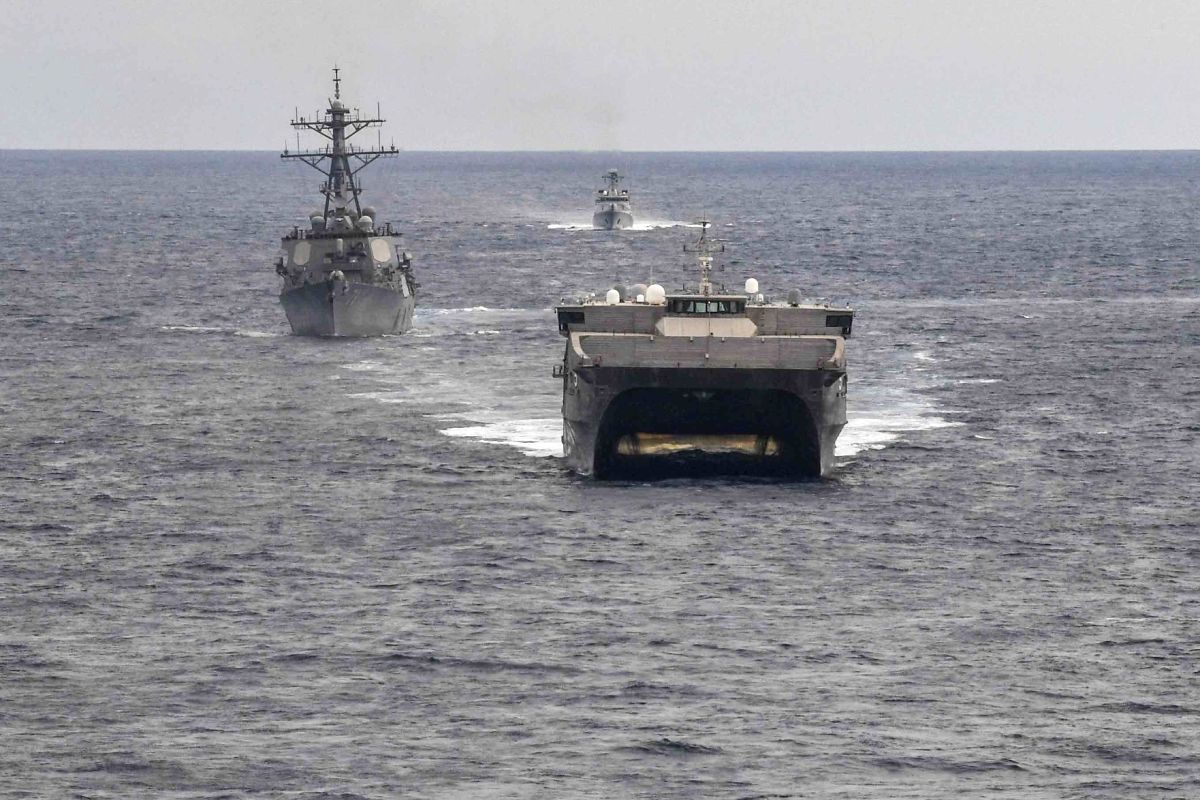
This year, the Moroccan Navy is taking part in the multinational naval exercise ‘Fleet Exercise 250’, being held at the naval base in Norfolk, in the US state of Virginia.
1972: the ‘knife-edge’ moment of the air force coup
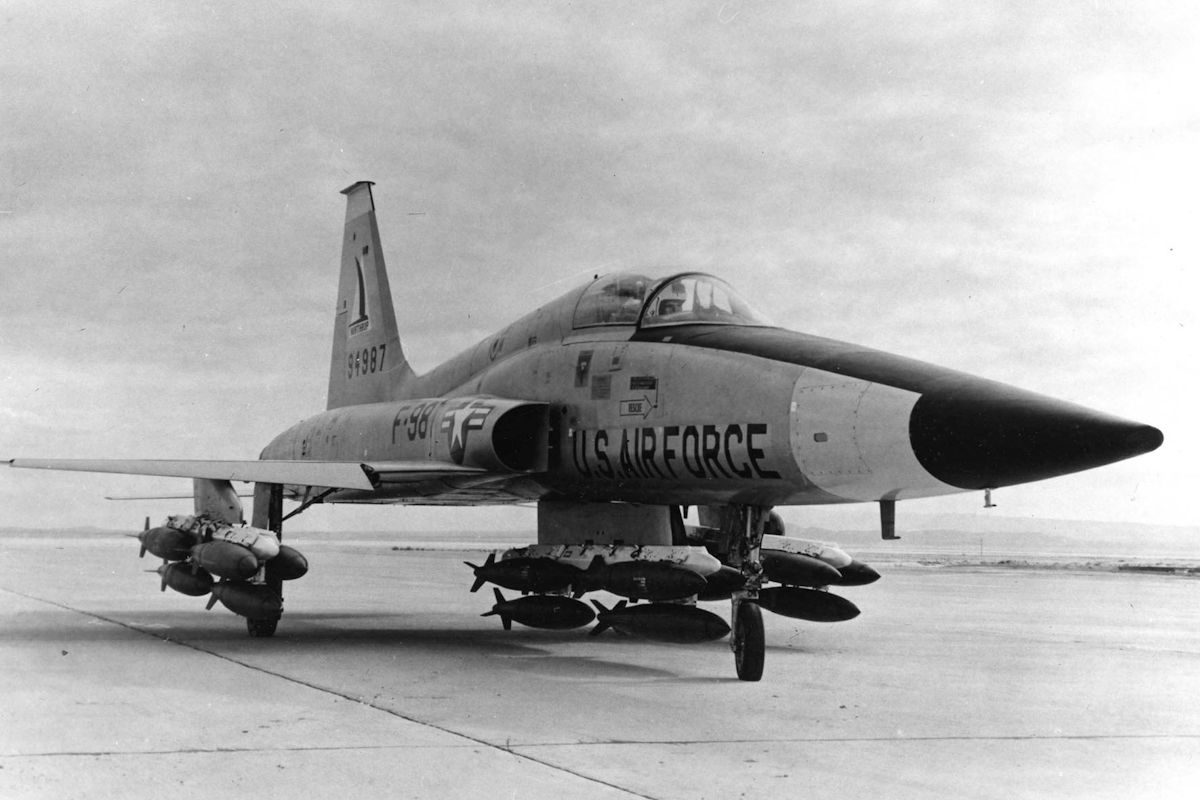
On 16 August 1972, F-5s piloted by rebel officers took off from the joint US-Moroccan air base at Kenitra to intercept and shoot down the royal Boeing carrying King Hassan II on his return from France. The CIA had shown a form of ‘consenting’ neutrality; it was aware of the plot but had not warned the monarch. This had a profound impact on Moroccan policy regarding foreign military presence, which is why there are no US bases in Morocco.
Substantial financial support
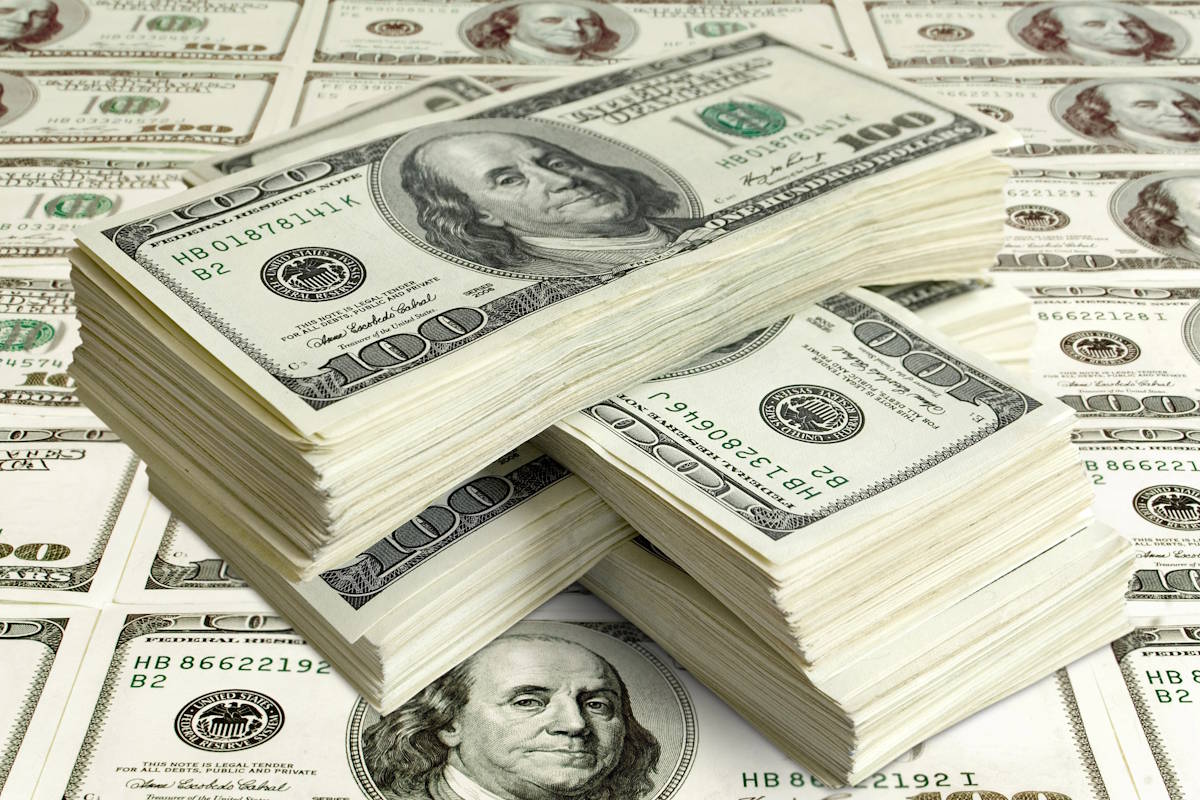
Morocco was one of the main recipients of US aid throughout the Cold War, receiving more than 400 million dollars in US aid between 1957 and 1963. In 1966, Morocco became the fifth-largest recipient of US agricultural aid; by 1990, the country had received over $1 billion in military aid and $1.3 billion in economic aid, accounting for more than a fifth of the total aid granted by the United States to all African countries during that period.
US private investment continued to grow steadily.
2001 and beyond – the fight against terrorism
Morocco was one of the first Arab and Islamic states to condemn the 11 September terrorist attacks in the United States and to express its solidarity with the American people in the fight against terrorism.
Morocco also plays a central role in the Trans-Saharan Counter-Terrorism Initiative, which aims to curb the Islamist insurgency in the Maghreb and the Sahel.
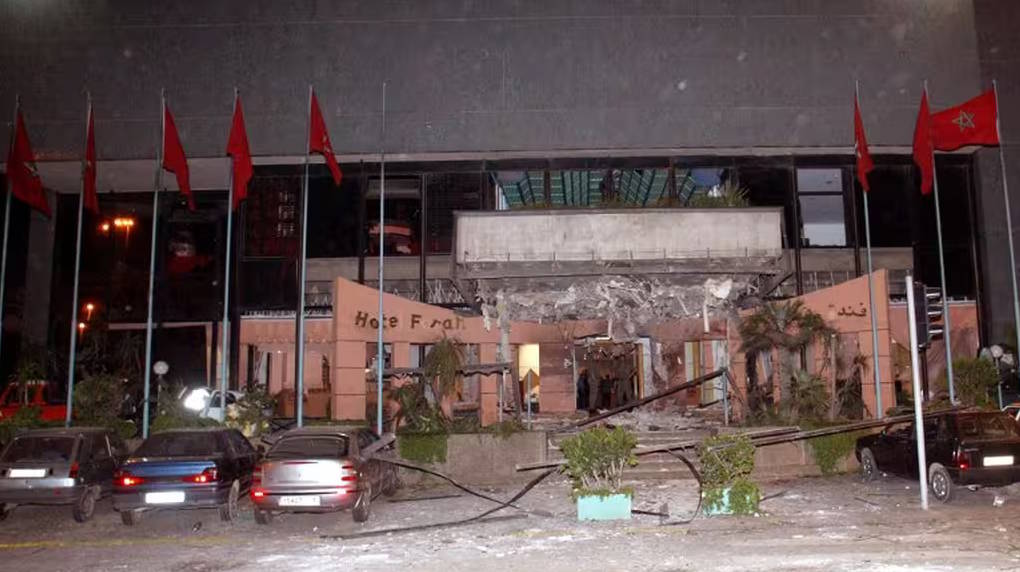
Similarly, when Casablanca was hit by terrorist attacks on 16 May 2003, the US government made the full range of resources of its armed forces and intelligence services available to Morocco. Furthermore, the CIA used Morocco as a source for recruiting Arabic-speaking spies.
2020–2026: Western Sahara
The United States has stated that it supports Morocco’s position on the Southern Provinces, in exchange for the normalisation of its relations with Israel.
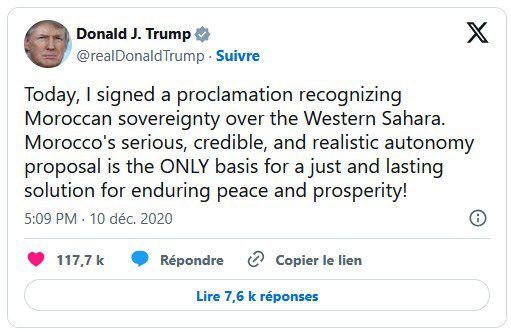
On 10 December 2020, President Trump issued a statement in which he expressed support for Morocco’s occupation of Western Sahara and the opening of a consulate in Dakhla, “to promote economic and trade opportunities”.
On 31 October 2025, at the initiative of the United States, the UN Security Council endorsed Morocco’s autonomy plan for Western Sahara, describing it as the “most viable” solution for the disputed territory.
Friendship and Realpolitik
Are relations between the United States and Morocco a matter of friendship or of Realpolitik (foreign policy based on the balance of power and national interest), as Henry Kissinger advocated? Both, in fact.
When, in 1777, Sultan Mohammed Ben Abdellah recognised the United States, against the interests of the all-powerful Britain, he demonstrated remarkable diplomatic audacity and foresight.
His successors continued this policy; even as Moulay Abderrahmane closed Morocco to trade with Europeans, he maintained privileged ties with the United States.
Of course, this friendship was fuelled by mutual benefits. Whilst it began between two countries of moderate importance, the United States gradually became one of the world’s greatest powers. Naturally, US support for Moroccan independence was as much political – driven by a desire to weaken France in the Middle East – as it was moral and ‘ethical’. Yet the relationship between the two countries remains balanced, with Morocco serving as a vital military ally, owing to its geographical position as a physical and moral bridgehead in the Middle East.
Above all, there is the friendship that individuals feel for Morocco. Whether it be the hundreds of Peace Corps volunteers who spend two years in the country, learning its language and culture; or Kathy Kriger, a former trade adviser at the US Consulate in Casablanca, who founded Rick’s Café as a tribute to the film Casablanca, whether it be the donors who have enabled the US legation in Tangier to remain open, or the several thousand Americans who have settled in Morocco, and the 150,000 Moroccans living in the United States – all of them strengthen the bonds of friendship that unite the two countries.
 A typo or syntax error? You can select the text and hit Ctrl+Enter to send us a message. Thank you! If this post interested you, maybe you can also leave a comment. We'd love to exchange with you !
 Mohammed VI