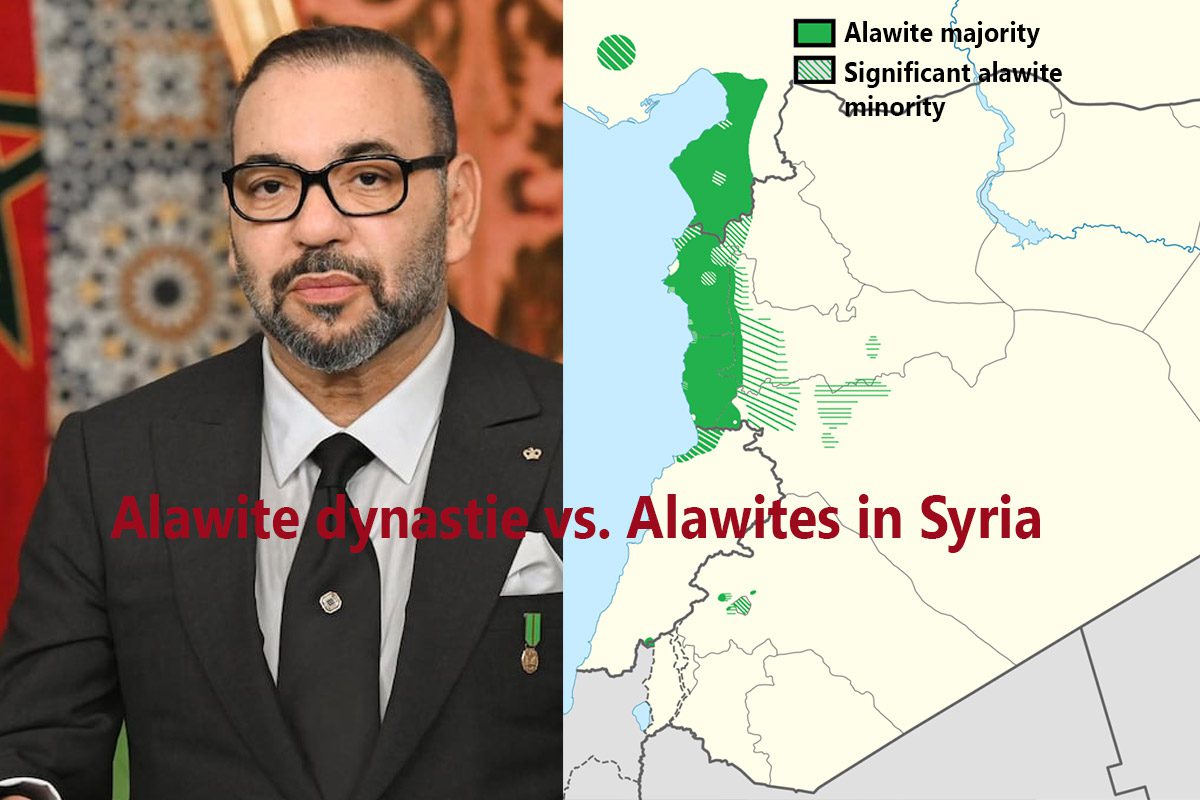
With current events in Syria and the overthrow of Bashar El Hassad, I have often seen the Alaouite dynasty and the Syrian Alaouites drawn closer together; some even claim that they (who are they?) are cousins.
This is absolutely not the case. In both cases, their names refer to Ali, the Prophet’s son-in-law, but for very different reasons.
The Alawites of Morocco are Sunnis, descendants of the Prophet
The ancestor of the Alaouite dynasty is Al-Hassan Ad-Dakhil, a descendant of the Prophet, and therefore of Ali (all the descendants of the Prophet go back to Ali, his son-in-law) and sherif (a sherif ( شريف ) or churfā in Darija is simply a descendant of the Prophet).
He had been called by the inhabitants of Tafilalt to benefit from his baraka. His presence having borne fruit, with the improvement in the date harvest, his family set up home in Sijilmassa.
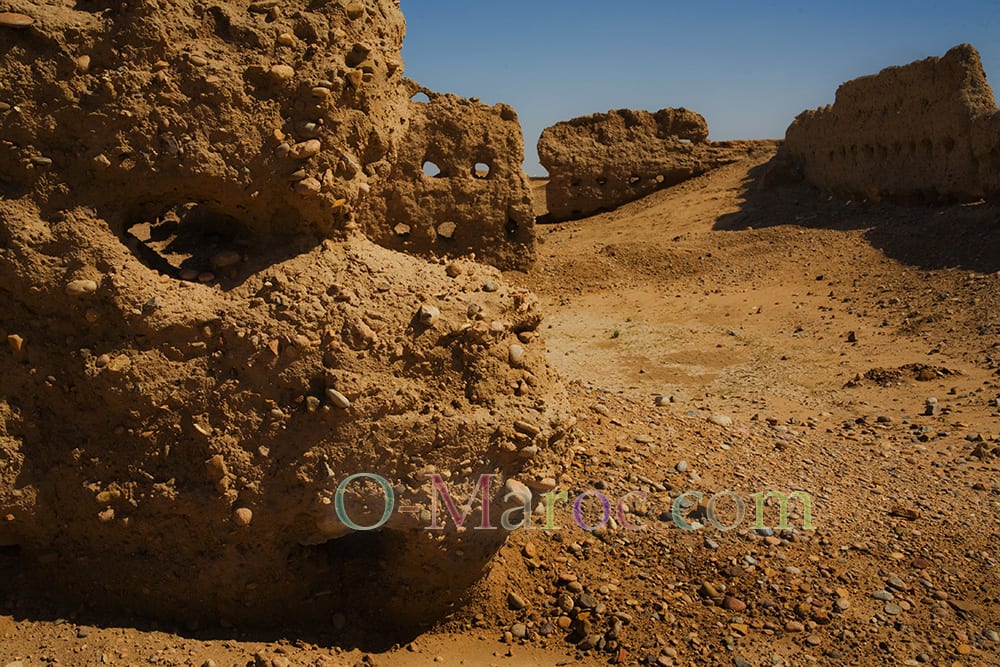
Eight generations later, in 1631, the inhabitants of Sijilmassa chose his descendant, Moulay Ali Cherif, as sultan, to fight against the short-lived sultan of Fez, Muhammad al-Hajj ad-Dila’i, who reigned for six years after the fall of the Saadians. This was the beginning of the second oldest dynasty in the world, after the Japanese emperors.
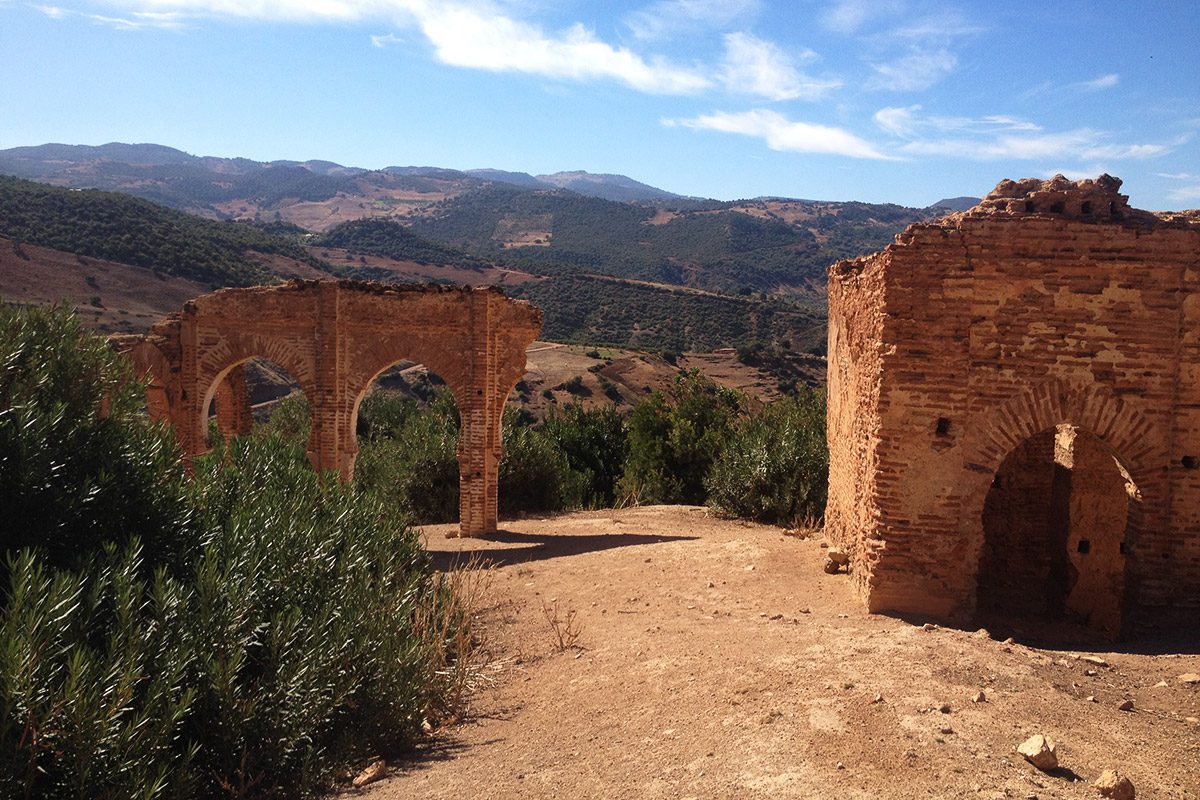
The mausoleum of Moulay Ali Cherif can still be seen in Rissani.
The Alawites of Syria are a sect of Shi’ism
The Shia, whose name comes from the Arabic shia ( شِيعَة ) (followers, by implication, of Ali in the war of succession that pitted his son Hussein against the Umayyads, Hussein being killed at the Battle of Kerbala).
The beliefs of the Alawites are anything but orthodox, even for a Shia. The sect was founded in the 9th century by Ibn Noseïr, who was excommunicated by the Shia.
In a nutshell, the Alawites believe in a trinity made up of the Meaning (mana), the Name (ism) and the Gate (Bab). Ali, Mohammed and Salman the Persian are the seventh reincarnation of this trinity.
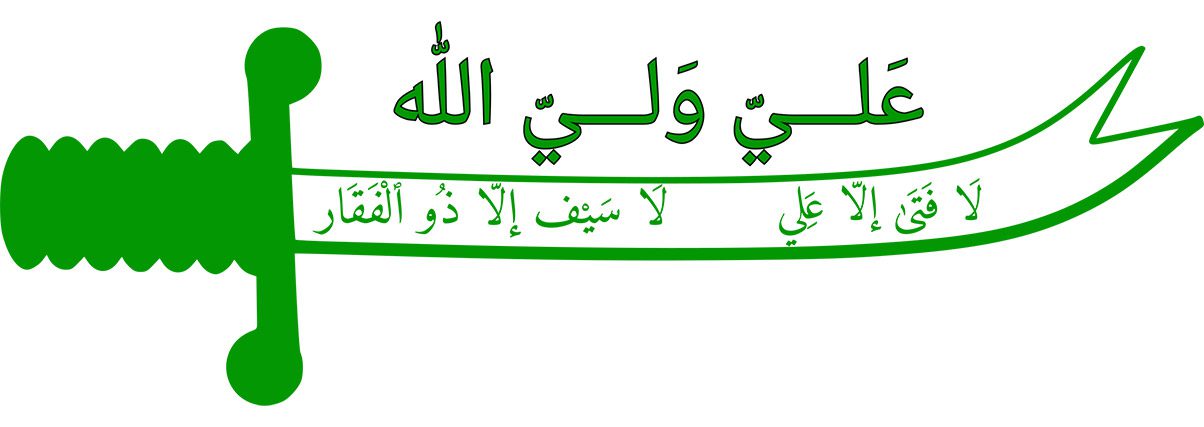
According to them, Ali (the meaning) created Mohammed (the name) who in turn created Salman the Persian (the door). Mohammed thus has a secondary role; he is merely the one who professes a limited and simplistic version of the religion aimed at the ignorant masses, the true faith being reserved only for the initiated, who have access to the Meaning (Ali). Ali is said to be the incarnation of God, and their profession of faith is ‘There is no God but Ali’.
They practise a kind of religious syncretism, with Muslim, Christian and Iranian festivals: Eid el-Fitr, for those who practise Ramadan, is practised by some, who celebrate Eid el-Fitr, Ashura, but also Christmas, Epiphany and Easter, as well as Saint Barbara’s Day (Eid il-Burbara) and the Iranian festival of Noruz.
The Alawites reject the pilgrimage to Mecca, which they regard as idolatry, and are not concerned with almsgiving: having developed ‘a symbolic interpretation of the five pillars of Islam, they dispense with complying with them in practice (ibāḥa)’. Wine is revered as a solar and divine symbol.
As with the neighbouring Druze, Alawism is a secret religion, which is transmitted by initiation and to which one does not convert. You have to have an Alawite father and mother to be one yourself.
From Nosayris to Alawites
With beliefs like these, they were mistreated under the Mamluks and the Ottoman Empire, which considered them inferior to the ‘People of the Book’. The question of whether they were Muslims was constantly raised. A few political fatwas recognised them as such, in order to safeguard the unity of the region, but that’s really pushing things too far.
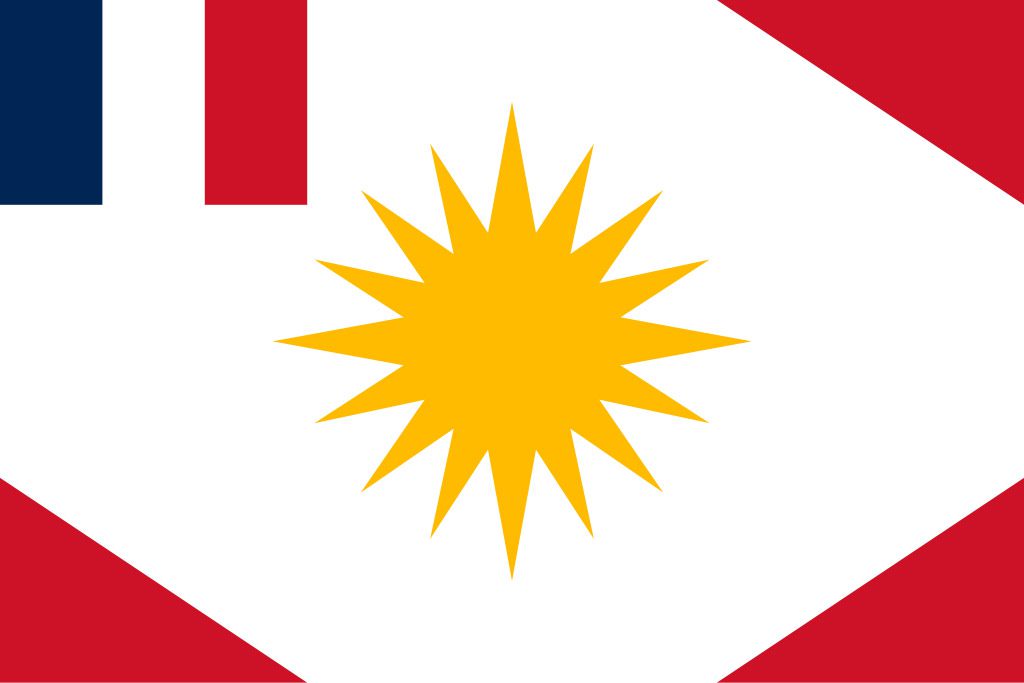
It was the French who changed their name from Nosayris or Ansari in Arabic (from Ibn Noseïr) to ‘’Alawites‘’ by creating an Alawite state in 1922, in order to divide and conquer, just as they tried to do with the Berber Dahir in Morocco.
 A typo or syntax error? You can select the text and hit Ctrl+Enter to send us a message. Thank you! If this post interested you, maybe you can also leave a comment. We'd love to exchange with you !