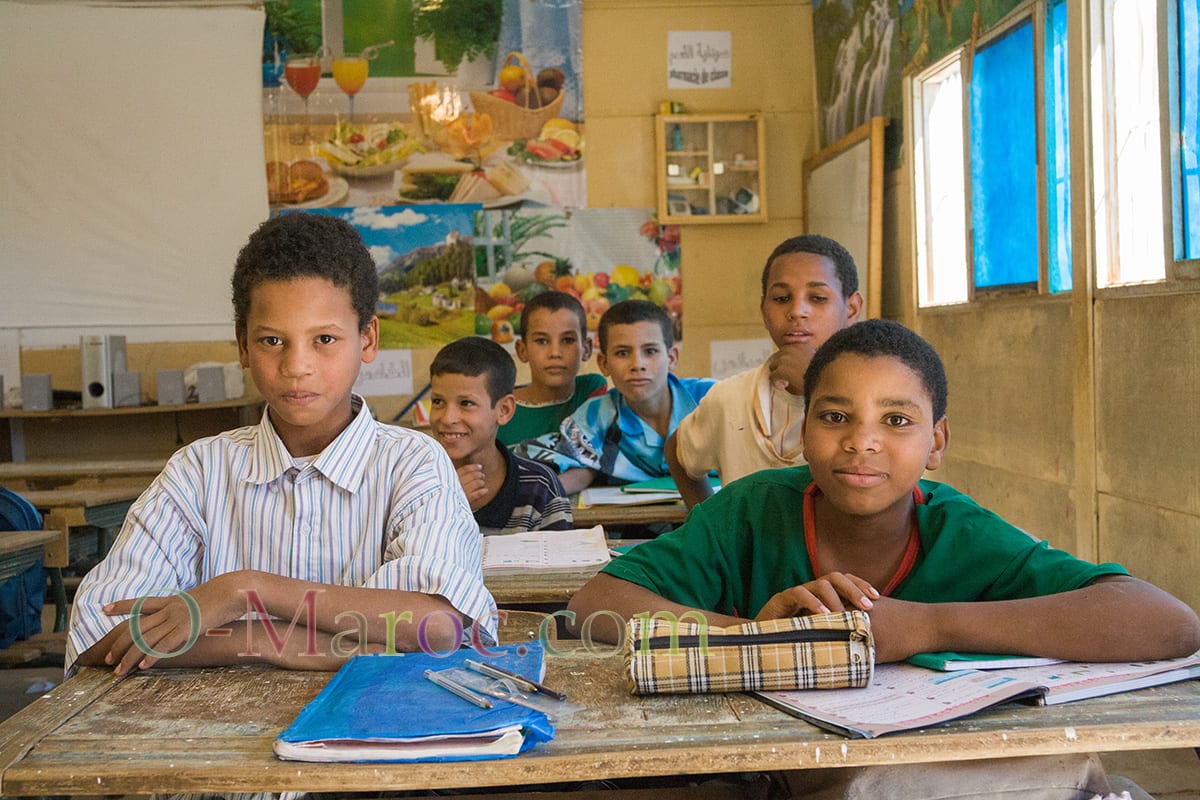
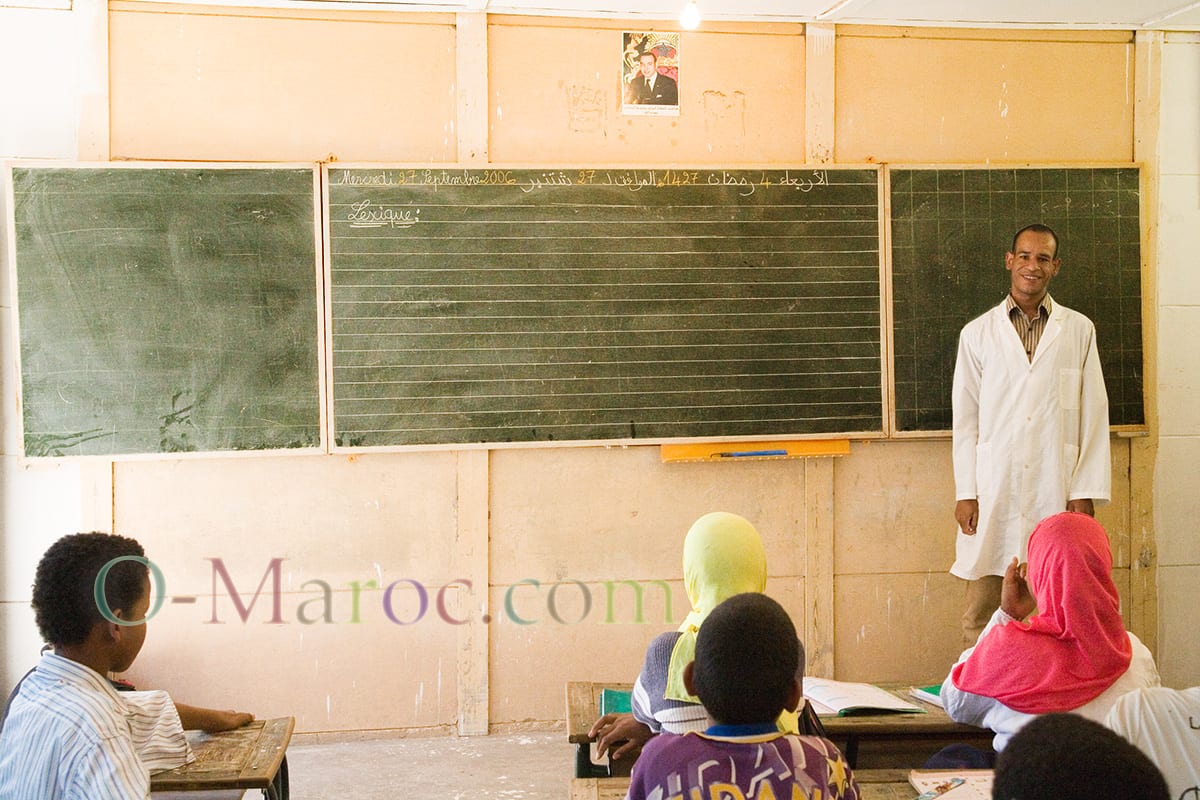
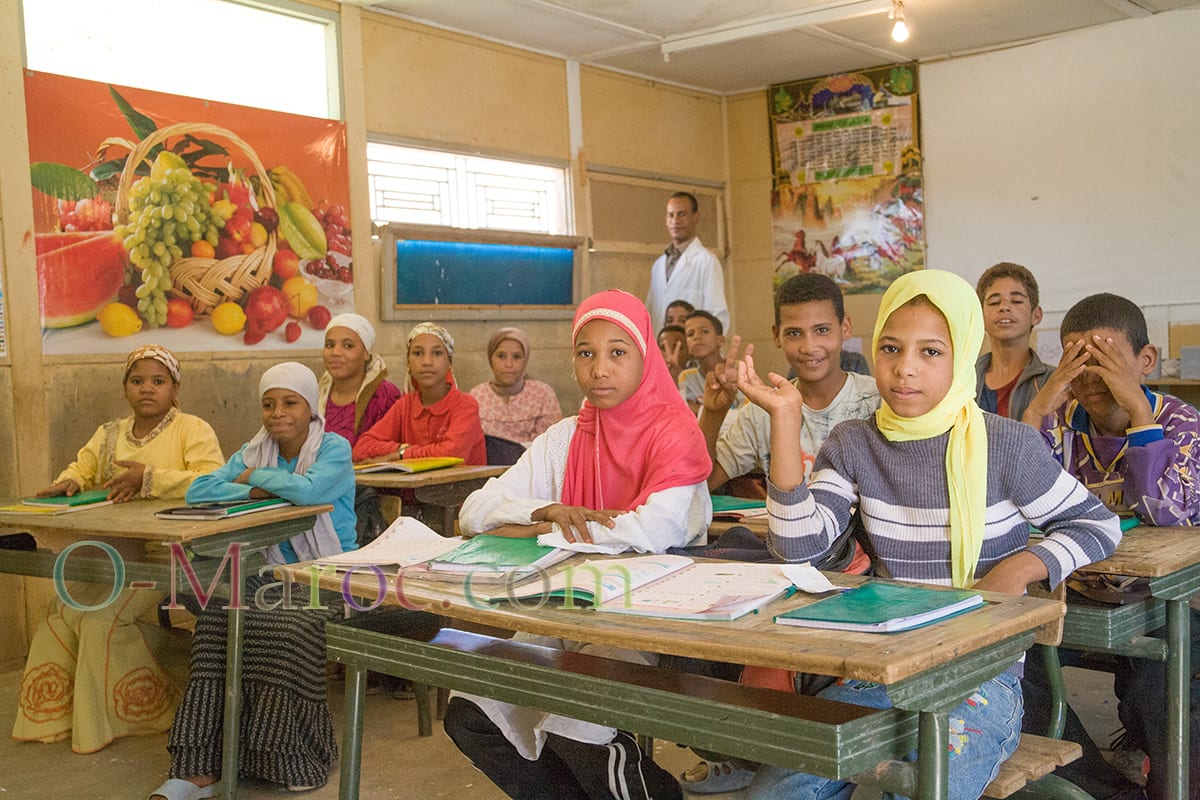
As in every school in the world, the good pupils sit at the front, whilst the less able ones try to hide at the back of the class. But our arrival has caused a stir in the school; the teachers have come out onto the doorstep, and the classrooms are echoing with the laughter of the children who have caught a glimpse of us and realised this is a welcome break from their 45-minute lesson. It’s Ramadan, late morning, and everyone’s happy to take a break.
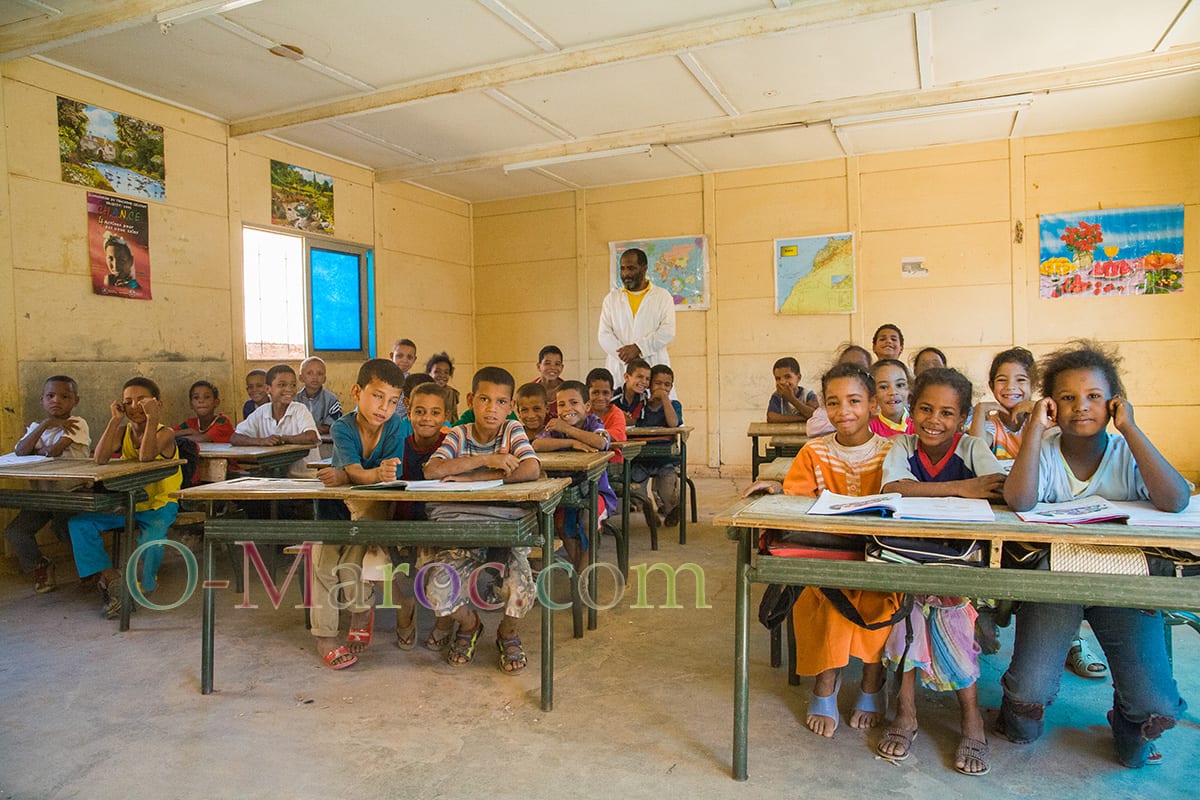
In the douar of Aït Ballouk, in Tazzarine, the school has five teachers. Class sizes are reasonable, ranging from 20 to 30 pupils.
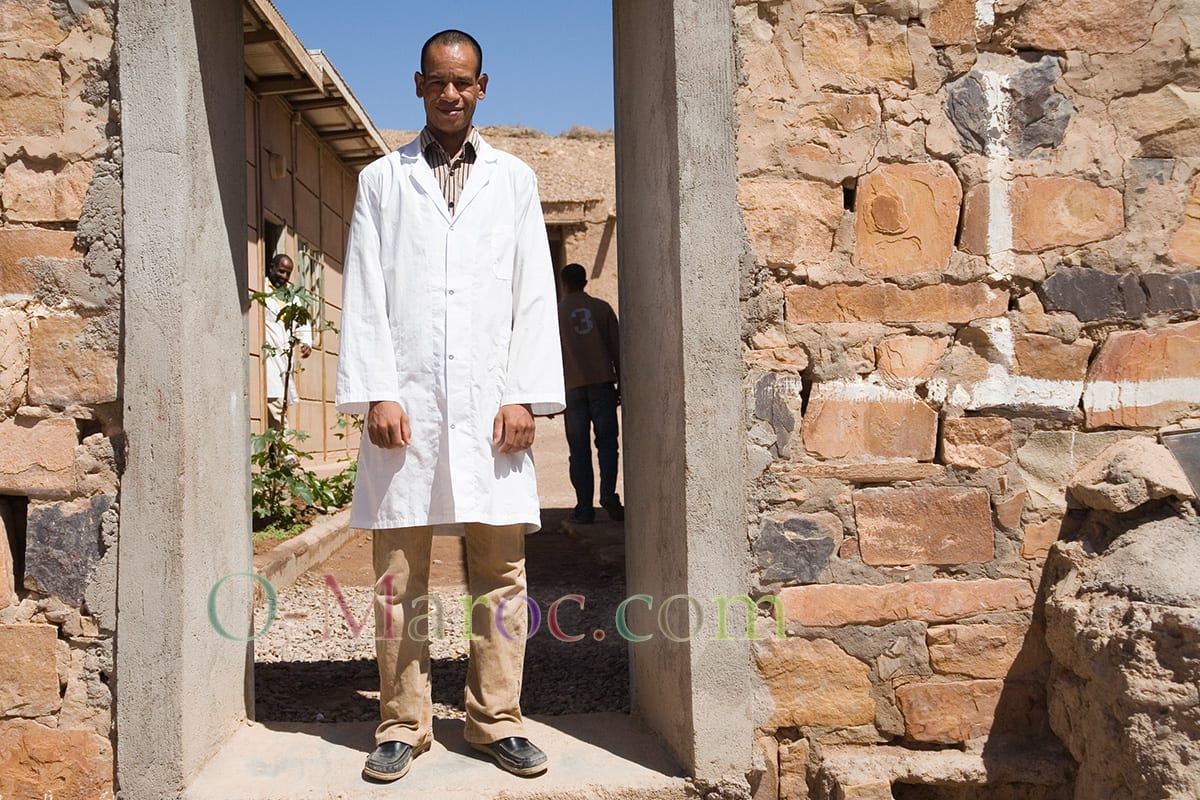
Mohammed Khalloufi is one of the young primary school teachers who go out of their way to help their pupils, to take them beyond the school curriculum, and to help them discover the world.
He has equipped himself with IT equipment: a laptop, a CD burner and a satellite receiver that allows him to record television programmes. He has an overhead projector and speakers, and regularly organises screenings in his classroom or at home.
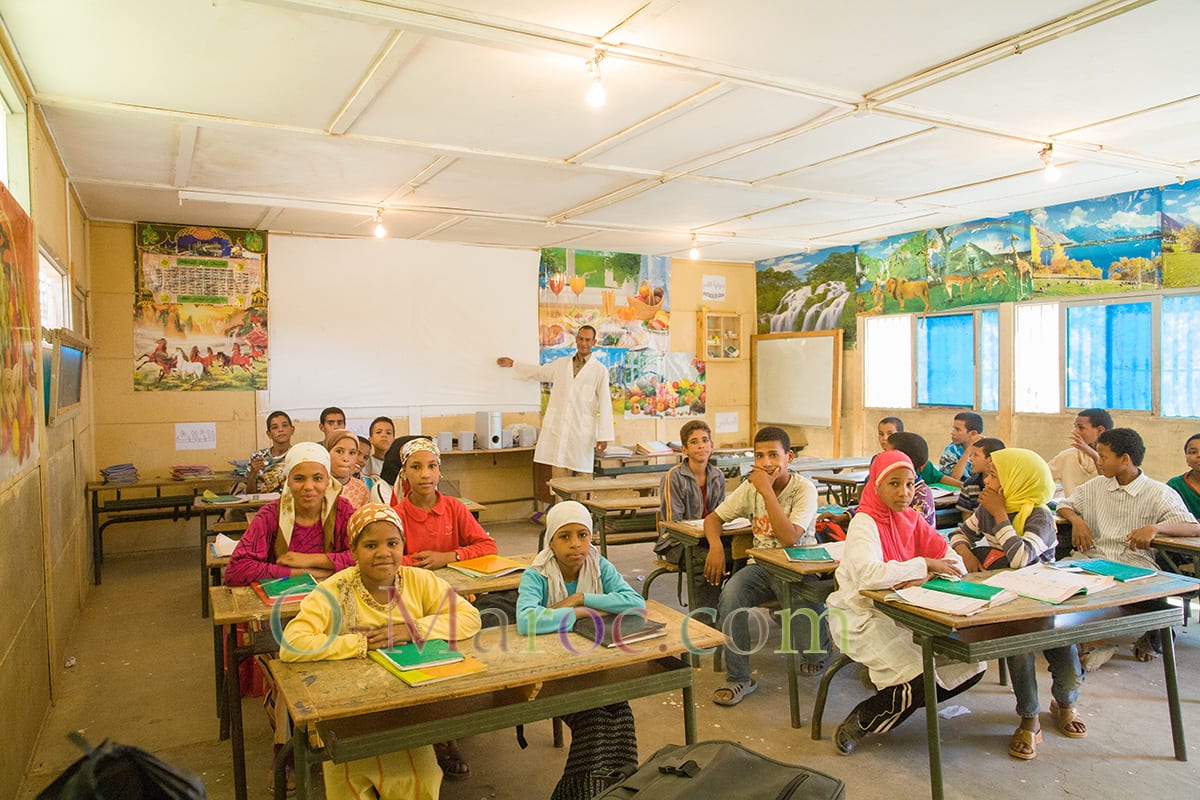
The most serious lessons take place in the classroom; at home, he tends to provide entertainment, such as cartoons, but he always takes the opportunity to teach the children something.
He draws on current events and awareness days, such as World Ozone Day, World Tuberculosis Day and Moroccan Road Safety Day.
He puts together his slideshows by including videos and texts, and looks up references on Encarta; in short, he gives his pupils proper lessons in various subjects, just as our primary school teachers of the French Third Republic used to do, and he tries to provide them with all the knowledge available on the internet, making it accessible to them.
The fight against tuberculosis will, of course, provide an opportunity to discuss medicine and biology, but also history (who discovered the bacillus, the vaccine, etc.) and prevention. Mohammed is counting on his pupils to act as a bridge to their parents… Because books are very rare here, and apart from the telly, there aren’t many sources of information available.
ADSL, which is now becoming available in rural areas, has, of course, changed Mohammed’s life.
Education is one of Morocco’s biggest challenges. With a birth rate of over 22 per cent, ever-increasing numbers of young children are turning up at school gates, whilst the fight against illiteracy is sending women and adults back to study outside school hours.
Over the past two years, the Ministry of Education has reported a school enrolment rate of around 99 per cent of children starting primary school. The main pockets of resistance are found in remote douars in mountain villages, particularly in the Middle and Anti-Atlas ranges, and amongst nomadic communities who have not settled down, for obvious reasons. Furthermore, many children drop out of school early, leaving primary education to take up apprenticeships.
But little by little, secondary schools are opening – offering either general or technical education. It is becoming increasingly easier for young people to continue their studies right up to the baccalaureate (organised along the French model), and university grants are awarded on the basis of income, to enable children from poor families to access education.
It’s not all plain sailing, far from it. There are still many former primary school teachers from the generation that was trained in a rush following independence, some of whom teach their pupils subjects they themselves know nothing about, simply by making them repeat what is in their textbooks.
Nowadays, there is often a shortage of teachers, and lessons can start very late – sometimes as late as a month.
Young teachers sent to remote douars face very harsh living conditions; if they are Arab and posted to Berber areas, their contact with the local population may be very limited, not only because of the language barrier but also due to a certain deep-rooted mistrust.
A primary school teacher in Morocco earns around 200 euros a month at the start of their career, rising to 600 by the end. They are often overqualified, holding a bachelor’s degree or even a master’s, but have had to turn to this career for lack of other, more suitable jobs. They remain committed to helping their pupils discover the world.
If you happen to be passing through Tazzarine, Mohamed will be delighted to welcome you into his classroom.
To help a class or a school in Morocco, you can:
- Donate school supplies (bought locally – this helps the country’s economy – and an ‘all-inclusive’ package is generally cheaper than transporting them from Europe), such as exercise books, pens, textbooks for the school curriculum, chalk, slates, etc., and even aprons and school bags. These will be distributed to families who really need them by the teachers or the caïd.
- provide classroom materials, such as a world map, maps, illustrated charts, supplies for the school first-aid kit, IT equipment, supplementary books, dictionaries, leisure reading books and educational games. Here too, it is best to buy locally (at least in the major towns, as certain items cannot be found in small villages). Even in Ouarzazate, you can’t find everything; sometimes you have to go as far as Marrakesh).
- If you are a teacher yourself, organise an exchange with one of your classes. Pen-pals, or even a long-term mentoring arrangement, can be a hugely enriching experience for both sides.
 A typo or syntax error? You can select the text and hit Ctrl+Enter to send us a message. Thank you! If this post interested you, maybe you can also leave a comment. We'd love to exchange with you !