
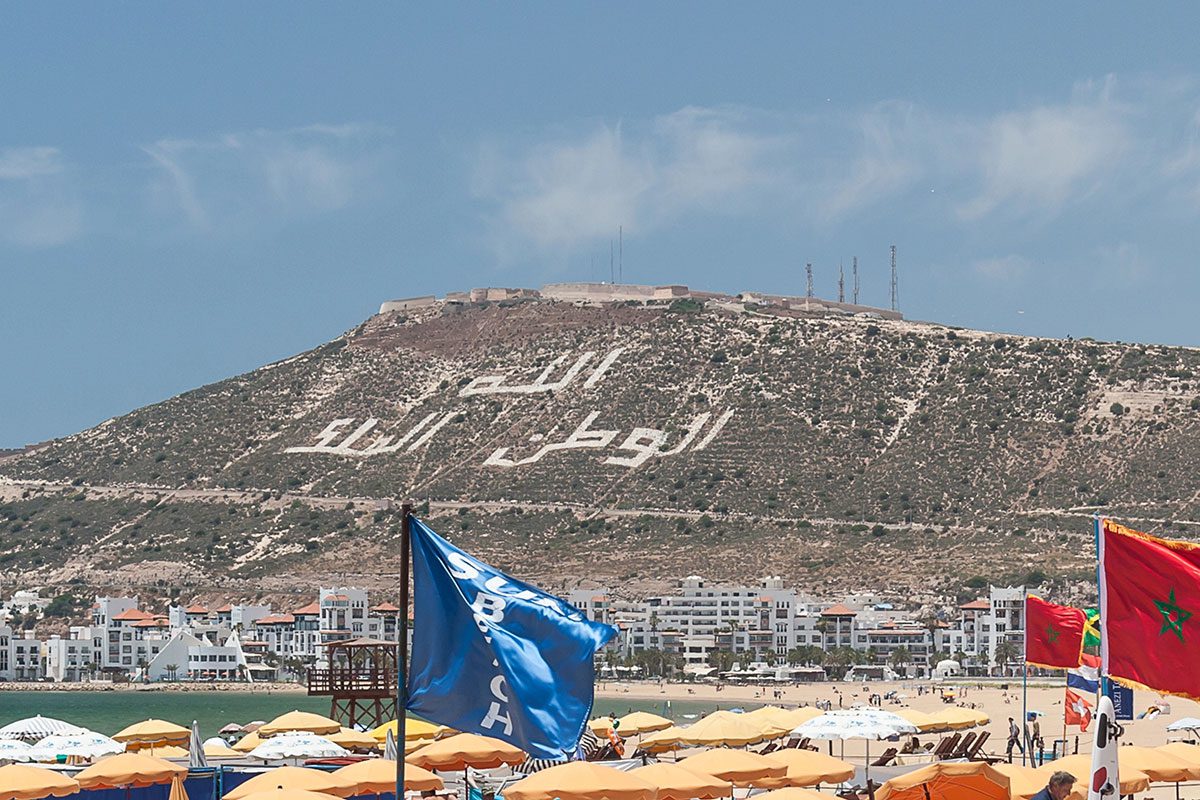
In Arabic, ‘royal’ is ‘ملكي’ (malaki), from the same root as ‘ملك’ (malik), meaning ‘king’, as in ‘Allah, Al Watan, Al Malik’ (لله، ٱلْوَطَن، ٱلْمَلِك), the motto that appears on many mountains in Morocco and concludes the national anthem.
Tuna royal or royal?
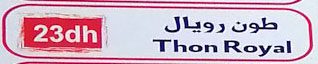
But a few days ago, in a sandwich shop, I saw another ‘translation’: simply ‘royal’, but written in Arabic script! رويال ra-waw-ya-alif-lam
In fact, it’s a transcription. And it’s still quite common.
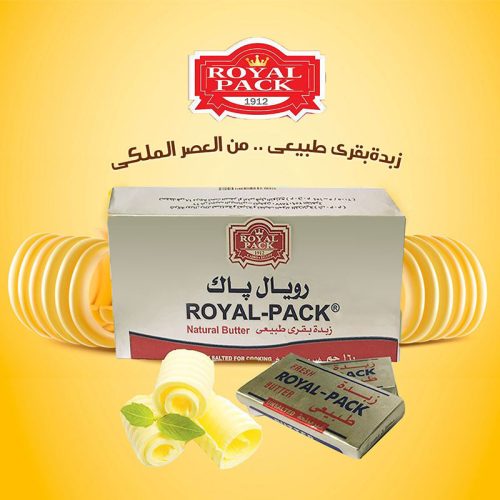
Take this Egyptian company, Royal Pack, for example, whose name is simply transcribed from Arabic as:
روپيل پاك using the پ that the Egyptians use to represent the letter P.
On the other hand, other companies, such as Royal Air Maroc, accurately convey the meaning of “royal” in their Arabic name الخطوط الملكية المغربية, which translates as Al-Khoutout al-Malikiyah al-Maghribiyah, meaning “The (air) lines of the Kingdom of Morocco”.
The word for tuna in Arabic is تونة, tunna (yes, the name of this fish comes from Arabic), but طون in Darija (it’s simply a matter of how the ‘t’ is pronounced). And ‘royal tuna’ refers to a specific species of tuna, also known as bluefin tuna (Thunnus thynnus), whose Arabic name is تن أزرق الزعنفة, al Tuna Zarqa’ al Zaanif. But that is not what this sandwich refers to; here, ‘royal’ is used to denote abundance. Logically, its name should be تونة الملكي for a word-for-word translation.
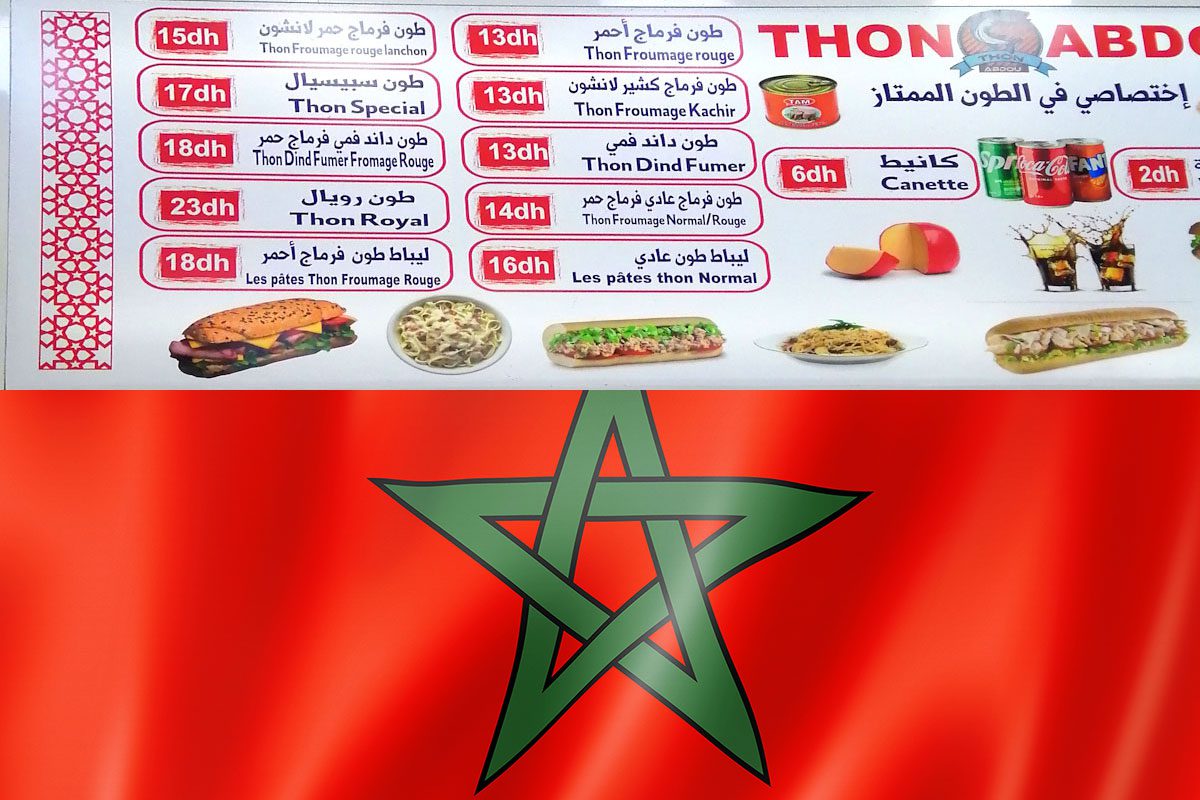
Drink can, turkey, kacher and red cheese
ِThat’s not the only odd “translation” on that sign. Once I’d spotted the word “royal”, I took a look at the other translations as well.
Special tuna

There are several Arabic words that can be used to translate “special”. The most appropriate one here would be “special” in the positive sense of something out of the ordinary. It is مُميز, mummayaz.
But here the word is transcribed letter by letter, سبيسيال, with a ب for the p, which does not exist in either Standard Arabic or Moroccan Arabic.
Tuna and red cheese
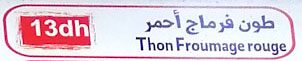
For my non-Moroccan readers (the rest of you will surely be familiar with it), ‘red cheese’ (fromage rouge in French) is a large wheel of Edam wrapped in red paraffin wax, which is where it gets its name.
It is an inexpensive cheese (around 100 to 130 dirhams per kilo) that is widely used in sandwiches and even on pizzas.
Here, apart from the mistake in “Froumage”, the name in Darija is bilingual: we have thon, طون, in Darija, then the letter-by-letter transcription فرماج “froumage”, whereas the word for cheese in Arabic is جُبْـن, jben, as in Chergui’s Jben, then the colour, أَحْمَر, red, which has been translated (although we also sometimes find the transcription روج, as in the name of the Moulin Rouge).
I do wonder, actually, whether ‘froumage’ isn’t in fact a transcription from Arabic…
Tuna and smoked turkey

Here again, a transliteration of “turkey” (Dinde in French) is used instead of the Arabic word. In Standard Arabic, turkey is دِيك رُومِي, the “Roman rooster”, in other words the “foreign rooster”. And in Darija, it is بيبِي , bibi.
‘Smoked’ (‘Fumé’ in French) in Arabic is مدخن, mudakhan. So it should be ديك رومي مدخن , but we have a letter-by-letter transcription again: داند فمي
Kacher
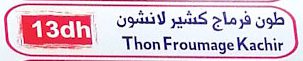
كشير لانشون is the brand name for kasher luncheon meat. The kasher is a North African 'creation', which originated in Algeria. But today it refers to a whole range of beef or turkey cold cuts, in the form of sausages.
Luncheon is a word taken directly from English, referring to an assortment of cold meats, an “English platter”. In Morocco, it refers to tinned meat products. An equivalent of the famous Spam!
Drink can
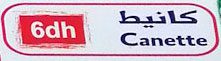
We also see the word for ‘drink can’ (canette in Frenchà, written in the same way: كانيط . This is a Darija word, used in North Africa. The standard Arabic term for a can is عبوة المشروبات, ambouwa al machouba. I have never seen it used in Morocco.
Sandwich or snack
And what about “sandwich”? The word doesn’t appear on the sign. Well, although there is an official Arabic translation, شطيرة (shatira), it is more commonly written as سَنْدوِيتش, ساندويش or سَندَوتش. After all, “sandwich” is a universally used English word! Not even the Académie Française has suggested a replacement, nor have the Quebecois! But in Darija, they say كاسكروط, “casse-croûte” that means snack.
In conclusion: languages that influence one another
This is what a simple glance at the menu of a small snack bar can reveal about Moroccan multilingualism, where words are spelled one way or another depending on what they refer to (royal), where European words are used even though a Darija equivalent exists (dinde), and where a word written in Arabic but derived from French is ‘transcribed’ into Latin script (froumage). But the question also arises of proficiency in French and Darija, as evidenced by the mistakes and the intermingling of vocabulary.
Did you find this article interesting? Would you like to see more articles on Arabic as spoken in Morocco?
 A typo or syntax error? You can select the text and hit Ctrl+Enter to send us a message. Thank you! If this post interested you, maybe you can also leave a comment. We'd love to exchange with you !


