You can come on holiday to Morocco without knowing much about Islam, or worse still, only what is portrayed in the European media. So, to understand the basics and avoid offending Moroccans, here’s a brief introduction to a subject that could take years of study!
A simple, tolerant, essential Islam
A simple Islam
Because the Malekite school, which is the Moroccan school, puts forward simple principles and an ideal of a modest, religious and fairly austere life. This is because, throughout the religious movements that have taken place in Morocco since the arrival of Islam, one constant has remained, that of an egalitarian, quasi-democratic Islam, which corresponded to the structure of Berber society, a virtuous and demanding Islam, and each dynastic revolution was based on a religious reform, against the sultans “softened by luxury”, an Islam that had Shiite temptations, and of which Kahrijism was an important constituent (formerly in Sijilmassa, the Kharijites are now essentially in Algeria, in Ghardaïa).
A tolerant Islam
Because it is heir to Arabo-Andalusian Spain, where members of the three religions of the Book coexisted peacefully. Between jews in the south , long integrated into the Berber tribes, and the Jews of Fez, heirs to the courts of Granada and Seville, between Berbers and Arabs, cohabitation was never called into question.
Even today, Moroccans practise a moderate form of Islam and, above all, accept foreigners without trying to convert them, on the sole condition that their beliefs and customs are respected in return.
An essential Islam
Because, beyond the arrangements (drinking beer, not always praying), Islam remains an essential component of Moroccan identity. Because faith is also expressed through assiduous practice of Ramadan, through charity. Because if there’s one taboo left in Morocco, it’s religious transgression. Because the whole of culture, the whole of daily life, is imbued with Islam.
Islam in everyday life
The rhythm of life is slightly different. Unlike other Muslim countries, not everything stops on Fridays – Morocco has kept the European weekend – but the timetable is adjusted to allow for long Friday prayers. Some monuments, banks and public services close earlier than usual, and shops may also close to reopen later. One day, you’ll probably see a waiter take a few minutes off at prayer time, then come back. But work is also considered a prayer, and the tourists continue to be looked after.
Ramadan in Morocco
This is not the case during the month of Ramadan, which is scrupulously observed by the entire population.
All Muslims must fast from sunrise to sunset, and this fast includes not drinking or smoking (it does not apply to young children or the sick). This profoundly alters the rhythm of life, with all activity stopping about a quarter of an hour before sunset and resuming an hour after the young person breaks.
Working hours are adjusted and reduced. At the same time, Moroccans go to bed much later than usual, to have a second proper meal before going to sleep. They get up an hour before sunrise for breakfast. In other words, a nap during the day is welcome.
Ramadan has a very special atmosphere, with the day both slowed down and electrified, and the evening very festive. Ramadan is also a month of generosity, when no one should go hungry, the poor are fed, and you will certainly be invited to share the breaking of the fast with your guide.
Depending on the region you visit, it will be more or less easy to find something to eat during the day. In the small towns of the south, you may only find a café where you’ll be kindly served the only thing available, an omelette, but you’ll quickly give in to your solitude so as not to be tempted! It’s up to you whether you want to experience the good or the bad of this very special month.
The next month of Ramadan begins on Monday 8 February 2027 (See Muslim holidays in Morocco).
Prohibitions for non-Muslims
Mosques have been off-limits to non-Muslims since the time of French colonisation. The French established their protectorate in Morocco following an "incident" where Moroccans killed European workers who were walking through a Muslim cemetery. Lyautey banned non-Muslims from entering places of worship to avoid further problems.
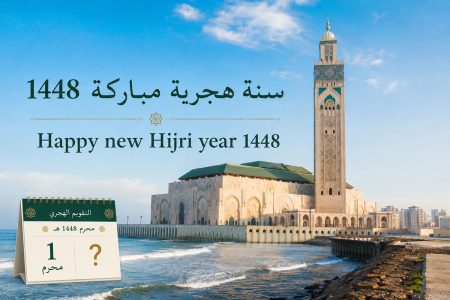
Mosques, marabouts and zaouïas are therefore closed to you, but you can have a look through the door. Only the Hassan II mosque can be visited, exclusively in guided groups. (As well as the mausoleum Moulay Ismaïl in Meknes, because the same Lyautey once refused to be left at the door while Moroccan notables came in to pray). The mausoleum Moulay Ali Cheriff in Rissani has recently opened, but its mosque remains off-limits.
Tips can also open some doors for you.
The various “currents” of Islam in Morocco
We cannot speak of ‘currents’ in the political sense, especially as Morocco is Sunni and Malekite.
The Sufism and the zawiyas (linked but not equivalent) are important in Morocco’s political and religious life.
Apart from a few isolated (albeit serious) incidents, Moroccan Islam remains extremely tolerant. Nevertheless, the country is feeling the effects of external events, and Moroccans are asserting their Muslim identity.
 A typo or syntax error? You can select the text and hit Ctrl+Enter to send us a message. Thank you! If this post interested you, maybe you can also leave a comment. We'd love to exchange with you !