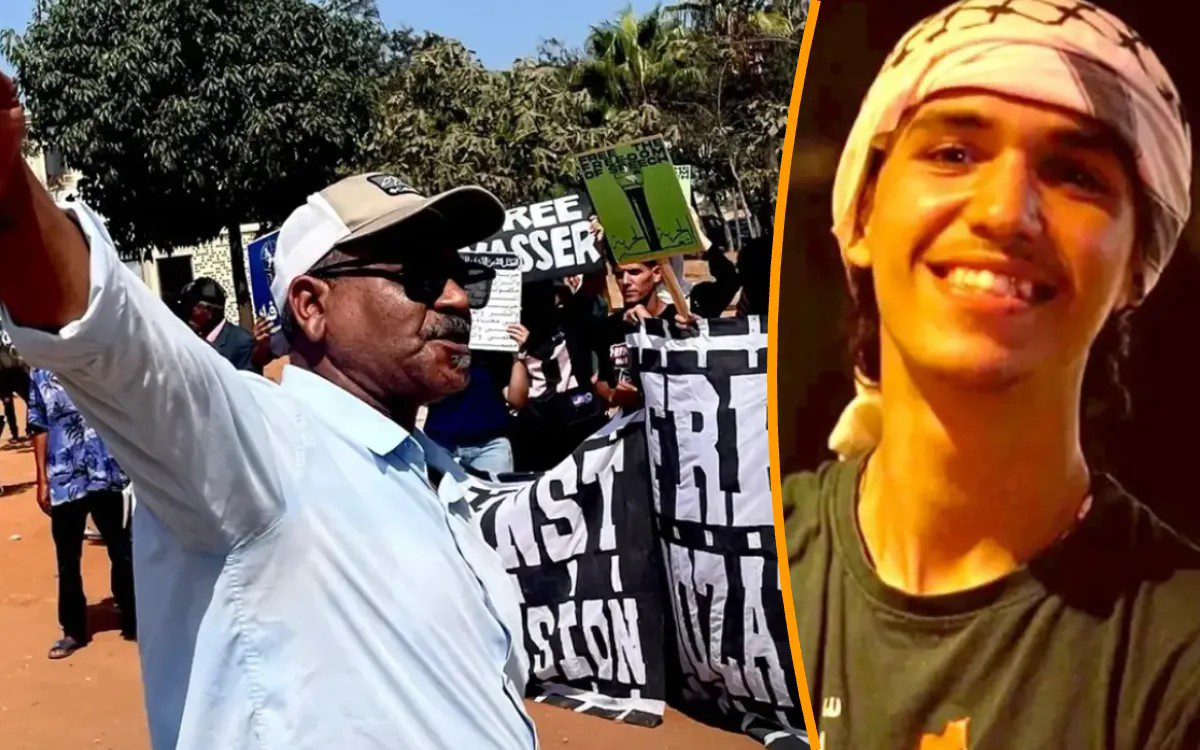
The good thing about having lived for a while – a long time, in fact – is that you remember what has already happened. And in this case, the Yasser Mounbir affair reminds me very strongly of the Fouad Mourtada affair, which took place in 2008.
Two young men (Yasser is 22, Fouad was 26) were both arrested and sentenced to prison for posts on the internet. And for both of them, their convictions have attracted international attention, with criticism focusing on the censorship and the severity of the sentences: four years’ imprisonment and a fine of 40,000 dirhams for Yasser Mounbir, and three years’ imprisonment and a fine of 10,000 dirhams for Fouad Mourtada (yes, the sentences have increased over the past 18 years).
That is where the similarities end. Fouad Mouartada is an engineer, whilst Yasser Mounbir presents himself as an artist and cartoonist. Fouad Mourtada set up a fake Facebook profile in the name of the king’s brother (but using his own photo) at a time when it could be said that judges were unaware of social media; Yasser Mounbir has his own Instagram account with 12,000 followers.
Above all, the “offence” is not the same. Fouad Mourtada’s fake profile was not offensive to the prince. He had created it for the simple reason that he admired the prince and wanted all of Moulay Rachid’s fans on Facebook to be able to access the page and express their admiration too. The only post on the page was a smiley face.
Yasser Mounbir’s cartoons are offensive.
I won’t be posting them here, but you can see them in the Quotidien video (French TV show) at the bottom of the article. These cartoons express a political opinion. They are on a par with Charlie Hebdo. The last one is even more insulting to the king, who is shown from behind, wearing a black harness and jockstrap like those worn by gay men at Pride parades.
In other drawings published earlier, the king is depicted in make-up, in disguise, transformed into an animal, or kneeling with a rubbish tip in the background.
The young man has clearly crossed the line: in Morocco, you don’t criticise the King or the royal family, nor Islam. That’s just the way it is. (And we support Western Sahara).
And the law provides for the prosecution of those who breach these limits: Article 179 of the Moroccan Penal Code prohibits “defamation, insult or invasion of the King’s privacy”, and makes such offences punishable by six months to two years’ imprisonment. The sentence may be doubled in the event of dissemination by electronic means.
As for offences against Islam, this is covered by Article 267-5 of the same Criminal Code (which led to the conviction of Ibtissame Lachgar).
Yasser Mounbir’s lawyers have condemned the sentence as disproportionate and a serious infringement of creative freedom. In their view, artistic expression cannot justify a custodial sentence simply because it disturbs, shocks or is perceived as offensive.
Indeed.
Nevertheless, portraying the King as a ‘flamboyant’ homosexual in a Muslim country is far more than just offensive. And the line between ‘offensive’ and ‘defamatory’ is a fine one in this case.
I have re-read the article I published about Fouad Mourtada, and 18 years on, I would say exactly the same thing again:
- the king is sacred in Morocco;
- the issue of the divide between modern Morocco and traditional Morocco, a divide which, in fact, is widening rather than narrowing.
I would add that there has been a real tightening of the reins on freedom of expression. The convictions of the GenZ 212 protesters are proof of this.
But as I said at the time, things are always worse in some places, and better in others. Modernists want genuine freedom of expression, but many Moroccans are shocked when people cross the lines. Living in Morocco has taught me to respect them. If certain political activists want to cross those lines, they must do so in full knowledge of the consequences, without expecting leniency from the courts. That’s just the way it is.
 A typo or syntax error? You can select the text and hit Ctrl+Enter to send us a message. Thank you! If this post interested you, maybe you can also leave a comment. We'd love to exchange with you !
 Mohammed VI