When Rue Galilée was renamed Rue Taha Hussein, one of the city councillors reportedly complained about the name change. It may have been logical to do away with names associated with the colonial era, but even so, he said, we could have kept the name of that great mathematician!
This overlooked the fact that Rue Galilée owed its name only very indirectly to the great Renaissance figure, inventor of the telescope and ardent defender of the theory that the Earth revolves around the Sun.
The cruiser Galilée and the events in Casablanca
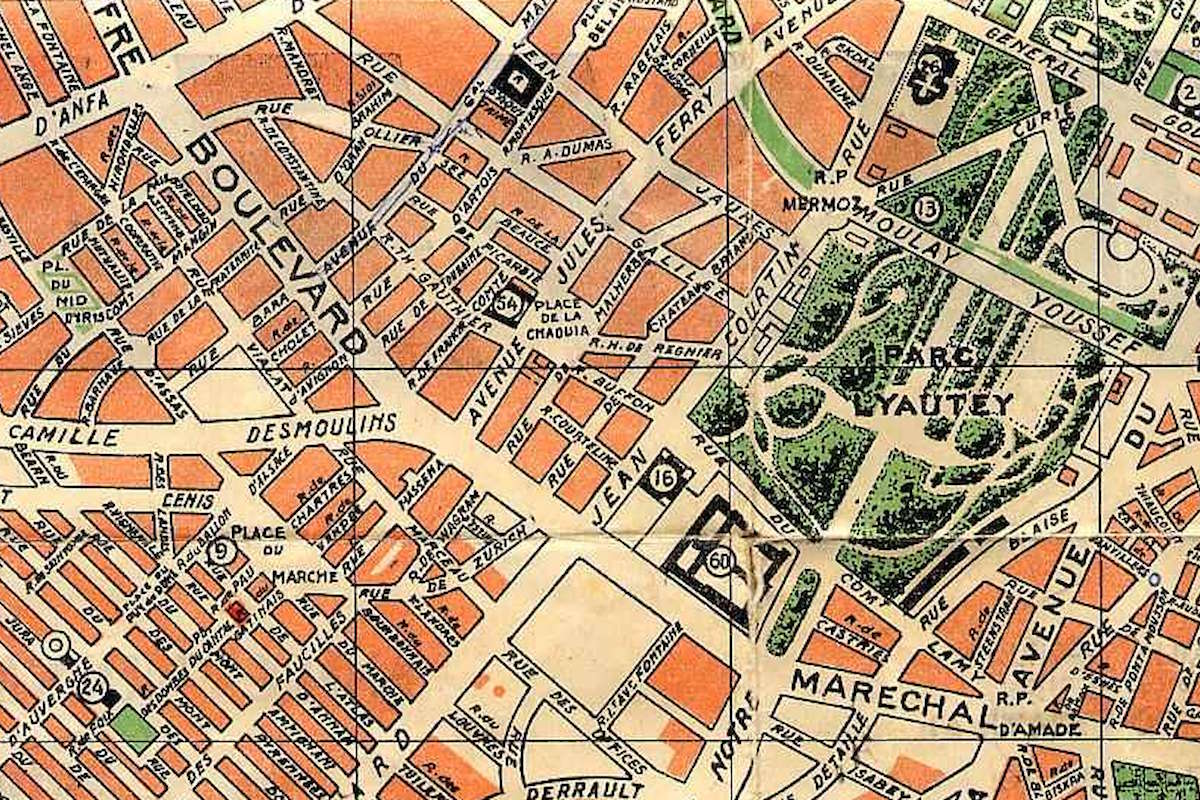
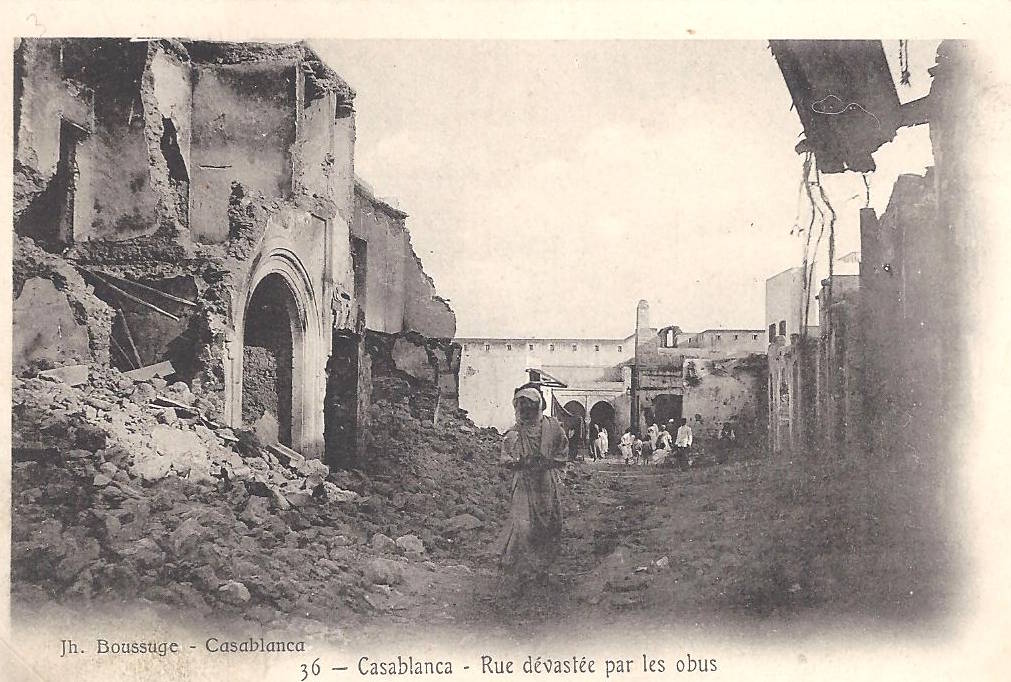
Stretching from Boulevard d’Anfa to Boulevard Jean Courtin, Rue Galilée actually took its name from the French warship which, under the command of Commander Ollivier, organised the landing of French troops and sparked Histoire - Emeutes de 1907, which culminated in the bombardment of the medina under the command of Rear Admiral Philibert.
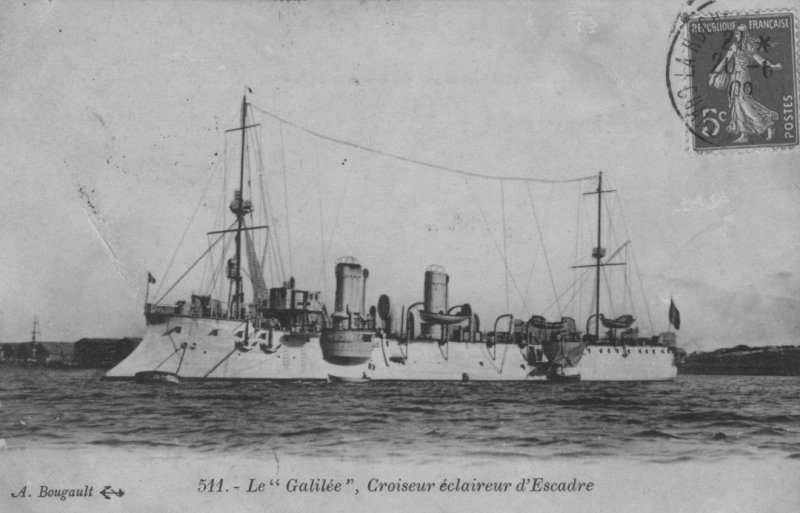
This cruiser, which was to be struck off the register just a few years later, in 1911, was armed with:
- four 138 mm guns, capable of firing 30 to 35-kilo shells at a range of one and a half kilometres
- two 100 mm guns (firing shells weighing around fifteen kilos)
- eight 47 mm guns, capable of firing 15 rounds per minute at a range of 8.5 kilometres
- two 37 mm guns, firing 25 rounds per minute and nicknamed ‘pom-poms’ because of their rhythmic sound
- two 420 mm torpedo tubes
- and, finally, 120 mines.
It travelled at a speed of 10 knots (19 km/h), which, for the time, was fast!
Street names with a distinctly military flavour
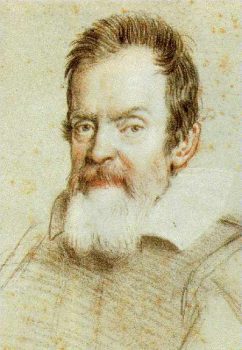
But, you might ask, what evidence is there that the French named this street after the cruiser rather than the Renaissance mathematician?
An analysis of the neighbourhood’s names. Street names in Casablanca under the protectorate are overwhelmingly military in nature. Names of military figures, names of camps, names of ships, names of regiments, names of battles… Casablanca was the largest military base in North Africa, and this is evident.
However, in the neighbourhood around Rue ex-Galilée, military names are not in the majority. There is Place de la Chaouïa, which refers to a pacification campaign, Boulevard du Général Mangin, but also Rue Edmond Rostand, Rue Rabelais, Rue Alexandre Dumas and Rue Théophile Gauthier. Today, only Rue Théophile Gauthier has retained its original name.
BUT these artists, authors, etc. are all French. There’s no street named after Leonardo da Vinci, Shakespeare, Copernicus, etc. So I still think the name ‘Galilée’ was chosen in reference to the French cruiser and not to the Italian intellectual.
Should Galilée Street have been renamed?
The frequent reactions to this name change prove one thing: ‘everyone’ has forgotten the cruiser Galilée. Except for the committee responsible for street name changes.
Yes, the committee knew who Galileo was and, above all, what it was.
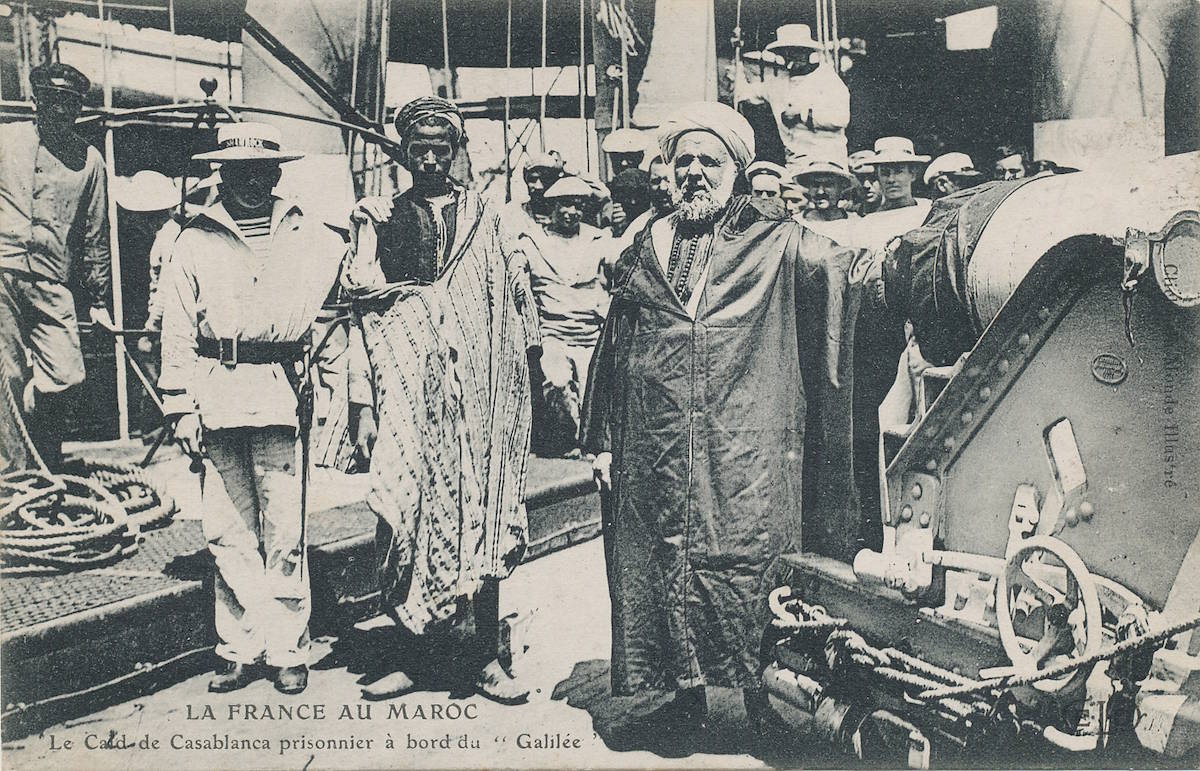
So should we have banished the memory of the deadly cruiser – on board which the Caïd of Casablanca was held prisoner? Or should we have decided to pay tribute to a brilliant mathematician, given that nobody remembers the cruiser?
I believe there are certain ‘cursed’ names in Casablanca – such as Chayla, Philibert, Poeymireau… – and that ‘Galilée’ is one of them. Because it carries a tragic historical legacy.
As an aside, the quote from Fouad Laroui is taken from an article entitled “Saving Socrates”, in which he says
But in fact, Rue Socrate was named by that very same commission. For under the Protectorate, it was named after a military officer, Lieutenant Alex Mallet!
But who was Taha Hussein?
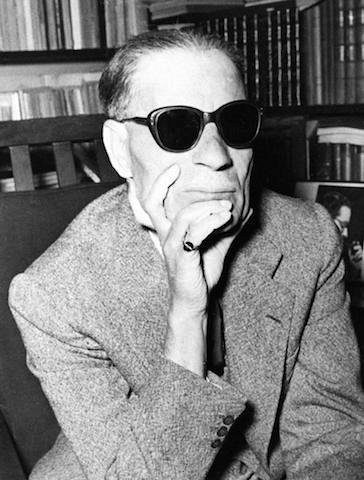
Taha Hussein was an Egyptian academic, novelist, essayist and literary critic, who served as Minister of Education for two years.
Born into a poor family and having lost his sight at the age of six, he nevertheless managed to pursue a high-level university education, first at Al-Azhar and then at the Sorbonne, where he completed a doctoral thesis on Ibn Khaldun under the supervision of Durkheim – no less!
His literary work forms part of the Nahda movement النهضة , a trend towards modernisation and secularisation somewhat similar to the European Renaissance, to which Gibran Khalil Gibran, the author of *The Prophet*, also belongs.
As a literary critic, he took an interest in pre-Islamic poetry. In the absence of historical sources, he turned to the Qur’an, which he subjected to a critical analysis (in the scientific sense of the term), and challenged the prejudice surrounding this period, known as jahiliyyah جاهِليّة (the Age of Ignorance). He highlights its cultural richness and asserts that it permeates the Qur’an. He lays the foundations for a historical approach to Arabic literary criticism. This will bring him into conflict with the religious authorities.
As an author, his main work is his memoir, *Al-Ayyâm* (‘The Days’). In it, he uses simple, accessible vocabulary and a modernised form of Arabic.
Just like Galileo, Taha Hussein was a great intellectual. Just like Galileo, his modernist views brought him into conflict with the religious authorities. Just like Galileo, he avoided being condemned, but suffered the consequences (by losing his teaching post).
So choosing him to replace Galileo proves that the Commission had absolutely no intention to “seek to appease those who wish to drag us back to the Dark Ages of thought” as said Laroui.
 A typo or syntax error? You can select the text and hit Ctrl+Enter to send us a message. Thank you! If this post interested you, maybe you can also leave a comment. We'd love to exchange with you !