This time, we’re heading to a small village in the High Atlas region, 70 kilometres (an hour’s drive) from Ouarzazate, heading towards Marrakech, in the small rural village of Tazadout (a Berber name, a feminine name, as it begins and ends with T, and refers to the female of the monkey. The male monkey, meanwhile, is called Zatout).
A Berber village where the inhabitants speak Berber; the three Arabic-speaking families are bilingual and are therefore well integrated. More information on the Berber language here.
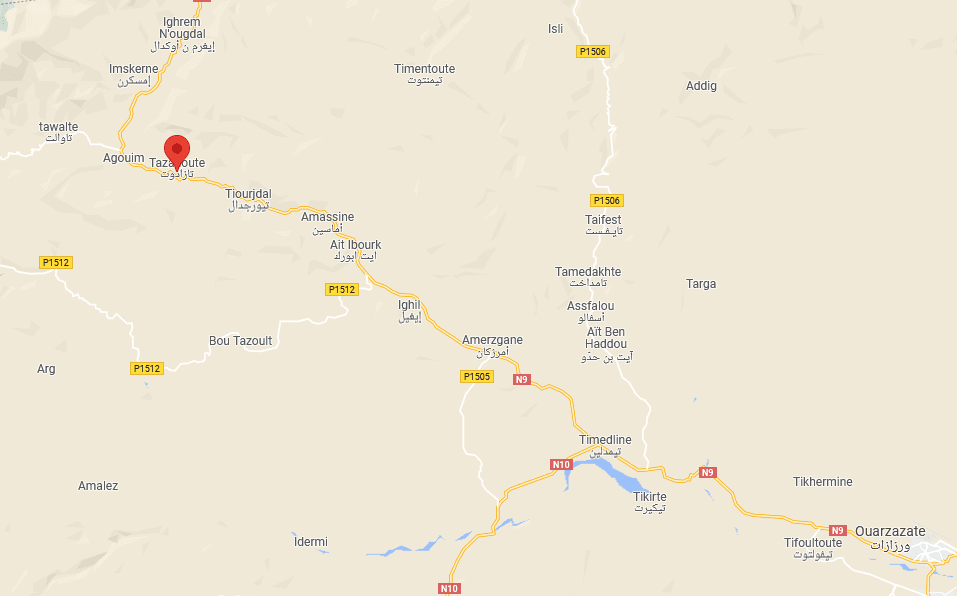
Tazadout is deep in the mountains. In the depths of winter, its 42 families can sometimes find themselves cut off by snow for a few days or even a week. The traditional buildings, made of rammed earth and clay, provide good insulation, but they are more difficult to maintain and are gradually being replaced by concrete houses.
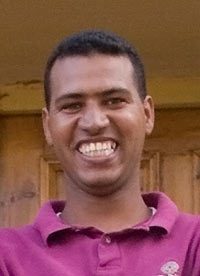
Brahim El Guabli has been a primary school teacher in Tazadout for several years. The 42 families have many children (each household has an average of eight people) and the school is very full. As well as teaching, Brahim runs a training programme for women. Education must not be confined to the school walls, particularly in rural communities, where illiteracy remains widespread. We need to teach people to read and write, provide training and raise awareness.
The programme is wide-ranging, covering the importance of education, hygiene and sexually transmitted diseases, providing information on the new Family Code – which is still struggling to take root in the villages – and running activity workshops (cooking, embroidery, etc.). It supports the association, gradually training its members and teaching them about their rights and duties. It is this sort of initiative – small, individual actions – that is gradually enabling rural Morocco to progress. Teaching adults to read and write and explaining the law to them makes them less dependent on the authorities and helps to combat corruption, which is unfortunately still very widespread. Today, he is seeking to build an additional classroom at the school for his association, ‘Education and Solidarity’. With the support of French organisations and in partnership with two secondary schools in the town of Dreux, he still needs help to secure the necessary resources and mobilise support.
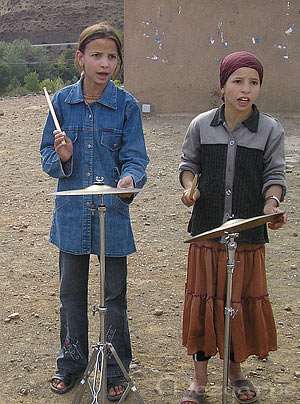
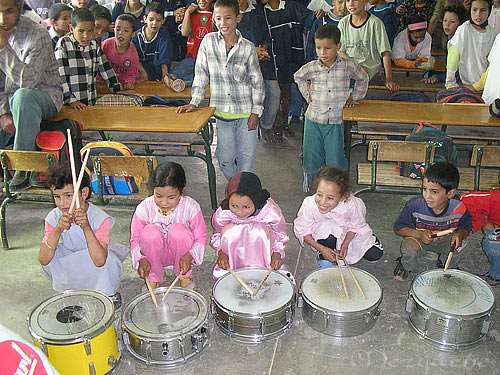
The room will serve, amongst other things, as a multimedia library, with computers available for use by pupils and families in Tazadout; it will serve as a reading area; it will host training sessions (particularly those for the women’s training programme); it will also serve as an exhibition space; and it will help to alleviate the ‘deplorable’ condition of two of the three classrooms. It will be run by the teachers, all of whom are members of the association, each of whom volunteers half a day to run activities, in addition to their teaching hours. And in the meantime, even without a room, we’re making do! Recently, a French couple of musicians came to spend a few days in Tazadout and run music workshops… whether in the classrooms or in the playground, the little ones had a brilliant time!
News from Brahim
As I mentioned in a comment, Brahim was posted to another village after three years.
He continued his voluntary work and also continued his studies by correspondence, notably at a French university.
He eventually moved to the United States. He is now an Assistant Professor of Arabic Studies at Williams College, where he teaches Arabic language and culture. His research focuses, amongst other things, on the presence of Jews in the Arab world, perceptions of the Sahara, and political movements. It was a pleasure and an honour to meet Brahim in Tazadoute and Agouim.
 A typo or syntax error? You can select the text and hit Ctrl+Enter to send us a message. Thank you! If this post interested you, maybe you can also leave a comment. We'd love to exchange with you !