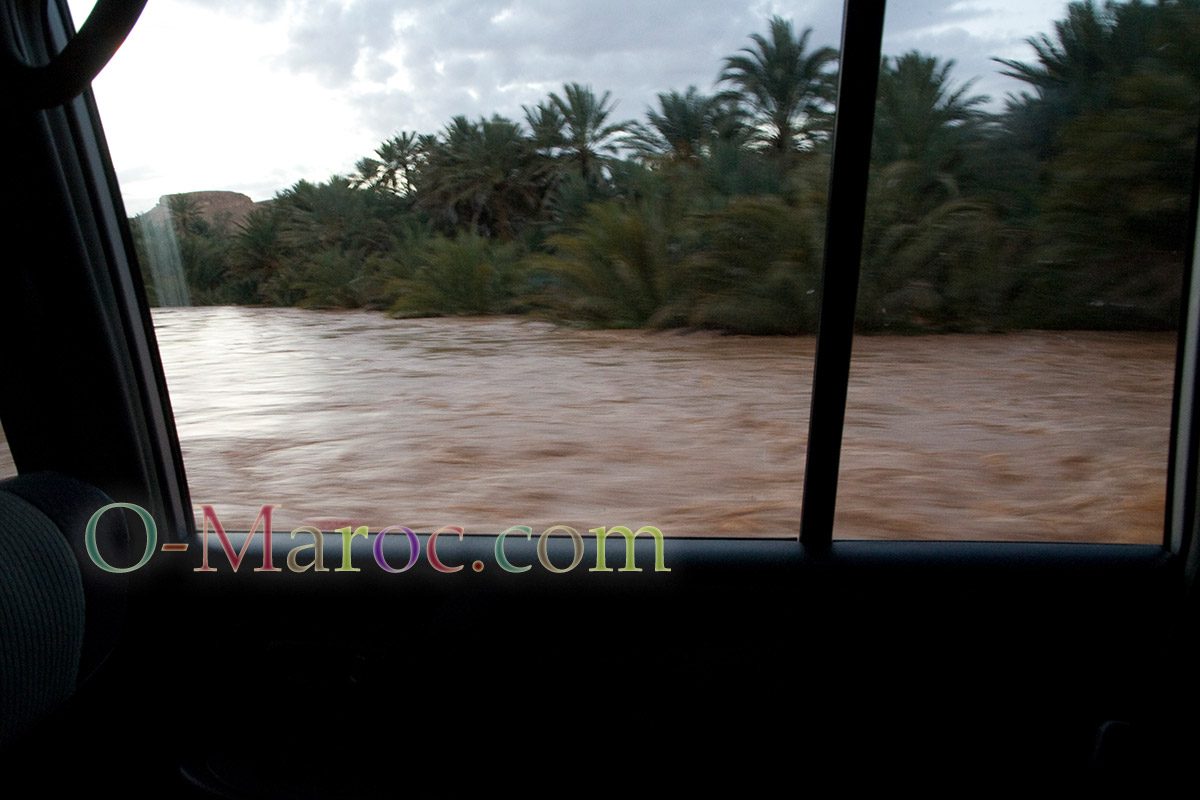
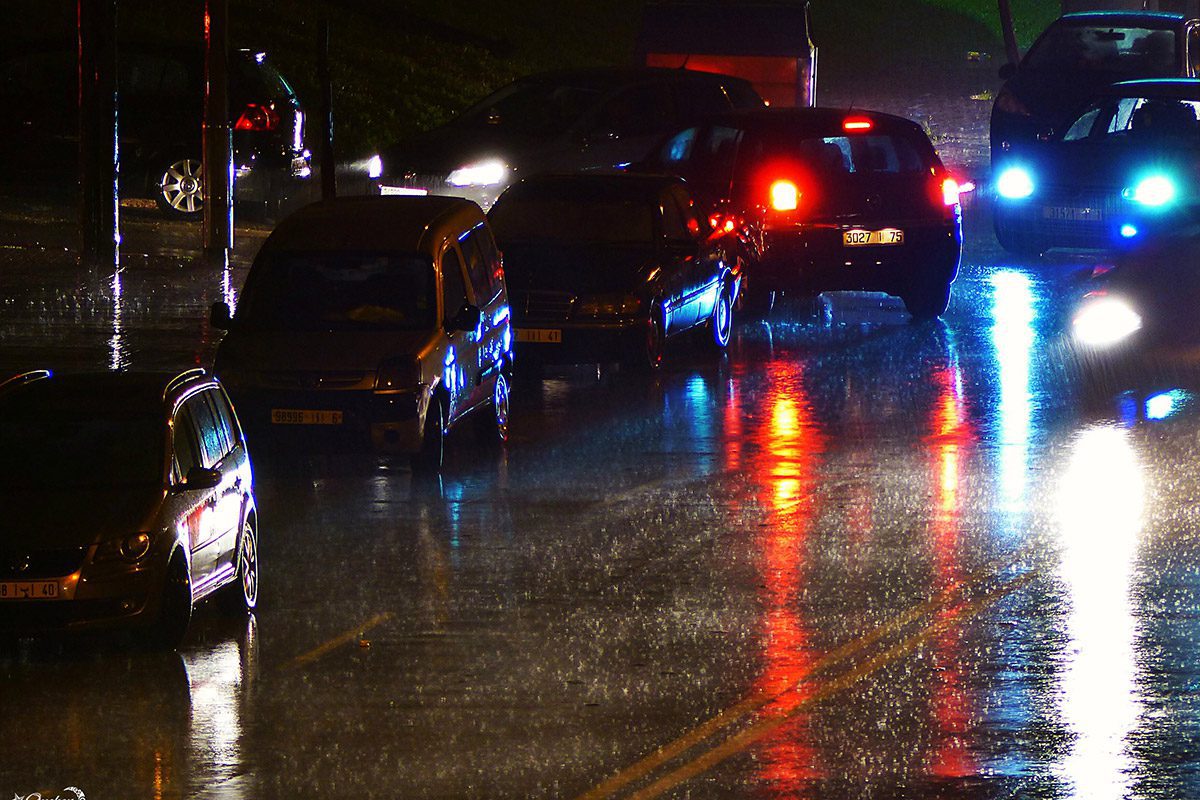
It has been raining in Morocco for three weeks, both in the north and south. Tangier has experienced very violent storms and has been severely flooded in its low-lying areas.
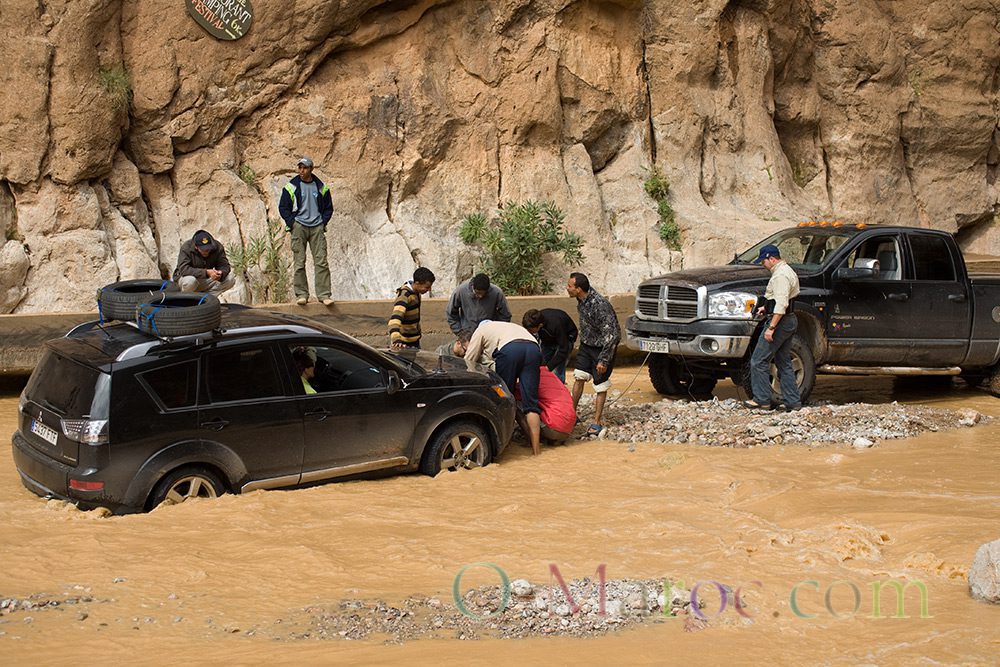
In the south, the wadis, fed by mountain torrents, can rise several metres extremely quickly. This year, we are far from the catastrophic rains that caused so many casualties in the Ourika valley and so much damage in Merzouga, nevertheless, the rises in water levels are quite impressive, the flow of the rivers has increased significantly, and one could be stuck for a few hours on the side of the road, getting to know other Moroccans sharing the same delays.
The weather now seems to be settling down, and after a week of somewhat disrupted circuits, here is a summary of the situation.
The roads in southern Morocco are passable.
With the exception of the road from Zagora to Rissani, all roads are clear. They were blocked for a few hours to a day (such as the road from Rabat to Tangier, and they could be completely covered with water and impassable even in a 4×4, or simply covered with mud to varying degrees, requiring cleaning so that passenger cars could pass.
Major roads, such as the Tichka Pass, were repaired very quickly. This morning, there were about ten roadworks sites rebuilding the kerbs; by this evening, there were only two left.
When it comes to slopes, caution is advised.
Many roads in the south have been “broken”, enough to be impassable or dangerous for drivers who are not very experienced.
In no particular order:
-
The Telouet track is not recommended. It is possible to pass at certain times, but as soon as it rains, it becomes impassable again – unless earthworks are carried out.
-
The section between Ouarzazate and Aït Ben Haddou is fine.
-
The M’Goun Gorge track is still impassable. As there is an alternative route to Boutaghar via the top, it will probably not be repaired quickly.
-
The track from M’semrir to Tamtatouchte, which had already been badly damaged in the previous two years, is once again impassable. In general, it is best to avoid it when the weather is bad.
-
The track from Ait Hani was impassable in the middle of the week.
-
The track from Tamnougalte is passable without any difficulty.
-
The track from Gheris (Tafraout Aït N’Kebach) was flooded and therefore dangerous. However, as it is more sandy than clayey, it can dry out fairly quickly.
Recommendations for drivers
When travelling by car, remember that your insurance only covers you on tarmac roads.
Assess the conditions in relation to your vehicle. What is feasible for a 4×4 or a high Moroccan car, an “almost 4×4” is not always feasible for you.
If you are stuck in a wadi while the water is rising, abandon your vehicle as quickly as possible and head for the nearest high ground (the deaths in Ourika were those who tried to flee by car; those who climbed the walls survived).
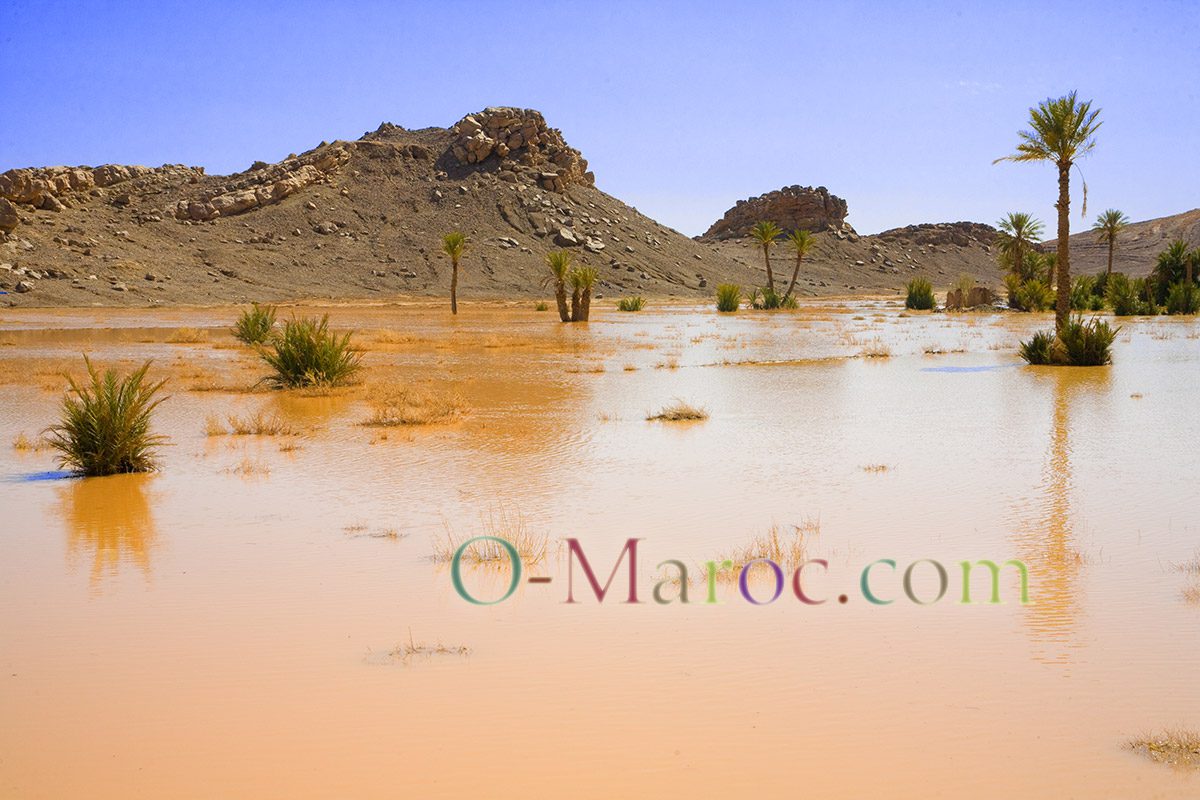
By following these safety guidelines, you can enjoy the rare and poetic spectacle of the flooded desert…
 A typo or syntax error? You can select the text and hit Ctrl+Enter to send us a message. Thank you! If this post interested you, maybe you can also leave a comment. We'd love to exchange with you !