I did not at all appreciate the article by the Académie Française, which is making a masterful contribution to the fight against the pandemic by suggesting that the term ‘social distancing’ be replaced by ‘maintaining physical distance’, for two reasons:
- Most significantly, the Académie Française displays an incredible lack of understanding of the social sciences and of ‘social distance’ as described by Edward T. Hall and the Palo Alto School – a concept I’ll explain in more detail below. This concept dates back as far as the 1970s, after all! It forms part of the foundations of NLP and is a tool widely used by all communication coaches.
It would at least have been possible to mention it in the article, or even to suggest that ‘social distancing’ meant ‘maintaining social distance’ (which roughly corresponds to the safety distance, with social distance being between 1.20 and 3.60 metres). - Many people have welcomed this change in terminology, because it would prevent people from feeling down at the thought that their social network might fray as physical distances increase. In my humble opinion, this is pure Orwellian nonsense – claiming that a word can change reality, that a cleaning assistant is happy to do the work of a domestic cleaner, or that a word might give the impression that the work is arduous.
And this led me to reflect on what is known as proxemics – that is to say, according to Edward Hall, the set of rules governing, within a culture, the management of the space around an individual. And on the complexity of proxemics in Moroccan culture. In other words, on the failure to observe ‘safety’ distances.
Edward Hall’s concept of social distance: one of the four ‘proxemic’ distances
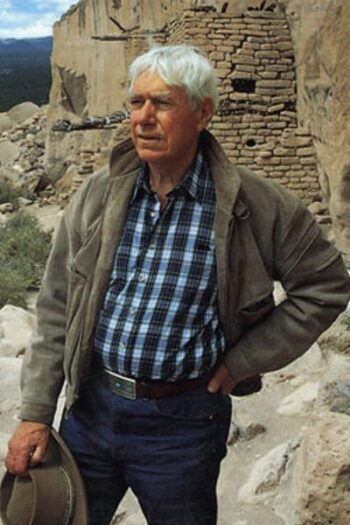
According to this scientist, ‘social distance’ defines one of the four circles centred on the individual, within which we allow other people into our lives depending on our level of intimacy with them.
If, for example, someone with whom we have a distant relationship were to enter our inner circle, it would make us feel uncomfortable, triggering an often unconscious avoidance response (we pull away), or even aggression.
Edward Hall’s four circles, as he identified them in a North American population, correspond to the following distances:
- intimate distance: less than 40 cm
- personal distance: 45 cm to 125 cm
- social distance: 120 cm to 360 cm
- public distance: more than 360 cm
These figures are averages: they vary from person to person and from culture to culture, and even, to some extent, depending on the circumstances (e.g. rush-hour travel on public transport).
Proxemics is one of the cornerstones of the analysis of non-verbal communication, alongside other indicators (eye contact, micro-gestures, posture and even the direction of one’s breath).
Moroccan proxemics can be unsettling for foreigners
We swing between being very close – almost clinging – and very distant. This depends on gender, rather than on the actual relationship with the person. From a Western perspective, Moroccans behave towards you as if you were very close friends, even if the word doesn’t have the same meaning.
Whilst relationships between people of the same sex can be physically close, those between men and women are physically distant, even when they are intimate (husband and wife, brother and sister), and this is the case from a very young age. It is, above all, a matter of respecting modesty. These distances persist at home, even within the inner circle of intimacy. I have never seen my parents-in-law touch each other, for example.
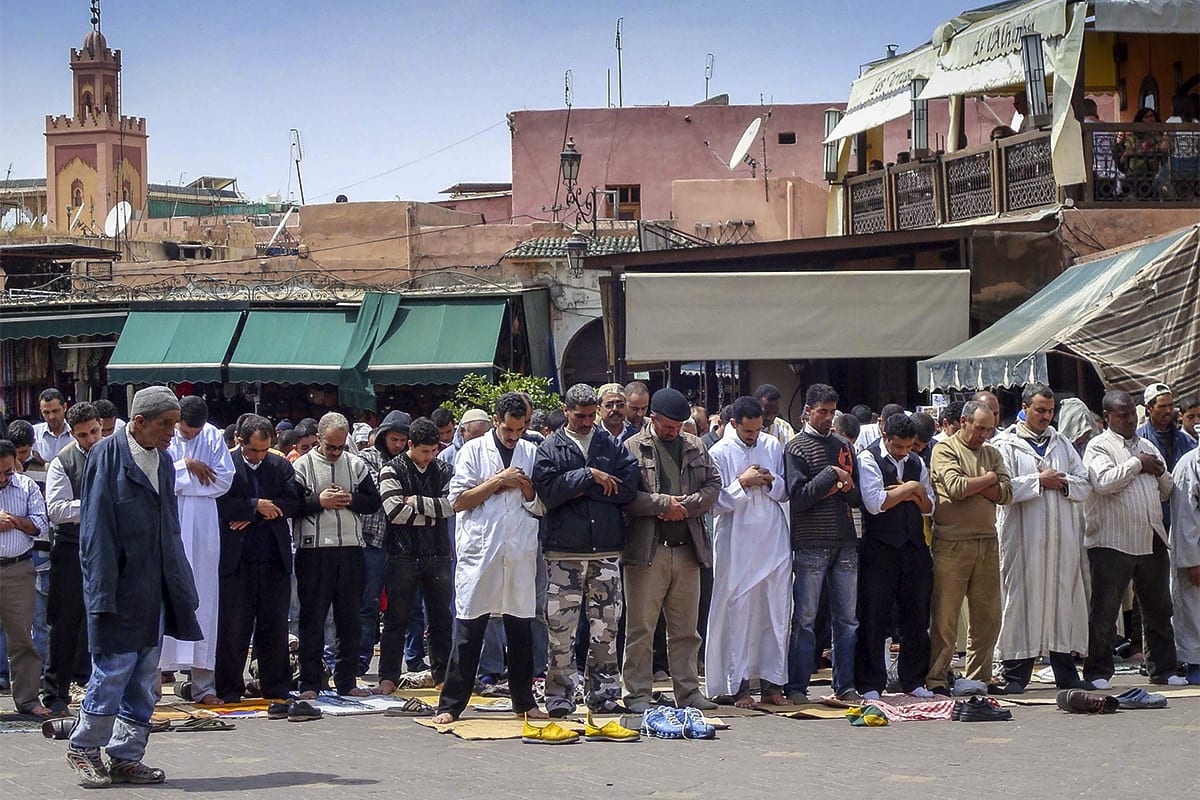
Religious practice encourages this physical proximity. In the mosque, worshippers must stand in tight rows (the spaces are often marked out to indicate the prayer mats) and one row must be filled before starting the next.
Is it easy to change these distances?
Having lived in several countries, three of which had very different approaches to personal space (Germany, France and Morocco), I can tell you straight away that no, it’s very difficult.
And when it isn’t a choice, but is dictated by circumstances, it is frustrating at best, and painful at worst. (Hence my irritation with those who believe that simply changing a word will prevent suffering).
Changing one’s behaviour deliberately: sustained focus over a long period of time
It took me, for example, several months to stop holding my husband’s hand in the street.
Because this tendency to keep my distance was out of character for me, I made a point of being more flexible: Moroccans tend to be more adaptable, depending on the place and the situation. For me, coming from a different culture, I had to adopt an ‘all or nothing’ approach, which meant I kept my distance even when we were in France. The reverse was true for my husband, who felt self-conscious about putting his arm round my shoulders in the street when he was in France, even though he knew it wouldn’t shock anyone.
Accepting an ‘invasion’ is just as difficult
Having lived for a long time in Germany and other countries where people aren’t really used to physical contact, I found it very difficult for a long time to accept women’s use of personal space in Morocco. Whenever a woman I barely knew would take my hand or press close to me whilst walking down the street, my first reaction was to ‘shake her off’ or break the contact. I learnt very quickly to rein in this reaction, which was hurtful. It took me much longer to stop feeling invaded (to be honest, I still don’t like it).
Will the coronavirus lead to a lasting change in the distance people keep from one another in Morocco?
I don’t think so.
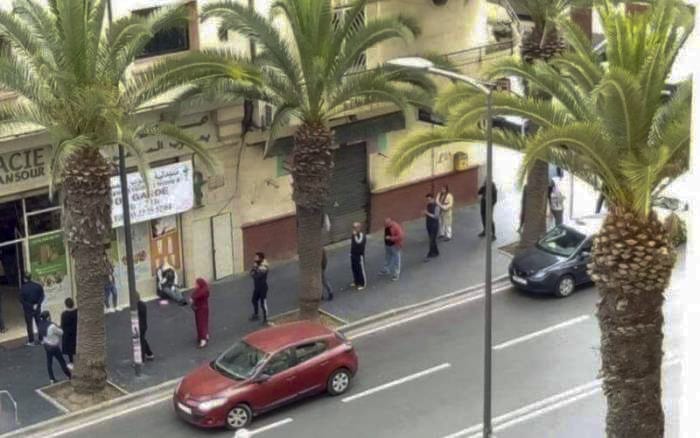
We’ve seen plenty of photos of Moroccans queuing in an orderly fashion, keeping their distance from one another. We’ve seen fewer photos of other Moroccans queuing just a few centimetres apart – which is already far more orderly than the jostling that we usually call ‘queuing’.
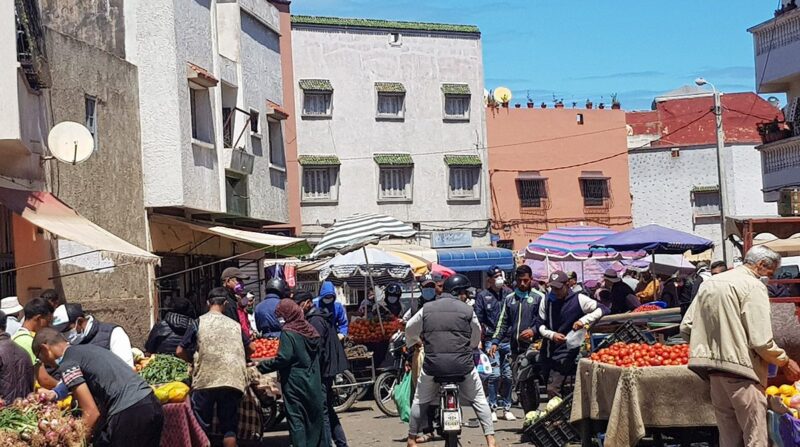
In reality, changing the physical distance between oneself and others without changing the nature of the relationship creates a dissonance in non-verbal communication – in the unconscious aspect of our communication with others. And anything that is unconscious is difficult to change.

Despite widespread fear of the virus, Moroccans are already drawing closer together. What’s more, older people – the chibanis as they’re known here – are the least able to change this, and are often less educated than others, making them the least able to understand its importance. Grandmothers will want to kiss their grandchildren. In Morocco, you never refuse anything to your parents or grandparents. So we let them get on with it, even though we know it’s wrong.
How can we keep our distance under these circumstances? And how can we imagine (going back to the start of the article) that talking about physical distancing rather than social distancing will make it more acceptable to Grandma?
 A typo or syntax error? You can select the text and hit Ctrl+Enter to send us a message. Thank you! If this post interested you, maybe you can also leave a comment. We'd love to exchange with you !