Henna tattoos are one of the symbols of Morocco and the entire Middle East. Henna is a plant that grows in hot countries, particularly well in semi-desert regions.
Henna used throughout Morocco
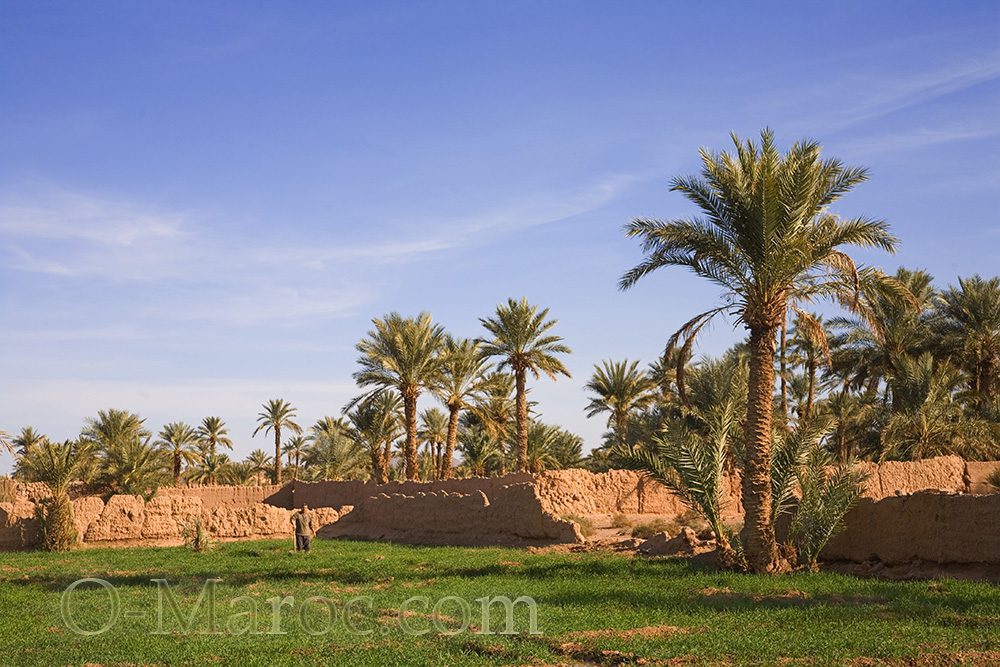
In Tazzarine, the henna fields colour the palm grove a beautiful deep green, before transforming into decorations on women’s hands. Tazzarine is known throughout Morocco for its henna.
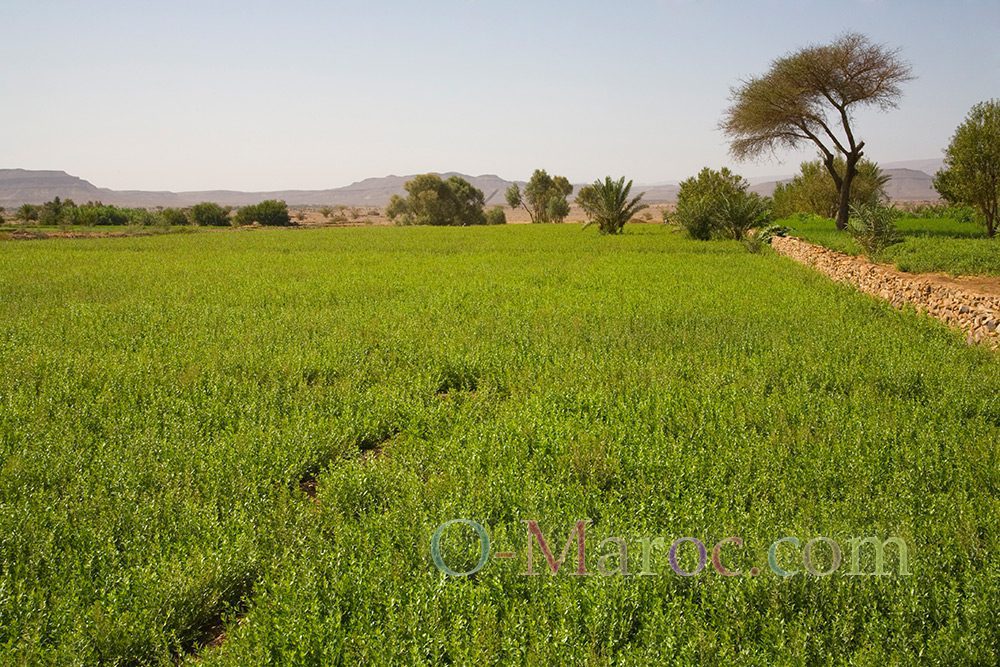
Lawsonia inermis is a shrubby plant, medium in size, between 60 centimetres and one metre at most.
Its leaves, which are a deep green colour, will be cut and dried, producing a brownish-green powder.
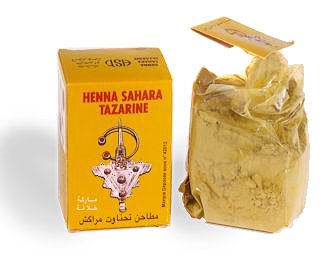
Tazzarine henna is sold throughout Morocco in small green and yellow cardboard boxes, whose colour evokes henna powder, decorated with a fibula.
This is a natural henna, which darkens without colouring too much red (a little bit though). It should not be used on dyed hair, and if it is applied to the nails, the tattoo does not fade like it does on the skin; you have to wait for the nail to grow out..
It is safe, unlike the ‘black’ henna used in Jemaa Fna or elsewhere, which actually contains petroleum (PPD or paraphenylenediamine) and can cause irritation, lasting skin damage or contact allergies to products containing it (black leather, hair dye, etc.).
Preparing henna paste for tattooing
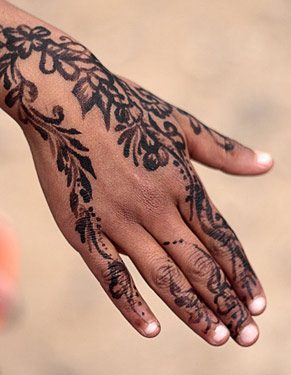
Then, mixed with water, a slightly acidic liquid such as lemon juice or tea, or a little rose water for fragrance, it is made into a paste which is then applied to the skin with a needle or syringe, the fineness of which depends on the dexterity of the tattoo artist.
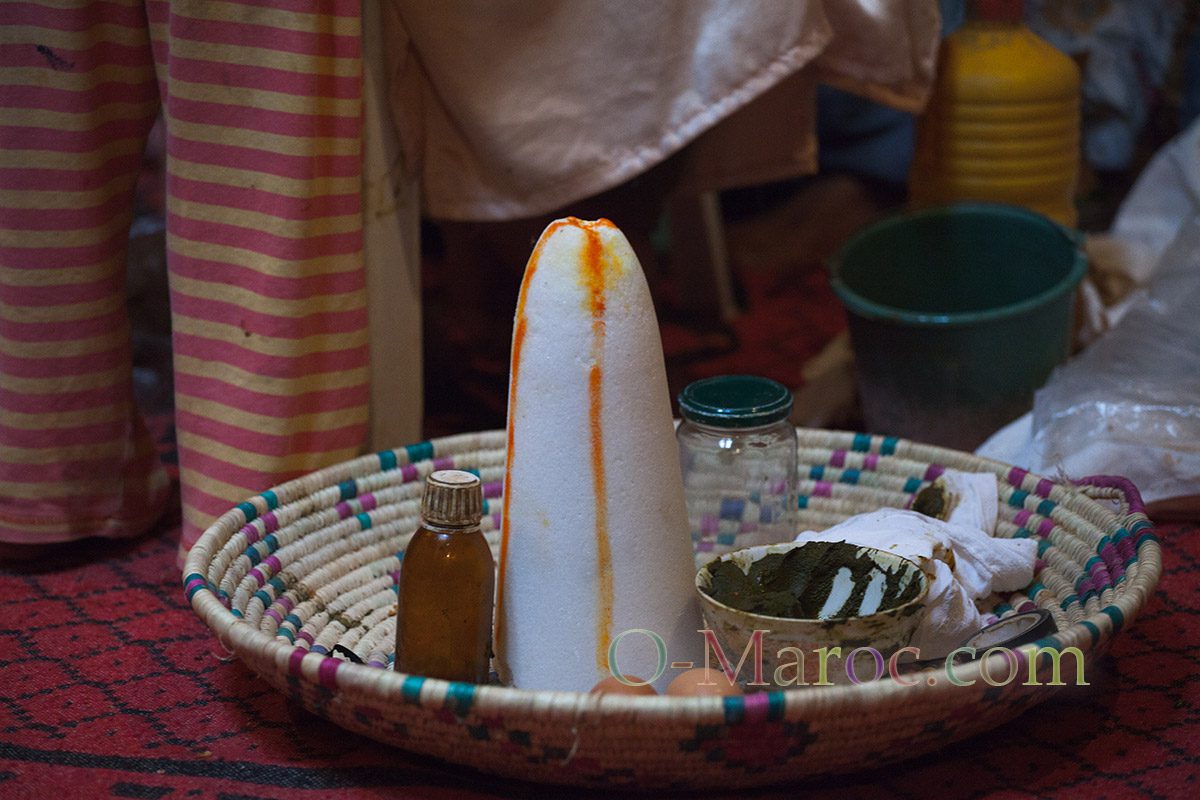
The henna will dry for a few hours. Often, the feet and hands are protected with cloths soaked in oil so that the paste stays on the skin as long as possible, which will also ensure the tattoo lasts longer.
Used as an ornament or for skin and hair care, henna is widely used throughout Morocco.
The henna ceremony, an essential part of a Moroccan wedding
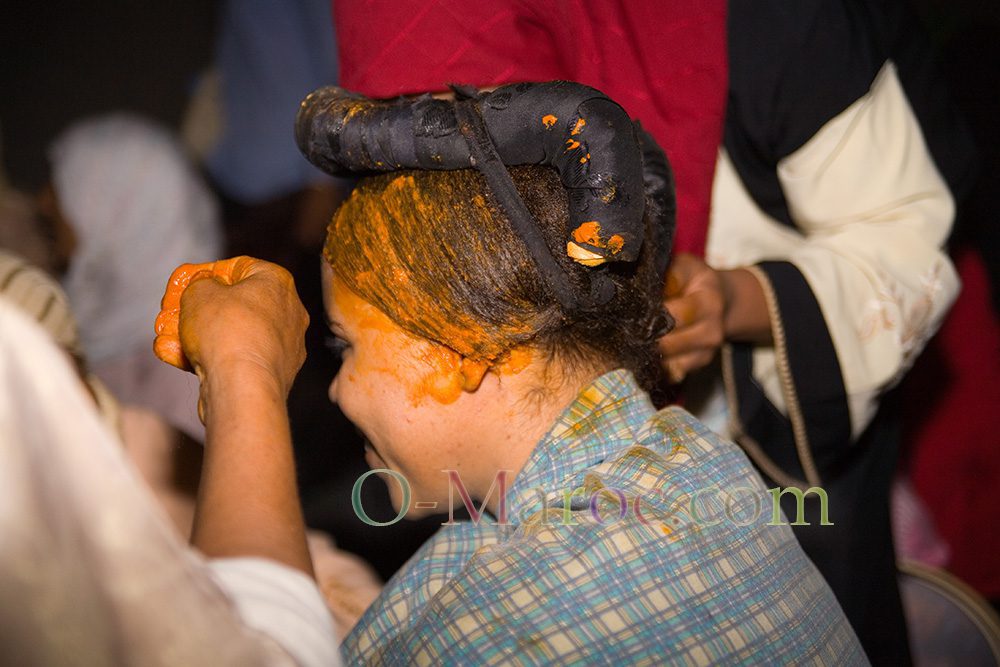
The henna ceremony is an essential part of a wedding. It takes place in several stages, beginning with the tattooing of the hands and feet (for the bride, but also for the women attending the wedding), then, in a moment when men are forbidden to be present, the bride-to-be has her hair styled and covered with henna before putting on her red veil and joining her fiancé.
Often in Morocco, and in the south, women cover the soles of their feet entirely with henna. They walk easily barefoot, and henna both softens the skin and protects it against fungi, especially in the event of minor injuries.
 A typo or syntax error? You can select the text and hit Ctrl+Enter to send us a message. Thank you! If this post interested you, maybe you can also leave a comment. We'd love to exchange with you !