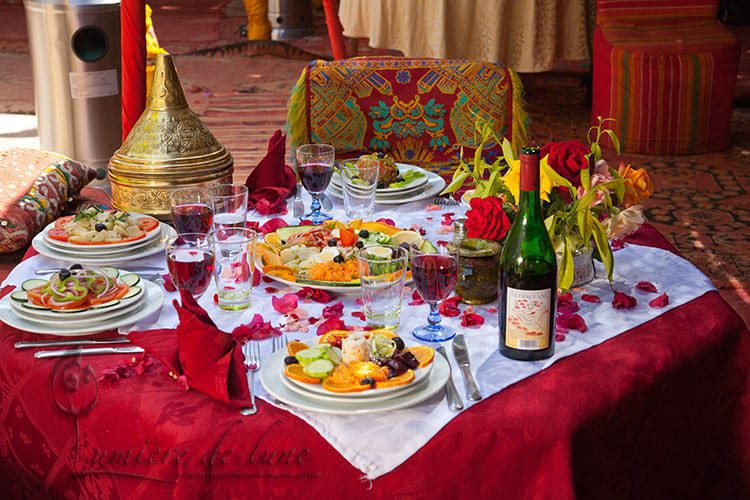
Following a number of comments on our article about the sale of alcohol during Ramadan, it would appear that the government has unofficially banned all sales of alcohol – including to non-Muslims – during the month of Ramadan. And, whilst they were at it, they’ve brought the ban into force a few days early.
That explains why all the wine cellars are closed this week.
This method is very typical of the Moroccan style of governance, where official and public documents are shrouded in an ‘artistic’ vagueness of instructions that clarify them, without people actually being able to access the documents themselves and therefore challenge them.
Could we have expected this total ban on alcohol?
In a way, yes. For some time now – specifically since the appointment of a PJD government – the sale of alcohol has become an increasingly ‘touchy’ issue in Morocco. You only have to look at Marjane’s back-and-forth on the subject, with ‘leaks’ that have been denied, then leaked again, then not denied, yet alcohol can – almost – always be found in Marjane stores.
In essence, even though it is possible to go about one’s life completely ignoring them, there are numerous political tensions in Morocco, as well as austerity measures. Easing restrictions on alcohol – which ‘officially’ only affects foreigners – is a clever way of giving the public something that costs very little.
Furthermore, still from a political perspective, we must not forget the annual demonstrations by those breaking the fast, which are political demonstrations linked to the ‘20 February’ faction of the population. In other words, opponents. Tightening the screws on the sale of alcohol ensures consistency in cracking down on the breaking of the fast in public.

Is a last-minute ban a good thing?
There was clearly a dilemma: announcing it publicly would amount to acknowledging ipso facto that ‘Islamic law’ had not been observed up to that point – something everyone knows, but which no one ever says. A typically Moroccan paradox.
Furthermore, this would have led to people anticipating the hoarding behaviour usually observed, with shopping trolleys full of bottles being wheeled out of Marjane and Carrefour stores.
On the other hand, catching people off guard will be a boon to traffickers and Moroccan ‘bootleggers’. For there are many people in this country who cannot live without alcohol. Medically speaking, they are known as alcoholics, and the sudden, involuntary withdrawal of an alcoholic leads to violence.
In that sense, it would have been better to warn them…
A month without alcohol?
A reader of this blog, who drew my attention to the early closure of the alcohol sales, told me:
Let’s hope a solution can be found; otherwise, in the years to come, the city will be deserted by Europeans and tourists during that month.
It’s a personal choice… but I must admit that the superb, deserted beaches of El Jadida in the height of summer are well worth, for me, going without alcohol – which is, after all, good for your health.
Finally, we mustn’t forget that what is known as ‘halal tourism’ is on the rise. It is driven by affluent Muslims who are looking for accommodation and restaurants that allow them to enjoy their holidays whilst respecting their faith. It is a rapidly growing sector, and Morocco may well be seeking – at last – to position itself in this niche.
 A typo or syntax error? You can select the text and hit Ctrl+Enter to send us a message. Thank you! If this post interested you, maybe you can also leave a comment. We'd love to exchange with you !