Tonight on TV5, a report originally broadcast on Arte, by Claudia and Günther Wallbrecht, about a Tuareg doctor.
I was fascinated by the similarities and differences, feeling a bit like I was seeing what life must have been like for my in-laws’ grandparents…
You can see an excerpt here (and more by clicking on the link in the description):
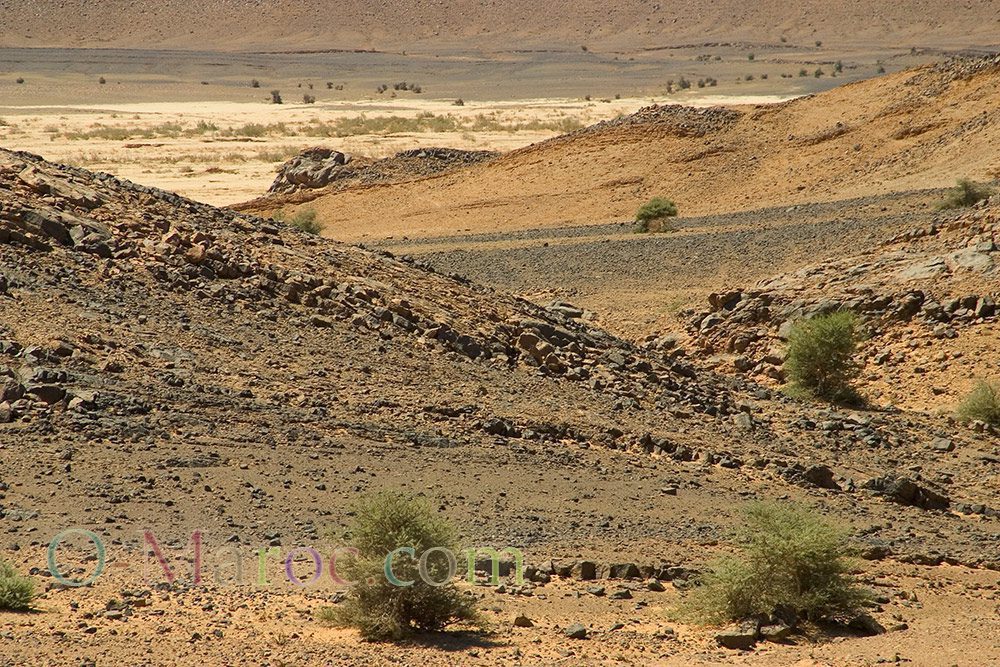
Many of our customers tell us that Tazarine and the surrounding desert, particularly Serdrar, resemble Mauritania. I have never been there, but tonight I saw how true that is.
The colours are similar, especially the dark tone of the stones, black schist that casts a reflection on the landscape and dulls the brightness of the sand.
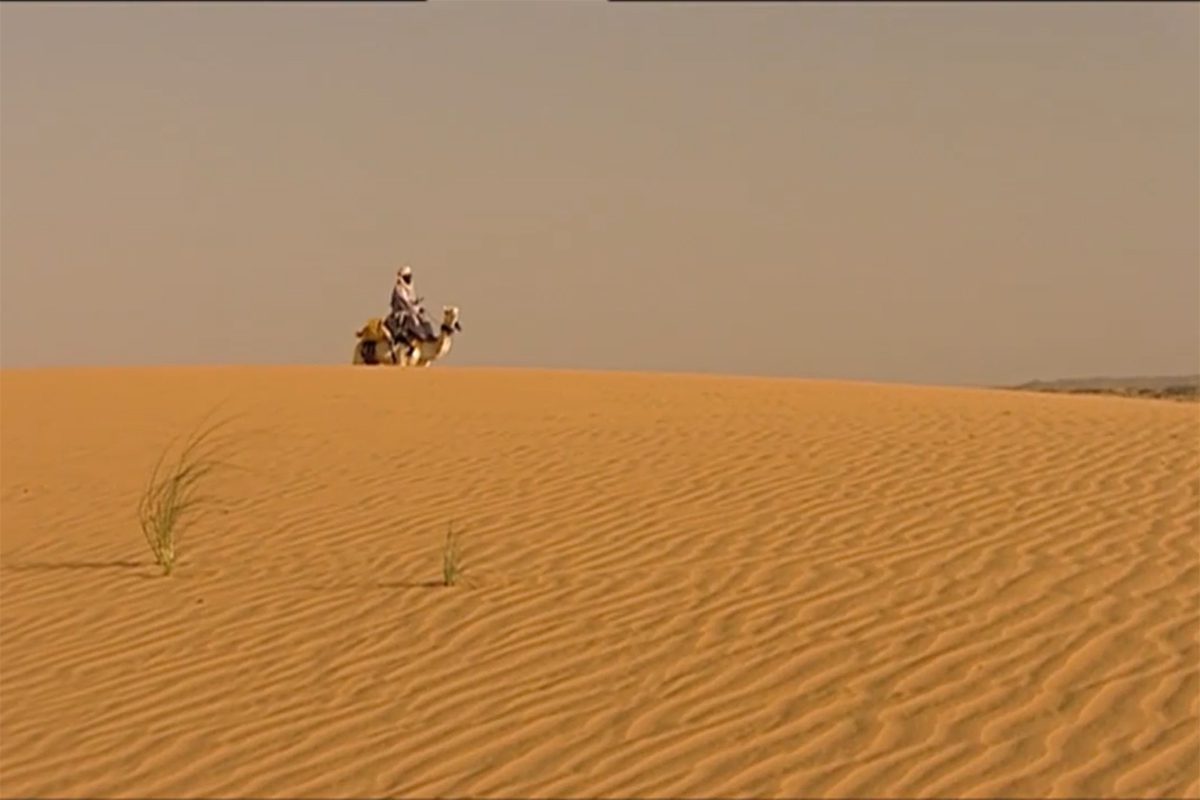
The sand ranges from bright yellow to a darker ochre, strangely similar to the colour of wet sand on our beaches, and as soon as there is a little mist, the light also takes on a grey undertone. And from time to time, a solitary tree provides shade in the middle of the day.
Ousmane Dodo is a doctor who makes his rounds on camelback, 10 months a year, spending rare days with his family.
He may also spend three or four days alone in the desert from time to time, relying on his ancestral knowledge to guide him. He followed caravans before studying (school is compulsory in Mauritania, and children of nomadic parents are sent to boarding school), and is well aware of the real difficulties and living conditions of nomads, who trust him precisely because he is one of their own.
A nomad of a different kind, seeking out people and the sick instead of pastures…
A fascinating moment for me is when we see him following the tracks of his family’s goats from atop his camel to find his wife. The ground is trampled, several herds have passed through, but he explains that you can clearly see the difference between white goats and black goats, and the direction… and he arrives home.
I would probably have thought it was staged if I hadn’t read the same description in Desert of Deserts, where Wilfried Thesiger recounts how Bedouins are able to identify almost every camel in the herd by its tracks, and to recognise whether an animal is male or female, young or old, pregnant or not, when they come across tracks on the trail…
Ousmane’s patients cannot read, so he has to explain to them in simple terms how to take their medicine. He often receives boxes of medicine from European tourists, and I was fascinated to see him decipher the ingredients of one of them, which was new to him… in Latin! He tries to give medication, but also works with traditional remedies. With an average income of €30 per month, few inhabitants of Agadez can afford medication, even generic drugs.
Life is hard, drought is gaining ground, locusts are passing through, and families are finding it increasingly difficult to find land where they can stay for a few weeks to graze their animals.
This race for scarce grass has killed a small child, born prematurely at seven months, and the mother is so exhausted that she may well die too. But the family could not stop when the baby was born; they had to leave immediately, in search of a little greenery.
One in four children born in the desert dies before the age of five.
But not everything in this report is bleak. Ousmane attends a traditional festival at the end of the rainy season, a large gathering before the caravans set off on their 1,200-kilometre round trip across the Ténéré desert in a month’s time, to fetch salt.
And I find myself almost in a Moroccan moussem, in Guelmim, for example, where I would love to see a beauty contest for dromedaries, with the animals and men competing in finery, and in the audience, Tuaregs in their traditional costumes, under the great veil of shiny indigo blue, protecting themselves further under multicoloured umbrellas.
The place is timeless, the central ‘square’ a simple expanse of sand, lined with a few tents, nothing else. Nothing, except for an orchestra of five young girls singing into microphones, accompanied by an electric guitar that the loudspeakers carry far away.
The young girls could, apart from their clothes, be the Ahwash, the rhythms are similar, the swaying, the complicity in the heart, which sings as much for itself as for its audience, and even the sometimes nasal rises in
But the words are different. Tamasheq, the language of the Tuaregs, is not Tamazight or Tashelhit, the Berber dialects of southern Morocco. Bilal struggles to understand them, and I don’t understand a single word. But the place names are familiar, as are the sounds of the language. Agadez, Aguelman, names that I can see on roads near our home. There is an Aguelmane near Middelt, an Agdez not far from Tazzarine. This is normal, as Aguelmane is an Amazigh word which means ‘lake’ and is also found in the name Goulmima (Igoulmimen, the ponds).
Another difference is that women are much freer. They are not veiled and talk freely with men. Ousmane explains how he met his wife in a village where he was treating patients. ‘I saw her, I liked her, I asked her if we could get married. We talked at night, we talked all night long, I came back, we talked, we made love. And then we got married.’
The Tuaregs are monogamous and accept relationships before marriage. Women can file for divorce on an equal footing with men…
I took away two things in particular as symbols of the difference between our worlds. Ousmane talks to one of his friends who has returned from Europe and explains to him
Over there, you have to pay for everything. You get on the bus, you pay; you park your car, you pay.
and Ousmane was astonished…
Above all, he enjoys bathing at the foot of the Aguelman waterfalls. It feels so good to be able to dive into the water, cool off, swim a few strokes… and he only gets to do this once a year, because water is so scarce in this country.
But this doctor who parks his camel anywhere in the desert without paying for parking, this doctor of the poor and illiterate, who can only swim once a year, knows how to read and understand the Latin names of our medicines…
 A typo or syntax error? You can select the text and hit Ctrl+Enter to send us a message. Thank you! If this post interested you, maybe you can also leave a comment. We'd love to exchange with you !