I only discovered Fouad Laroui quite recently, much to my shame, as this Moroccan writer is very well known.Unfortunately not in the English-speaking world, where he is not translated. But if you have some French, you can enjoy his novels.
But I’ve made up for it by reading several of his books in quick succession.
As with Tahir Shah, it was a real pleasure.
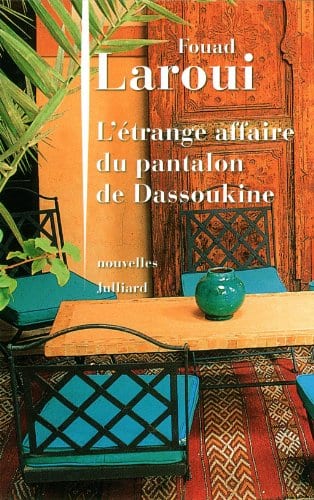
Whether it be A Year with the French, The Adventures of the Bedouins in the Polder, or his latest collection of short stories, The Strange Case of Dassoukine’s Trousers, which won the 2013 Goncourt Prize for Short Stories, I have found in these books the same humour tinged with tenderness, and such a subtle understanding of Moroccan society, whether in Morocco or abroad.
The first is a book of childhood memories, the second is about Moroccan emigration, and the last is ‘more about’ Morocco and Moroccans.
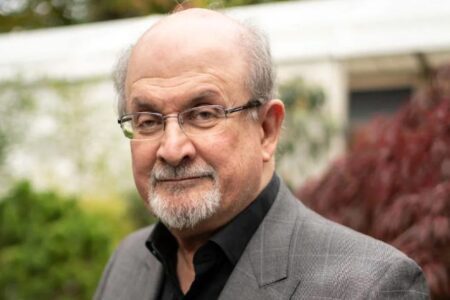
But first of all, who is Fouad Laroui?
Fouad Laroui was born in Oujda, a city whose traditions are strongly influenced by neighbouring Algeria. However, his roots lie on the Atlantic coast, with a father from El Jadida and a mother from Essaouira.
He did not stay there: as a young boy, he was one of the gifted Moroccan pupils selected to study at the French lycée, in this case the famous Lycée Lyautey in Casablanca. There he would no doubt have rubbed shoulders with Eric Besson, though he makes no mention of him in Une année chez les Français. He spent virtually his entire school life as an orphan, as his father disappeared in Hassan II’s political prisons; having left the house in April 1969 simply to run an errand, he was never seen alive again.
This ordeal did not prevent him from excelling in his studies – exceptionally so, even for a young Moroccan scholarship holder: he attended the École des Mines in France and the École des Ponts et Chaussées. But the well-trodden career path that lay ahead of him as a senior executive in a major Moroccan company did not particularly interest him. Whilst phosphate is one of Morocco’s natural resources, and those who know how to extract it are the privileged few, Fouad Laraoui is more interested in cultural riches.
At the age of thirty-one, in 1989, he turned his life around, gave up his career in Morocco and returned to study in Europe. But this time, he settled in England, at the prestigious universities of Cambridge and York. He obtained a PhD in economics, and set off once again to settle elsewhere. Dr Fouad Laroui settled in Amsterdam, where he taught econometrics and got married.
But this Moroccan with multiple roots (rather than being rootless) is restless. From being a ‘die-hard’ engineer, he went on to become a doctor of humanities. He then slipped completely over to the ‘dark side of the force’, becoming a writer as well. His first novel, Les Dents du Topographe, was published in 1996 in French by Julliard and won the Albert Camus Discovery Prize. But he also writes in Dutch, with poems published in the Netherlands, as well as literary reviews for Jeune Afrique. He is also a columnist for the Moroccan radio station Medi1.
He has enjoyed real success on both sides of the Strait of Gibraltar, as evidenced by the release of his major works in Kindle format, including The Strange Case of Dassoukine’s Trousers.
The Laroui style
Fouad Laroui’s ‘little tune’ is very distinctive. In particular, he manages to use irony without coming across as caustic or condescending.
Fouad Laroui knows the characters he portrays inside out – their little quirks, the tone of their voices. His description of the conversation between three Jdidis (El Jadida inhabitants) in The Strange Case of Dassoukine’s Trousers is simply marvellous: you can hear their accents, see their gestures, and follow the meandering course of those long café conversations.
Fouad Laroui is well-regarded in Morocco because he sees things from a Moroccan perspective. Moroccans agree with what he says about the people of this country. They do not feel insulted or offended by one of their own, who undoubtedly speaks in the same way as those he describes.
As well as this kindness, Fouad Laroui’s other talent is that he is profoundly multicultural.
Living in Europe, a true European – having lived in several countries – he is able to explain, without seeming to, the mysteries of Moroccan culture: why this, why that, and why, during the month of Ramadan, an atheist Moroccan who does not observe Ramadan will refrain from smoking or drinking in front of his Egyptian and Coptic boss, who himself does not observe Ramadan. (From The Bedouins in the Polder)
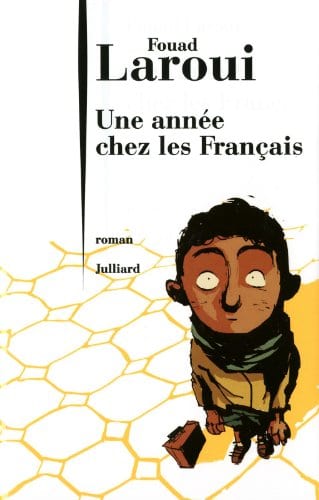
A year with the French
This book is autobiographical. It tells the story of a ten-year-old Moroccan boy who, one fine morning in 1969, after an epic journey through the mountains of Morocco in the company of his uncle and a few poultry, finds himself standing before a huge gate – that of a French secondary school.
We’ll never mention it by name, of course, but we know it’s Lycée Lyautey.
This is the first year that young Mehdi has spent time ‘with the French’ – those strange people who are so different from Moroccans, who eat pork, who shamelessly talk about things that a decent Moroccan would never dare to mention (too much hachouma, my son), but who have one immense quality: their homes are full of books, and you can read all day long.
For Mehdi is a child who loves reading and devours books. So much so that his teacher was impressed by his intelligence and knowledge, and fought to secure a scholarship for him. So much so that the little Aroubi boy also went on to win over his wealthier classmates, the sons of the Moroccan and French upper middle classes.
Through the eyes of young Mehdi and the people he meets, the story also highlights the shortcomings of a society that has only very recently emerged from colonial rule, featuring the school’s pawns, frustrated Moroccan supervisors, and the children of wealthy families who have no need to work hard at school, and the misunderstandings when he is denied the role he dreams of playing in the amateur theatre group because of his ‘Moroccan’ appearance.
It was also a friendship with a young Frenchman, which would be cut short by misunderstandings, after it had opened up new horizons for him in this strange world.
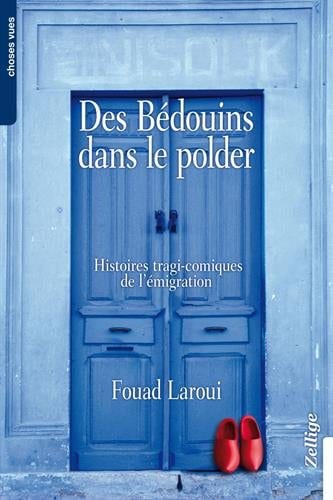
The Bedouins in the polder
‘The Bedouins in the Polder’ is a personal reflection, a collection of essays. It is therefore ‘less’ autobiographical than ‘A Year with the French’. Nevertheless, it still deals with a world that Fouad Laroui knows intimately: that of Moroccans living abroad, the M.R.E., as they’re called back home, those who return only in the summer.
Moreover, the text is often written in the first person singular. Fouad Laroui bases his reflections on experiences he has had and people he has met.
In this collection, he does not seek to paint an idyllic picture of Moroccan emigration, but rather to explain, on the basis of real facts, the major misunderstandings on the part of Europe, the (total) inability of European governments to understand the motivations of Moroccans, and therefore to ‘press the right buttons’ to integrate them.
The Netherlands has experienced significant immigration from Morocco; as elsewhere in Europe, many workers were sent to construction sites and housed in Sonacotra-style accommodation before they began to really settle in. In Geert Wilders’ country, tensions surrounding Islam – and therefore primarily surrounding people from the Maghreb – are very high.
Fouad Laroui is neither a politician nor an ethnologist. But he is a Moroccan who has lived amongst the polders, the canals along the Thames and the banks of the Seine. The insights he offers in this book are all the more relevant for the fact that they are not dogmatic.
The strange case of Dassoukine’s trousers
As far as I am aware, it is the only one of his books to have been translated into English.
It is indeed a very strange affair, this one involving Dassoukine, a senior Moroccan official sent to Brussels to negotiate a wheat purchase. He will have the honour of bringing back tonnes of free wheat to Morocco, at the cost of such an unbelievable humiliation in Brussels that it becomes laughable.
This contrast between glory and insignificance is, once again, characteristic of Laroui’s style. It is Dassoukine himself who tells his story, with humour and verve, whilst leaving the reader unsure as to what takes precedence: the satisfaction of getting the wheat for free, the humiliation suffered in order to obtain it, or the astonishment at the strange chain of events.
This book is the least autobiographical of the three. With the exception of one short story, it tells stories that took place elsewhere, involving other people.
One of the texts stands out completely from the others. It is disconcerting, and one should probably set it aside to read it ‘on its own’. Laroui uses a literary device of repetition to try to convey the sense of strangeness that a stranger, far from home, may sometimes feel.
It really struck a chord with me, because, as a foreigner in Morocco, I felt I could turn some of those phrases around and apply them to myself. All forms of emigration are much the same…
Fouad Laroui has published a collection of poems in Dutch entitled Verbannen woorden (Forbidden Words), which he did not want to have translated into French, as he considers it too personal. It strikes me that this unconventional short story is in the same vein as his poetry.
In short, as you’ll have gathered, I highly recommend Fouad Laroui’s books.
 A typo or syntax error? You can select the text and hit Ctrl+Enter to send us a message. Thank you! If this post interested you, maybe you can also leave a comment. We'd love to exchange with you !